After enduring a bumpy 3.5-hour-long highway ride and a bout of traffic congestion, we finally arrived in Indonesian famous tourism city Bandung by car, which was only 130 kilometers from the capital Jakarta, during a fieldtrip to the Tegalluar Station, the last point on the Jakarta-Bandung HSR in July.
Locals told us that the same journey sometimes takes up to six or seven hours during peak commuting hours, and the rainy weather only makes matters worse.
Compared with the hustle and bustle of Jakarta, Bandung, nestled in the mountains, is calm, humid, and has an abundance of fresh air, making it a very popular weekend escape for Jakartans.
Taking a trial ride on the train to Bandung was fairly a pleasant experience. On the trial run, and at a speed of approximately 180km/h, one could effortlessly balance a coin on its edge on the windowsill of the carriage without it falling, thanks to its smooth operation, which is also almost entirely silent.
We learned that the train is equipped with intelligent sensor technology and a seismic monitoring and warning system. With over 2,500 detection points throughout the train, all critical systems can be monitored in real time.
Facilities for those living with disabilities and an SOS call button, braille guide signs, and vending machines are easily found in the train's carriages.
The train's design has also incorporated amenities that cater to local Indonesian customs such as a temporary prayer room. The train, both in its exterior and interior design, showcases a rich and distinctive representation of Indonesian local symbols and elements.
The HSR includes four stops - Halim, Karawang, Padalarang, and Tegalluar. Halim is the inaugural station located in the capital of Jakarta, and Tegalluar sits in Bandung. The other two stations are located near Indonesia's industrial bases, home to a number of foreign enterprises and industrial parks.
During a visit, we were captivated by the modern and grand atmosphere of the Tegalluar Station.
The overall design incorporates fluid curves to channel the elements of mountains and water, symbolizing Indonesia's emphasis on harmonizing development with nature.
The extensive glass curtain walls reflect the boundless green fields and mountains in the distance, creating a soothing and pleasant ambiance.
The waiting area at the station includes space for commercial shops and restaurants. The station is equipped with both manned ticket offices and unmanned ticket machines, mirroring the basic configuration of high-speed railway stations in China.
With a building area of 15,000 square meters, the Tegalluar Station features two platforms and 4-5 railway lines, accommodating up to 1,500 passengers simultaneously, with a peak hourly capacity of 3,200 people. Departing from the station, travelers can easily access the renowned attractions of Bandung, such as the Asian-African Conference Museum and the Bandung Zoo.
During the visit to Tegalluar Station, local residents and employees would occasionally greet us with enthusiastic smiles and thumbs-ups, seemingly expressing their expectations for the railway project and their dreams for a new transportation dawn.
Chinese people believe that letters are as valuable as gold. For thousands of years, letters, across mountains and oceans, have been delivering writers' sentiments and conveyed friendship and expectations.
Xi Jinping, general secretary of the Communist Party of China (CPC) Central Committee and Chinese president, has managed to find time to reply to some letters from different parts of society and the world despite his busy work schedule.
Through his letters, Xi has corresponded with international friends from all walks of life on numerous occasions, part of a series of excellent stories of China's international exchanges in the new era. The letters have also added vivid color to the diplomacy between China and other countries.
The Global Times traced and contacted some of the recipients of Xi's letters, to hear the inspiring stories behind the letters and their communication with the president.
In this installment, Global Times reporters spoke with the heads of associations that have been actively promoting the development of friendship between the peoples of the two countries, about their past efforts to facilitate exchanges, understanding, and cooperation, as well as their views on current US-China relations.
"President Xi Jinping's reply letter has inspired those in the US who have feelings for China and want the relationship between the two countries to get back on track to move forward courageously," said David Chong, founder and president of the US-China Youth and Student Exchange Association, when speaking about how the excitement of receiving a letter from the Chinese president transformed into enduring inspiration.
Recently, Chinese President Xi replied to a letter from the US-China Youth and Student Exchange Association and friends from all walks of life in Washington State, US and a letter from the grandson of General Joseph W. Stilwell in the US respectively, both receiving positive responses from China and the US as well as the international community.
Letter after letter from President Xi to his American friends serve as reminders that the peoples of the two countries value each other's friendship, and that the interconnectedness of hearts can cross any barriers, Chong told the Global Times.
In recent years, despite China-US relations reached low ebb, the door to dialog and communication on the Chinese side has remained open, and exchanges and contacts between the Chinese and American people have remained uninterrupted.
Xi personally has shown that he attaches great importance to the friendship between the peoples of the two countries. "The hope and foundation of the China-US relationship lie in the people, and its future lies in the youths," was Xi's earnest hope expressed in his reply, a hope that Chong bears in mind.
Chong and like-minded peers look forward to further spreading the importance of promoting the China-US people-to-people friendship, which Xi has constantly emphasized, to promoting mutual understanding between the two countries through more tangible actions, and to letting the seeds of friendship between the two countries be firmly rooted in the hearts of the young generation.
Steadfast light behind dark clouds
In July, the US-China Youth and Student Exchange Association and other friendly people from all walks of life in Washington State sent a letter to Xi, expressing their good wishes for China's hosting of the 31st International University Sports Federation Summer World University Games in Chengdu and the Hangzhou Asian Games, while also reaffirming their commitment to continuously enhancing China-US youth cooperation and humanistic exchanges.
Speaking on the reason for writing the letter, Chong referred to President Xi's remark during his meeting with Bill Gates, co-chair of the Bill and Melinda Gates Foundation, on June 16 this year, where the president stressed that the foundation of China-US relations lies in the people.
"We have always placed our hope on the American people and wish all the best for the friendship between the two peoples," Xi said.
After seeing this news, Chong immediately shared Xi's views with his friends in Washington State, and they were all in agreement.
"We have found that in recent years, the voices of the American people calling for friendship between the two countries have been suppressed and even muffled. We felt it necessary to send a letter to President Xi, telling him that his friends in Washington State miss him, and at the same time letting our voices be heard by the American public, letting the Chinese people know that there has never been only one voice in the US, and that a lot of the American people expect that the two countries can continue to be friendly," he said.
Ron Chow, co-chairperson of the US-China Youth and Student Exchange Association, told the Global Times that President Xi's letter is an affirmation and support of their association's efforts to promote youth and student exchanges between the two countries.
"In fact, this cause is widely supported by the American community," Chow said.
The Global Times reporter found that the letter led by Chong and Chow to Xi was signed not only by the Secretary of State of Washington State, but also Washington State senators, mayors of Tacoma, Steilacoom and other politicians.
In September 2015, Xi visited Lincoln High School in Tacoma, US. Inside the school auditorium, he enjoyed a choir performance by Chinese and American students. The choir chose to perform a song named "On the Field of Hope," which embodies the Chinese people's faith and love for the future.
Less than a month after Xi's departure, the US-China Youth and Student Exchange Association was established.
"We should allow our young people to have more contacts and exchanges to understand each other's cultures and values, especially at a time when some of them are being misled by remarks by certain Western media and politicians, which have created unnecessary suspicions," Chow said.
In July, the association arranged five high school students and one teacher from Steilacoom, Washington State, to participate in the 17th Shanghai International Youth Interactive Friendship Camp.
Before coming to China, some US parents, influenced by negative public opinion about China, were apprehensive about their children's trip. However, the students returned from China told their families that it was one of the most wonderful summers they had ever spent, and hoped to continue their youth exchange program in China in coming years, Chow said.
From organizing US youth and student visits to China, promoting table tennis exchanges between the two countries, and helping teenagers who were personally affected by the Wenchuan earthquake in 2008 to visit Washington State, the US-China Youth and Student Exchange Association has shown commitment to the improvement of people-to-people exchanges between the two countries' youths.
Looking back on the association's work over the years, Chong and Chow are pleased that the platform which allows for the promotion of sincere exchanges, deepened understanding and building of friendships between US and Chinese youths, has maintained a solid trajectory in the spirit of mutual benefit.
Take steps in same direction
"President Xi has many old friends in the US. Many of our friends have written letters to him, even those whose fathers fought with the Chinese military against fascism in World War II, creating a lifelong friendship. On the other hand, the story of President Xi's relationship with his old friends has also become a great story in US-China relations," Chong said.
On September 12, Xi also replied to a letter from the Chairman of the Sino-American Aviation Heritage Foundation Jeffrey Greene and Flying Tigers veterans Harry Moyer and Mel McMullen.
In his reply letters to the Flying Tigers' veterans and John Easterbrook, grandson of Stilwell, Xi stressed the fact that China and the US fought side by side against Japanese fascists and for world peace; looking into the future, the two countries have every reason to help each other achieve success and common prosperity.
The Chinese top leader continues to cherish his friends, honor history, and has hope for the next generation, and we cannot afford to sit back and watch the relationship between our two countries be pushed in the wrong direction by people with ulterior motives, Chong said.
In 1985, as Party secretary of Zhengding county in North China's Hebei Province, Xi went to the US on a study tour and met a number of American friends in Muscatine, Iowa. In 2012, when visiting the US as China's vice president, Xi made special arrangements to revisit Muscatine a reunion with his old friends.
This short stopover displayed the power of people-to-people exchanges. Xi told his old friends, "You were the first group of Americans that I came into contact with. My impression of the country came from you."
"To me, you are America," Xi said.
When President Xi visited the Lincoln High School in 2015, he surprised 100 students from the school with an invitation to visit China the next year. In 2016, 118 students and teachers from the school visited Chinese cities including Fuzhou, Chengdu, and Beijing.
On the eve of the Chinese Lunar New Year in 2021, the principal of that school sent a letter to Xi stating that over the years, US students' visits to China have been some of the best educational experiences of their lives, and that he looks forward to further strengthening student exchanges and educational cooperation between the two countries in the future, and setting an example through the friendly exchanges between the two countries' peoples.
Chong and Chow believe that with President Xi's concern and inspiration, there will also be more and more people who have full confidence in the bright future of the relationship between China and the US.
In January 2020, I attended the 6th China-Australia High-level Dialogue in Sydney's Intercontinental Hotel near the picturesque Circular Quay. Although bilateral relations between China and Australia already started to chill after the then Australian government unwarrantedly accused China of "political interference" and recklessly imposed a blanket ban on Huawei, both sides during the meeting positively expressed a desire to put an end to the decline of the relationship. We pledged to meet again in the following year in Beijing to seek further mutual understanding and promote improvement to the bilateral ties.
No one had anticipated that China-Australia relations would plunge to their historically lowest point as the Morrison administration continued to align with the US' Indo-Pacific Strategy and further antagonize China as an opponent. Although both sides had hoped for the Beijing rendezvous, regretfully, it did not materialize.
After the Labor government took office in May 2022, glimmers of hope for the improvement of the bilateral relations coalesced into brighter glows as the Albanese team put a decisive end to the anti-China "megaphone diplomacy" adopted by the previous administration. China and Australia worked together to renew contacts, leading to a bilateral summit in Bali six months later, in November, between President Xi Jinping and Albanese. In December, China's Foreign Minister Wang Yi reached a consensus with his Australian counterpart Penny Wong, who was visiting Beijing on the 50th anniversary of the diplomatic relationship between China and Australia, that the two sides should maintain high-level engagement, and commence or restart dialogue in areas including bilateral relations, economy and trade, and regional and international issues.
I had a sense of déjà vu when I walked into the spacious meeting room to participate in the 7th round of the dialogue, which finally took place on September 7 in the Diaoyutai State Guesthouse compound. The Australian side sent an 18-member delegation consisting of current and former government officials, and representatives from the business, education and academic circles to participate in the "track 1.5" dialogue. Amid pleasantries and formalities, there were indeed genuine aspirations to restore the relationship which had been insensitively and viciously devastated in the past three years.
The atmosphere during this year's dialogue was encouragingly candid, friendly and warm. While stating differences in the perceptions and assessments of various matters and topics, both sides also tried their best to identify common interests.
Disparities in the two countries' systems of governance and cultural traditions do exist, as in any other international relations, but the differences should not be amplified or even distorted to hinder or sabotage the stability of bilateral collaboration and exchanges.
There have been no historical or territorial disputes between the two countries and China has never posed any threat to Australia. Australia's close ties with the US should not naturally position Canberra as an adversary of China. As Li Zhaoxing, China's former foreign minister and head of the Chinese delegation to this year's dialogue said, Australia's bonds with its allies should not be in conflict with its ties with its other partners.
Despite the diplomatic upheavals during the past several years, China-Australia trade relations have been developing with vigorous dynamism. China has remained Australia's biggest trade partner for 14 years. Frictions and disputes can take place as in any international trade relations, but such disagreements should not be ideologized and politicized with the cold war mentality, which would only exacerbate problems rather than bring about resolutions.
It is heartening to see China and Australia have been carrying out proactive and conducive discussions and negotiations to seek solutions to the existing trade disputes. The recent resolution of the barley case is another promising step to steer the trade relations to the track of full recovery and consolidation with a constructive spirit on both sides.
During the sessions at the dialogue, I was thrilled to see a news alert on my phone that Anthony Albanese, Australia's Prime Minister, affirmed his long-anticipated visit to China within the year. The visit will obviously serve as a very positive move which will not only stabilize the bilateral relations, but also revitalize and strengthen the comprehensive strategic partnership.
China and Australia are two important countries and key economies in the Asia-Pacific. Our proactive and constructive partnership will not only contribute to the economic development and cultural diversity in both countries, but also the peace, stability and prosperity of the region, and also of the world.
I look forward to the new stage our bilateral relations will achieve when the next round of High-level Dialogue takes place in Australia next year.
China's plan to make Fujian Province a demonstration zone for the integrated development across the Taiwan Straits, jointly issued by the Communist Party of China Central Committee and the State Council on Tuesday, is an important measure to promote cross-Straits integrated development and the process of peaceful reunification, and a major policy boon for the people of Taiwan.
This circular of more than 4,000-words, with 6 major items and 21 specific measures, presents a panoramic view and visualization of the future scenarios of cross-Straits integration and development, especially for Taiwan compatriots who will develop on the mainland, and it stipulates specific provisions to ensure the effect of the policy on the ground. For the people of the mainland and Taiwan, this means not only personal opportunities and development, but also genuine and lasting peace. It is obviously a policy of great strength and breadth to benefit Taiwan, but its significance is not limited to the economic, social and cross-Straits exchanges. More importantly, it is the fruit of the Chinese government's comprehensive thinking on cross-Straits integration and development, and it also reflects the CPC Central Committee's utmost sincerity for peaceful reunification and utmost goodwill toward the compatriots in Taiwan. Anyone who hopes for peace and stability as well as for the shared well-being of people on both sides of the Taiwan Straits will not reject such goodwill.
On the same day, defense authority of Taiwan region released its latest defense report, claiming that "reservists may have to attend urban warfare." The two documents, one is talking about peace and the other about war; one focuses on development and the other on destruction, outlining two diametrically opposed destinies for Taiwan island. The move of the DPP authorities in Taiwan is not only deliberately opposed to the mainland, but also opposed to the interests and wishes of people on both sides of the Taiwan Straits.
The DPP authorities have always been afraid that the people on the island will feel sincerity and goodwill from the mainland. This time, they have deliberately ignored the impact of the circular through self-deception by burying their head in the sand. On the other hand, they have distorted and discredited the circular and made every effort to mislead the people on the island. A DPP legislator said that the circular was "digging a hole for the Taiwanese to jump into", which is one of the typically vicious and distorted remarks.
We must admit that the DPP has a skillful approach to deceiving the people on the island. If we want more compatriots in Taiwan to receive and accurately understand the decisions and deployments of this circular, there is still much work to be done. Fujian, as a demonstration zone for exploring cross-Straits integrated development, as long as the central government's policies are implemented well, will undoubtedly create a demonstration effect, win the reputation among Taiwan compatriots and enterprises, and fundamentally establish immunity against the DPP's manipulation of public opinion.
According to data released on September 11 by the executive authority in Taiwan, since Tsai Ing-wen took office in 2016, investment from Taiwan in the mainland has sharply declined by 44 percent, while investment in other countries and regions have surged by 96 percent. This data, which the DPP touts as an achievement, is actually a consequence of the DPP's various measures to sever economic and trade ties across the Taiwan Straits. The DPP has intensified political opposition and hostility towards the mainland, promoted economic "decoupling" from the mainland, made deliberate efforts in "de-Sinicization" in terms of culture and history, and increased military preparations and external collusion. These manipulations have created a very grim situation in cross-Straits relations.
The circular, issued in this context, has gone through a gradual deepening process. From the heartfelt call that "the two sides of the Taiwan Straits are one family," to the establishment of a demonstration zone for cross-Straits integrated development, the central government's policy on Taiwan has continuously advanced based on the actual development needs of Taiwan people in the mainland. This is conducive to further improving the business environment related to Taiwan, deepening cross-Straits industrial cooperation, and at the same time, it serves as a countermeasure to block the DPP's attempts to reverse the situation.
Economic and trade relationships are resilient; even in challenging times, they can find their way. However, when constrained by the political hostilities, progress can be extremely difficult. Both sides of the Taiwan Straits share a common language and origin, and blood runs thicker than water. In the face of political tension and economic and trade exchanges being obstructed, strengthening social connections between the two sides becomes particularly important. The establishment and practice of the Fujian demonstration zone will elevate both the depth and breadth of people-to-people exchanges across the Straits to a new level.
We must be fully prepared both psychologically and in our actions to counter the interference and disruption by the DPP as well as external forces. Based on the experiences of recent years, it's not difficult to discern that whatever the DPP vigorously promotes and celebrates with fanfare is typically detrimental to Taiwan's interests, undermining the foundation of peace across the Taiwan Straits. Conversely, what they deliberately avoid or protest against is often in the true interest of people on both sides of the Straits and conducive to cross-Straits peace and stability. The DPP's persistent "pro-independence" agenda, coupled with provocations from countries like the US and Japan, has been intensifying, which push us to continually strengthen our capacity to counteract separatist activities while advocating for peaceful reunification.
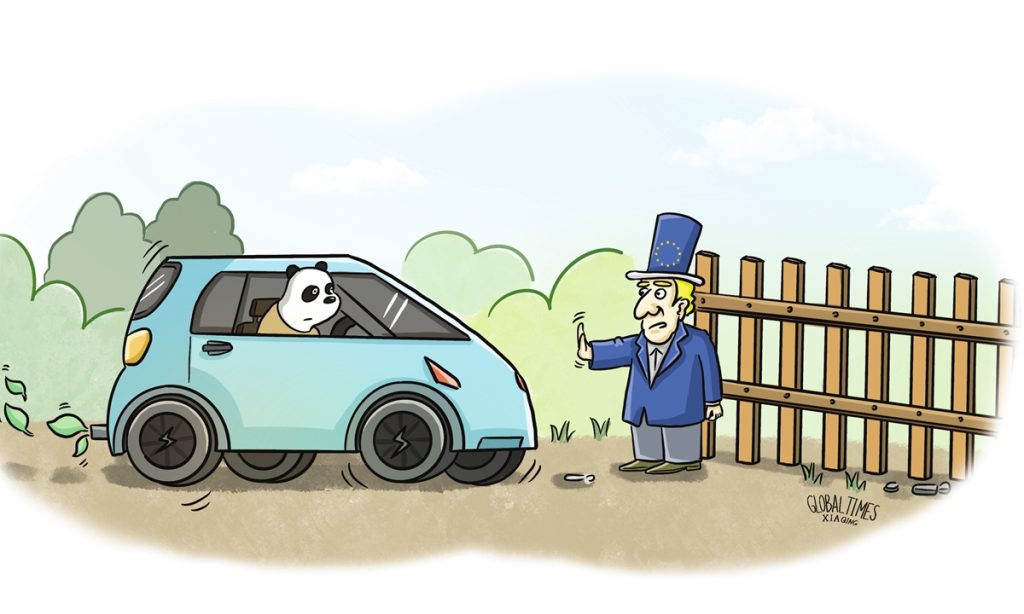
Recently, European politicians have been clamoring for anti-subsidy measures against Chinese electric vehicles. The European Commission President Ursula von der Leyen called for a corresponding investigation in her annual State of the Union address, which received positive responses from French Minister for European Affairs Laurence Boone, German Foreign Minister Annalena Baerbock, and Minister for Economic Affairs Robert Habeck. For a while, the specter of trade protectionism seems to have returned to the continent that has been waving the banner of "open markets" for decades.
In recent years, the EU has continuously dressed up its foreign trade policies with concepts such as "fair trade" and "open strategic autonomy." However, in practice, it has continuously promoted restrictive measures in various fields through policy-making and legislative processes, such as formulating "competition rules" and so-called due diligence for supply chains. This time, the EU's argument is that huge state subsidies are distorting the market and "Europe is open for competition. Not for a race to the bottom."
However, in the eyes of the outside world, the EU wields the tariff stick with its unilaterally determined standards and reasons, using the banner of "fairness" to impose unfair measures on enterprises and products of other countries, essentially aiming to protect its domestic companies and market. Meanwhile, the EU and some member states are vigorously implementing subsidy policies. For example, issued in February, the EU's "Green Deal Industrial Plan" significantly relaxes the regulation of industrial subsidies, and the French government's "Green Industry Act" proposes tax exemptions of 20 percent to 45 percent for renewable energy equipment, heat pumps and battery manufacturers.
In fact, the so-called actions of the EU are more driven by concerns over the impact of China's electric vehicle industry on its traditional fuel-powered car industry. European car companies have invested heavily in traditional car technology and industry centered on internal combustion engines, making it difficult for them to adapt to the massive industrial transformation brought about by the revolution of electric vehicles, hence their call for political measures. Tu Le, the founder of Sino Auto Insights, stated that the EU's initiation of the investigation "says as much about the lack of competitiveness of European EVs."
On the other hand, the EU's investigation into "distorting market subsidies" targeting Chinese electric vehicles is completely unfounded and untenable. Chinese companies began investing in electric vehicle research and development and industrial investment as early as 15 years ago and have benefited from China's high-quality development process, relying on continuous independent innovation, a comprehensive industry chain system, and a large domestic market. In 2022, China's electric vehicle market will account for 59 percent of the global market. At the same time, the claim that Chinese car companies are distorting the European electric vehicle market is a complete lie. In 2022, the market share of Chinese electric vehicles in the EU was only about eight percent.
The European industry itself has also expressed opposition and concerns about resorting to protectionist measures to seek competitiveness. Ola Kaellenius, CEO of Mercedes-Benz, stated that "if we look at the success of the WTO over the last 30 years, globalization, reducing trade barriers and promoting free trade have driven an enormous amount of economic growth and wealth generation," and companies oppose using political means to undermine the system centered around WTO rules.
For the EU, the pursuit of so-called trade fairness through protective measures is likely to backfire. In recent years, the EU has implemented various measures in the field of trade with China, not out of genuine economic considerations but rather as a result of its increasing emphasis on China as an economic and systemic competitor and adversary. These actions, driven by political bias, are bound to create a gap between the vision of cooperation and mutual benefit among enterprises. From the perspective of current industry development, the EU's initiation of anti-subsidy investigations against China is baseless and will only unilaterally increase the risk of trade disputes and escalate tensions between China and the EU.
The visit of Valdis Dombrovskis, Executive Vice-President of the European Commission, to China for the high-level EU-China economic and trade dialogue reflects the EU's desire to continue dialogue with China in the economic and trade fields. However, at the same time, the EU is preparing unilateral measures against China's electric vehicle industry, which is likely to raise doubts about its sincerity. The EU should realize that hoping to gain an advantage through "playing cards" and creating leverage will not bring benefits to the game but rather push the existing mutually beneficial relationship between the two sides toward a worse future, ultimately imposing unnecessary costs on its own economy and even its green transformation process.
China and Italy are representative of Eastern and Western civilizations. In the eyes of 75-year-old Italian sinologist Pier Francesco Fumagalli (Fumagalli), who has dedicated decades to promoting cultural exchanges between China and Italy, the Global Civilization Initiative proposed by China holds great vision for constructing a new global civilization and mobilizing a worldwide renaissance. In a recent interview with the Global Times (GT), Fumagalli shared his story of learning Chinese, his understanding of the Belt and Road Initiative, and the prospects of China-Italy relations.
GT: When did you start learning Chinese? We know that you have also studied various other Eastern languages. In comparison, do you find Chinese difficult to learn? What makes it unique?
Fumagalli: I wanted to learn Chinese when I was studying at the University of Milan in the 1970s, but there weren't as many opportunities to learn Chinese back then. I remember that the Israeli government provided me with a scholarship, so I went to Jerusalem to study Hebrew and Arabic. After a year, I returned to Milan and studied Eastern languages and ancient Indian languages at the Catholic University of the Sacred Heart. After graduating, I pursued a doctoral degree at the Biblioteca?Ambrosiana. The librarian at the time hoped I could engage in Sinology research. He not only introduced the library's collection of ancient Chinese books to me but also gave me a Chinese dictionary that was over a hundred years old. I truly began learning Chinese in 1994 at the Istituto Italo Cinese Vittorino Colombo and went to China for the first time in 1995 to study Chinese at the School of International Cultural Exchange (predecessor of the School of International Education) of Northwest University in Xi'an.
Since I have dabbled in many languages in the Eastern region, I find learning Chinese not too difficult, but mastering it requires a great deal of effort. In my opinion, each language has its own difficulties. For example, Chinese characters and pronunciation are relatively challenging, so one needs to practice writing and speaking more. However, the grammar is relatively easy. Most other Eastern languages are spelled using alphabets, which makes writing easier, but the grammar is more difficult.
GT: Besides Chinese, what else do you need to study and understand to become a sinologist?
Fumagalli: As a sinologist from a European country, I believe that besides learning Chinese, one should also understand various fields such as China's history, art, technology, culture, economy, politics, etc. If conditions permit, one should also learn Go and calligraphy. Of course, it is also important to understand the culture of ethnic minority regions in China and neighboring countries. As Confucius said, "Isn't it a pleasure to study and practice what you have learned"?
GT: From your first visit to China until now, what changes in China have impressed you the most?
Fumagalli: The scene of my first visit to China is still fresh in my memory. I flew from Milan to Beijing and then to Xi'an. The plane was brand new, with few passengers, and the flight attendants were very friendly. After arriving in Xi'an, I was picked up by a special car from Northwest University to the campus. The teachers and classmates at the International Cultural Exchange School were very polite to me, and the learning atmosphere was relaxed and pleasant. I also made many friends. This experience left a good impression on me. I am still in contact with many teachers and classmates, and in 2003, Professor Zhou Jiaxiang from Northwest University published a monograph on ancient Chinese literature at the Braidense National Library. Every time I go to Xi'an, I visit them.
From 1995 to 2019, I visited China more than 30 times, sometimes three times in a year. I think China has changed a lot! In 1995, there were many bicycles on the streets of Xi'an, but few cars. I remember some villages in Shaanxi were still using oxen to plow the fields. On Wangfujing Avenue in Beijing, I experienced riding a "huangbaoche" (a type of traditional Chinese taxi) for the first time. When I visited a friend's house, they lived in a 60-square-meter house with four people, but now it is 160 square meters!
GT: Has your interest and research in Chinese culture also influenced your family?
Fumagalli: My family also loves Chinese culture. My nephew also studied in China. Every time my Chinese friends come to Italy, I invite them to my home. My family is very happy, and both sides are very enthusiastic when they meet.
GT: You have published Biblioteca Ambrosiana with Sino-Western Cultural Exchange, could you talk about the original intention of publishing this book? What kind of cooperation does Biblioteca Ambrosiana, the oldest library in Milan, have with China? What Chinese books or artworks are collected?
Fumagalli: This book was published in 2008 and was a 60th birthday gift from Zhejiang University and Zhejiang International Cultural Exchange Association. It brings together my speeches and papers from Northwest University, Zhejiang University, Chongqing University, and the University of Hong Kong over the years. The purpose is to let Chinese students understand Western culture and carry out exchanges and cooperation with Biblioteca Ambrosiana in Milan.
The Biblioteca Ambrosiana was established in the early 17th century and includes academies, library, art gallery, and museum, all of which are closely related to the Renaissance. The academy collaborates with universities around the world to study global cultures, technologies, arts, religions, and philosophy. The library is open to students and professors from all over the world, providing free access to classical and modern materials. The art gallery and museum collect artworks and manuscripts from many Renaissance masters such as Raphael, Leonardo da Vinci, and Caravaggio.
In addition, we also collect ancient books and cultural artifacts from around the world, such as ancient Indian artifacts, feather cloaks made by the Tupinambá people in South America, and the Arabic Koran. The collection related to China includes classic works on the Ming Dynasty's bureaucracy, the Map of the Ten Thousand Countries of the Earth during the Ming Dynasty, and a table said to be brought back from China by Italian voyager Marco Polo.
GT: One time you saw the painting Taipingtu created by Chinese freehand flower and bird painter He Shuifa in 2010. The painting's juicy and vibrant apples quickly inspired you to invite him to speak at an academic festival in Italy. What attempts have you made to promote communication between contemporary art fields in Italy and China? What special feelings do you have? What is the perception of Italian audiences or readers toward art and artists from the East?
FumagalliIn May 2008, I went to Hangzhou and Beijing and invited scholars such as Ren Yanli, Chen Cunfu, Huang Shijian, who study Western religion, philosophy, and engage in cultural communication between China and the West, as well as painter He Shuifa, to join the newly established Chinese Cultural Research Center in the Ambrosiana Academy under the Biblioteca Ambrosiana. The center has become a new bridge for cultural communication and cooperation between Italy and China, serving the peoples of both countries. We introduce our cooperation in the Biblioteca Ambrosiana Yearbook "Asiatica Ambrosiana" every year.
Currently, our Academy has established cooperative relationships with 500 professors, scholars, and artists from around the world, including Wang Meixiu, who studies world religions, Wang Xiaochao, who studies foreign philosophy and religion, and artist Cui Ruzhuo. In 2022, we invited Professor Zhao Tingyang from the Chinese Academy of Social Sciences to introduce his "Tianxia System" in Milan, which I believe is a very important event.
GT: China and Italy are outstanding representatives of Eastern and Western civilizations. China has held many exhibitions of Chinese-Italian cultural exchanges in recent years, such as the "Tota Italia - Origins of a Nation," held at the National Museum of China in 2022, which was well received by the audience. The leaders of both countries also attach great importance to such communication. What is your opinion on the Global Civilization Initiative proposed by China?
Fumagalli: The Global Civilization Initiative proposed by China is an important initiative and shows great foresight in building a new global civilization. This initiative will help realize the Chinese Dream and promote world peace and human development, leading to a new renaissance in the world.
GT: China and Italy are respectively the starting point and endpoint of the ancient Silk Road. Over the years, you have been studying the cultural heritage cooperation and exchanges under the BRI. Since China proposed the BRI 10 years ago, it has not only made significant contributions to the world economy and the development of participating countries but also promoted cultural and people-to-people exchanges with relevant countries and regions. How do you view the cooperation between China and Italy, as well as China and Europe, over the past 10 years?
Fumagalli: The BRI involves numerous countries and regions as well as various aspects, including culture, economy and trade, infrastructure construction, art, science and technology, and politics, among others. From the collection of the Map of the Ten Thousand Countries of the Earth at the Biblioteca Ambrosiana, I can see that the China-proposed BRI can also be called the "Ten Thousand Belts and Roads of the Ten Thousand Countries" (or "Multiple Belts and Roads of the World)". In addition to the trade-oriented "Belt and Road," the high-speed rail construction-oriented "Belt and Road," there are also the education-oriented "Belt and Road," the culture-oriented "Belt and Road," the science and technology-oriented "Belt and Road," the art-oriented "Belt and Road," and so on.
Both China and Europe have rich and ancient cultures and histories. China has 56 ethnic groups, while EU has nearly 30 countries. In terms of the prospects for cooperation between Europe and China under the BRI, I believe our cooperation is very significant!
GT: Like you, many senior Italian sinologists mostly have the experience of studying in China in the 1980s and 1990s. What advice do you have for the new generation of sinologists emerging in Italy or Europe, or for young people who are particularly interested in Chinese culture?
Fumagalli: My dream is for young Italian and European sinologists to collaborate more with young Asian sinologists and young scholars from China to promote sinological research worldwide. These collaborations can take place through various research institutions, such as universities, technology companies, and medical institutes.
I hope that Italian sinologists can work together with Chinese experts to translate and publish Leonardo da Vinci's Codex Atlanticus, a manuscript consisting of 12 volumes and 1,119 pages. This would be a collaboration that could last for many years.
GT: What are your expectations and suggestions for strengthening people-to-people exchanges between China and Italy?
Fumagalli: I hope that communication among the public becomes more diversified, for example, by strengthening communication through news media, sports, music, and art. Even in Italy, clubs can be established for traditional Chinese culture and activities such as Go and Tai Chi.
In recent years, we have collaborated with the Italy-China Association to organize exhibitions of Leonardo da Vinci in Beijing, Hong Kong, and other places. This December, thanks to the cooperation with the Italo-Chinese Institute of Milan, an exhibition about Leonardo da Vinci is planned to be held in Shanghai, while an exhibition featuring contemporary Chinese painter Zeng Fanzhi will be held in Milan.
GT: Finally, I'd like to ask you about China-Italy relations. How do you evaluate the cooperation between China and Italy in recent years in politics, economics, and other fields? What are your expectations for the future of the relationship between the two countries?
Fumagalli: My new book, Estetica, Scienza e Fede: 400 anni dell 'esplorazione della Biblioteca Ambrosiana (Aesthetics, Science and Faith: 400 Years of Exploration of the Ambrosian Library), has just been published by Zhejiang University Press, and it contains my suggestions and expectations. In short, I hope that the friendship between Italy and China will deepen as major cities of both countries and friendly organizations continue to exchange in various fields. The Biblioteca Ambrosiana in Milan and the Italy-China Association will also be involved. Although the road ahead is long, I would like to use Chairman Mao Zedong's poem, "when the mountain flowers are in full bloom, she will smile mingling in their midst," to express my optimism about the further development of the relationship between the two countries.
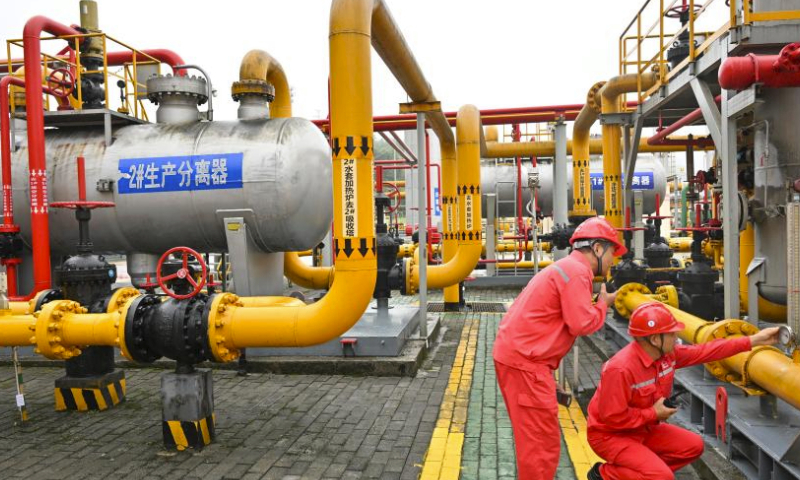
The Fuling shale gas field in Southwest China's Chongqing Municipality, has produced over 60 billion cubic meters of natural gas, according to its operator China Sinopec, Xinhua reported on Sunday, adding the attainments have helped shore up China's energy security.
The Fuling shale gas field, an important gas source in West-to-East Gas Transmission pipeline project, was first established in December 2012 and started operation in March 2014, distributing natural gas to more than 70 cities along Yangtze River Economic Belt.
The shale gas field has a proved reserve of 900 billion cubic meters. In 2022, Fuling shale gas field produced 7.2 billion cubic meters of natural gas and 6,998 tons of shale oil, according to Xinhua.
The low-carbon-emission feature of the shale gas made it as an important energy source to promote China's green transformation too.
China first discovered domestic shale gas reserves in the 90's, but lacked the necessary technology and expertise to exploit it.
After decades of technology research and development, operators like Sinopec have achieved to grasp core technologies.
Apart from breakthroughs in shale gas and oil exploration technology, the complicated geometric structure of shale gas field and the high costs on new drills represent new challenges.
The United Nations said that shale gas remains a traditional energy source that also produces carbon dioxide, but it is much less than coal and gasoline, which makes it a bridge from traditional energy to solar energy, wind power and hydropower.
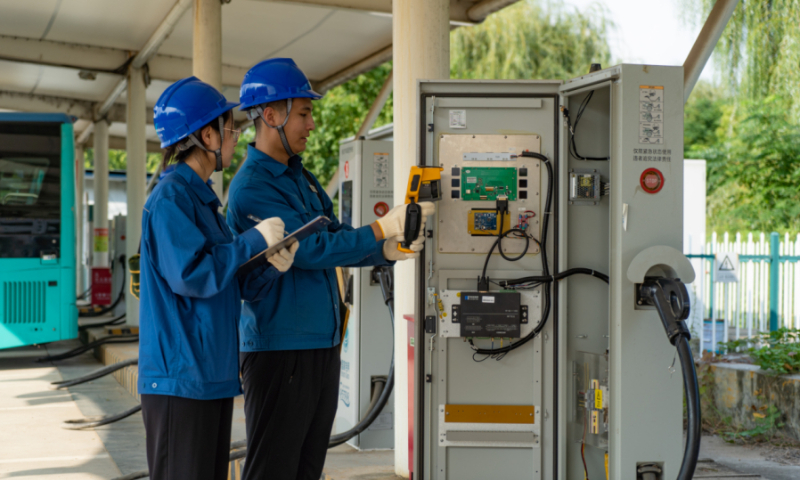
On Sep. 21st, in the hometown of Confucius, Qufu, Jining, Shandong Province, the staff workers from State Grid Jining Power Supply Company are inspecting the power operation data of the scenic spot through the smart power preservation application in front of the computer, to ensure safe and reliable power supply.
With the Mid-Autumn Festival and the National Day rapidly approaching, the 19th Nishan World Civilization Forum and 2023 China (Qufu) International Confucius Culture Festival are about to be held, and Qufu "Three holes", Nishan Holy Land and other scenic spots have an endless stream of tourists, ushering in the peak of electricity consumption. State Grid Jining Power Supply Company applies multiple means such as unmanned aerial vehicle autonomous inspection, remote camera monitoring, infrared temperature measurement, etc., to carry out inspections of power facilities, do a good job in the operation and maintenance of electric vehicle charging piles, and ensure reliable power supply in scenic spots and comfortable power consumption for tourists.
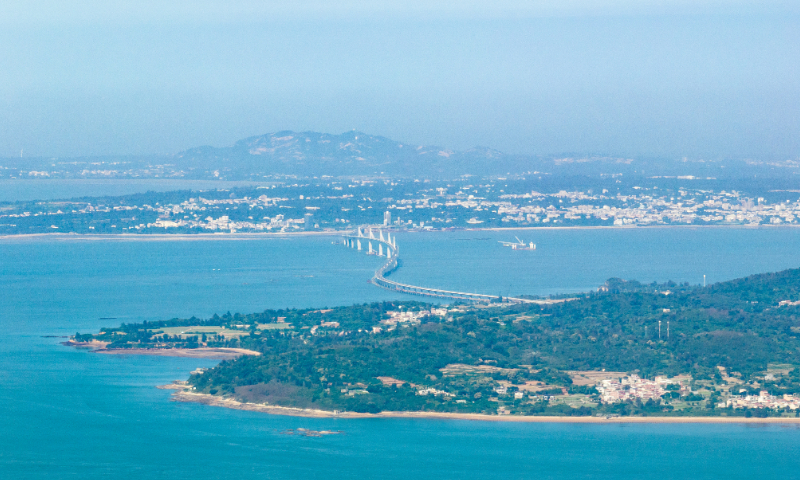
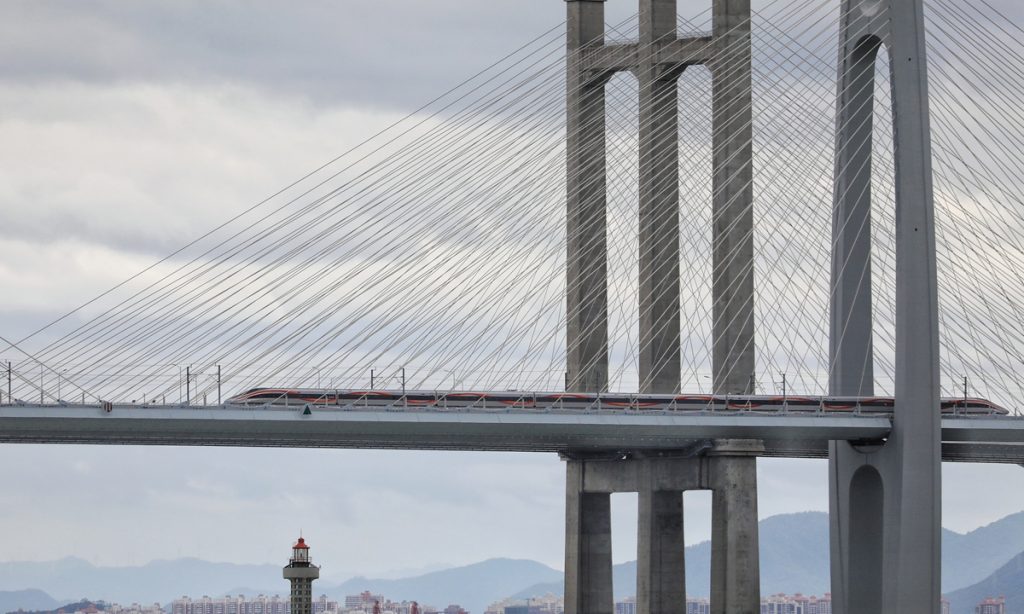
China's first sea-spanning high-speed railway capable of a top speed of 350 kilometers per hour is expected to start service in East China's Fujian Province on Thursday. The line shortens the travel time between Fuzhou and Xiamen to at most 55 minutes in a bid to enhance the connectivity between the two major cities in the province, the Xinhua News Agency reported on Wednesday.
With a total length of 277 kilometers, the railway starts from Fuzhou, passes through Putian, Quanzhou and Xiamen and ends in Zhangzhou.
The high-speed railway is yet another intelligent railway route to enter commercial service following the Beijing-Zhangjiakou high-speed railway and Beijing-Xiong'an high-speed railway, demonstrating new progress in the intelligentization of China's high-speed railway technology.
The railway was designed using the latest modeling technology based on digital information, which realized the integrated management of high-speed railway's design, construction and operation.
The BeiDou Navigation Satellite System, intelligent robots and environmentally friendly materials were adopted to facilitate the construction of cross-sea bridges. An intelligent command and dispatch system is used to ensure trains stay on schedule and operate efficiently. A big data analysts system can monitor and report all potential weather disasters, ensuring the safe operation of each train on the route.
The opening of the railway connects multiple cities along Southeast China's coast and forms a belt full of tourism sites. It will also form a high-quality traffic channel connecting Ningbo in East China's Zhejiang Province and Guangzhou in South China's Guangdong Province with other high-speed railway routes that have already been completed or are still under construction.
Wang Jianmin, a senior cross-Straits expert at Minnan Normal University in Fujian Province, told the Global Times that the opening of the Fuzhou-Xiamen high-speed railway shows China has the technological ability to build a cross-Straits railway.
"What's more, it also offers expectations for people on the both sides of the Straits that the railway will be the foundation of a cross-Straits railway in the future," said Wang.
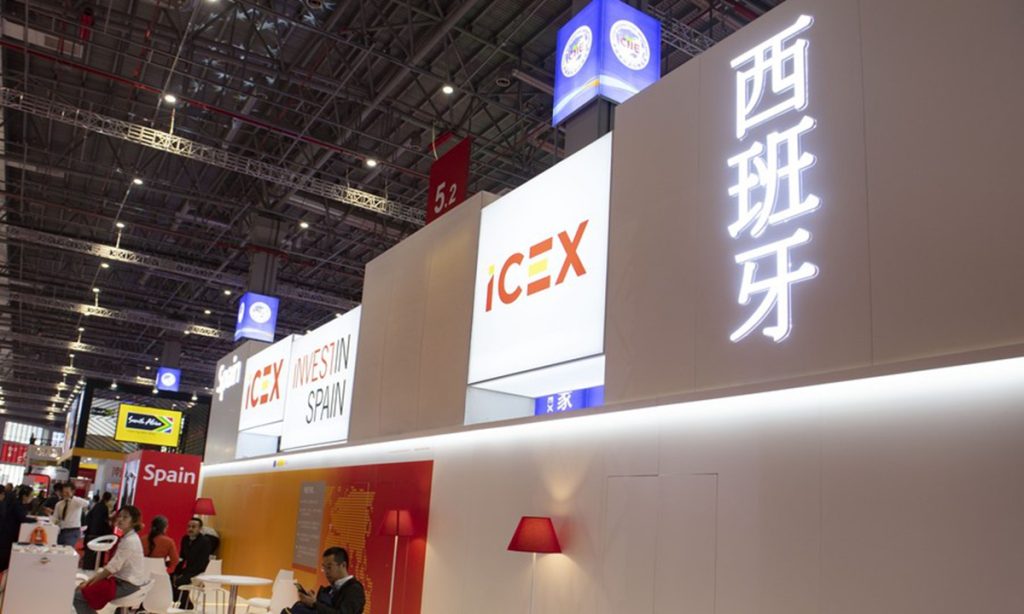
The China International Import Expo (CIIE) is a "perfect platform" for exchanging ideas within the global fashion and textile industry, a senior representative of the Spanish fashion giant Inditex told Xinhua in an interview on Thursday.
It will be the fourth time that Inditex, which owns popular brands such as Zara, Bershka, Massimo Dutti and Stradivarius, will take part in the trade fair. CIIE is aimed at economic globalization, and opening the Chinese market to the world.
"The CIIE is a perfect platform for us to keep learning and exchanging ideas with the most inspiring and also relevant industry players, stakeholders and partners," Amy Yu, Inditex's Greater China Head of Communication, told Xinhua.
"This is an international platform that welcomes both domestic and international stakeholders, so it's definitely an opportunity for us to connect both at home and abroad," Yu added.
This year will be the sixth time that the CIIE, which is hosted by China's Ministry of Commerce and the Shanghai Municipal People's Government, will be held in Shanghai's National Exhibition and Convention Center. The trade fair runs from Nov. 5 to 10.
Some 150,000 business professionals from over 100 countries and regions around the world are expected to participate, say the expo's organizers. Events at the fair include networking meetings, seminars and workshops, and new product releases.
Zara opened its first store in China's Hong Kong in 2004, followed by another in Shanghai in 2006, where Inditex's Asia regional HQ is also based. The company now operates 50 stores around China for four of its brands (Zara, Zara Home, Massimo Dutti and Oysho).
"China is not only a retail market where we operate stores and different brands, but also a talent center, and a place where we continuously get inspired," said Yu. "Our business activities started in China as early as the nineties, when we started cooperation with the local textile suppliers."
The Spanish company's involvement in China extends beyond business concerns to social engagement, Yu underlined.
The company worked with the China Youth Development Foundation and 33 schools for the benefit of more than 5,000 students in China, and with the China Environmental Protection Foundation for clothes donation and recycling projects, she said.