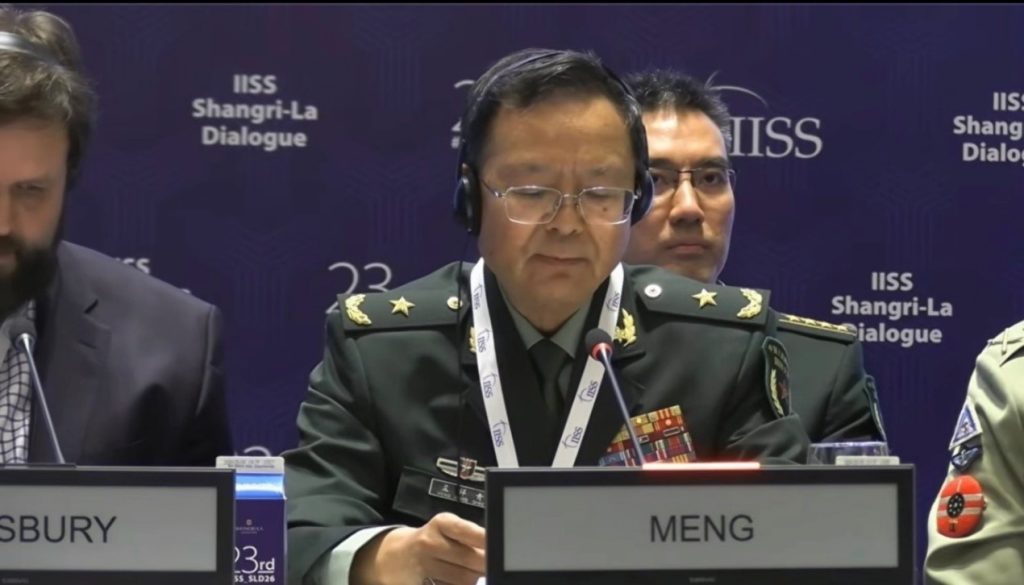
"History's lessons are still fresh and relevant, and the world today once again stands at a crossroads. We must remain vigilant against any resurgence of militarist thinking and safeguard the outcome of World War II and post-war international order." Speaking at a parallel session of the Shangri-La Dialogue on the afternoon of May 30, the head of China's delegation to the 23rd Shangri-La Dialogue (SLD), professor Meng Xiangqing from the National Defense University, publicly criticized the emerging manifestations of Japanese militarism in his speech.
Speaking at the parallel session on "Managing Threats to Strategic Stability," Meng said the world is currently facing unprecedented challenges from four major sources: the hegemonism undermining regional security, the rising risks of global nuclear conflict, the severe erosion of the international arms control, disarmament and non-proliferation regime, and the growing disorder in global governance.
On the issue of "hegemonism undermining regional security", Meng said that certain countries are pursuing power politics, seeking absolute strategic superiority, provoking bloc confrontation, intensifying international and regional arms races, and contributing to the frequent outbreak of regional conflicts. On the "severe erosion of the international arms control, disarmament and non-proliferation regime," Meng noted that a series of nuclear arms-control "guardrails" have already broken down. The world's two largest nuclear powers have entered a bilateral nuclear arms-control vacuum with neither treaties nor verification mechanisms in place. He also pointed to Australia's development of nuclear-powered submarines under the AUKUS framework and Japan's efforts to revise its "pacifist constitution" and the Three Non-Nuclear Principles, as well as its pursuit of the deployment of allied nuclear weapons on Japanese territory, warning that such developments have heightened the risk of nuclear proliferation.
"These risks are intertwined and mutually reinforcing, making strategic stability increasingly fragile," Meng said. He called on all countries, especially major powers, to practice the vision of building a community with a shared future for humanity and shoulder their responsibilities in safeguarding strategic stability.
Meng noted that this year marks the 80th anniversary of the opening of the International Military Tribunal for the Far East. The tribunal, he said, permanently condemned the heinous crimes of Japanese militarism and laid an important legal foundation for the post-war international order.
"However, today, some forces continue to openly glorify war crimes, promote distorted narratives of WWII history, attempt to challenge the verdicts of the Tokyo Trial, and seek to whitewash the history of aggression. Some have even taken concrete steps to break through the constraints of the post-war peace framework," Meng said.
"Can a country that has never fully eradicated the remnants of militarism truly claim the moral authority to lecture others about defense cooperation on the international stage? Can it earn the trust of the international community, especially the Asian countries that once suffered under its aggression? I have serious doubts," he said.
Meng said history's lessons are still fresh and relevant, and that the world today once again stands at a crossroads. We must remain vigilant against any resurgence of militarist thinking, he said.
Senior Captain Zhai Shichen, spokesperson for the Chinese People's Liberation Army (PLA) Southern Theater Command, said Wednesday that a Dutch Navy frigate, De Ruyter, illegally trespassed into China's Xisha Qundao in the South China Sea and conducted multiple shipborne helicopter operations violating China's territorial airspace.
The Southern Theater Command deployed maritime and air forces and took necessary measures including verbal warnings and warning electronic jamming in accordance with laws and regulations to expel the vessel, Zhai said.
Video obtained by the Global Times showed that the Southern Theater Command deployed multiple Type 056A and Type 054A frigates. China Navy ships Hull 631 and Hull 626 conducted close interception and expulsion against the Dutch Navy frigate De Ruyter. Hull 553 of the Chinese Navy issued verbal warnings in English to the Dutch NH-90 helicopter.
In addition, fighter jets armed with PL-10 air-to-air missiles were also dispatched by the Southern Theater Command to take part in the expulsion operation.
A spokesperson for the Chinese Ministry of National Defense (MND), also said on Thursday that a shipborne helicopter from the Dutch Navy frigate De Ruyter illegally intruded into the airspace over China's Xisha Qundao, seriously violating China's sovereignty and undermining China's security interests, and the Chinese military organized maritime and aerial forces to take effective measures to dispel the helicopter out of the area and has lodged solemn representations with the Dutch side.
"The Xisha Qundao is China's inherent territory. The Chinese military remains on high alert and resolutely defends national territorial sovereignty and maritime rights and interests. We urge the Dutch side to stop its infringements, risky and provocative acts, and strictly restrain frontline sea and air forces to avoid any unexpected incidents at sea or in the air," said Jiang Bin, spokesperson for the Chinese Ministry of National Defense.
Seventeen people have gone missing and one person has died as intense short-term rainfall hit Yongchuan District in Southwest China’s Chongqing Municipality from 11 pm Saturday to 8:20 am Sunday. Rescue and emergency response efforts are currently underway in full force, China Central Television reported on Sunday.
The report said rainfall in ChashanZhuhai subdistrict in Yongchuan reached 296.6 millimeters between 2 am and 4 am on Sunday, with the maximum hourly rainfall reaching 103.6 millimeters.
Meteorological authorities revealed parts of central and western Chongqing saw torrential to extremely heavy rainfall, with precipitation in Guankouwan and Hanjiagou villages in Yongchuan reaching 296.7 mm and 256.9 mm respectively. With this round of rain coming shortly after previous downpours, authorities warned of heightened risks of landslides, collapses and mudslides, Chongqing activated a Level-III geological disaster emergency response for Yongchuan at 7 am on Sunday, per Xinhua News Agency.
Chongqing has recently experienced continuous rainfall. At 5 am on Sunday, Chongqing issued an orange rainstorm alert, warning that from 5 am to 11 am, some townships in 25 districts and counties face meteorological risks of flash floods in small river basins, with very high risks in Banan, Nanchuan, Fuling, Fengdu and Wulong, according to local meteorological observatory.
Authorities also warned of rising water levels in medium and small rivers across parts of 31 districts and counties, with Beibei, Liangjiang New Area, Hechuan, Tongliang, Dazu, Rongchang and Yongchuan facing particularly high risks.
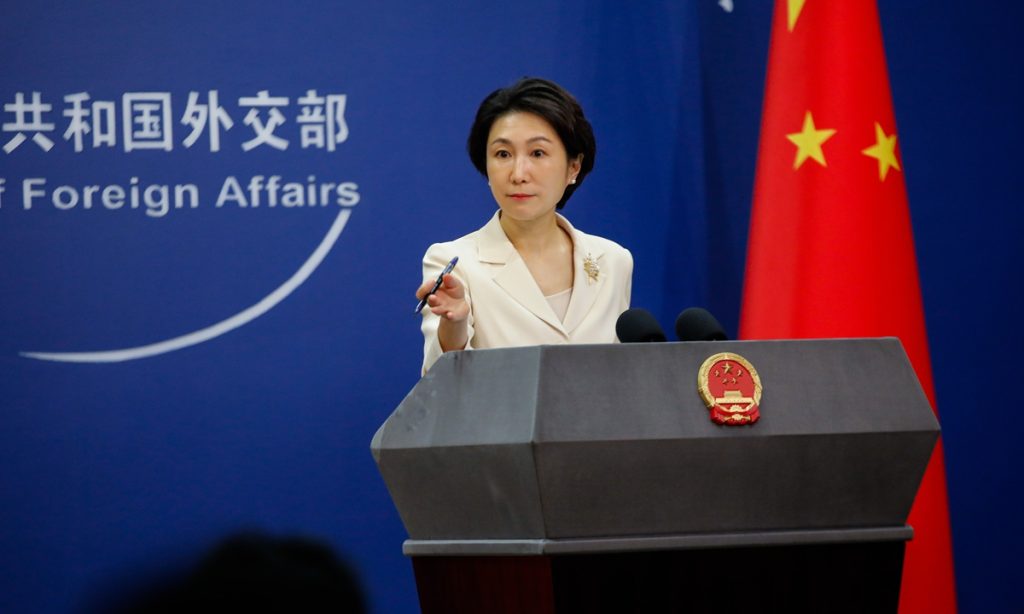
The cross-border friendship between a US donor and Chinese tree planters is a vivid example of people-to-people exchanges between China and the US, Chinese Foreign Ministry spokesperson Mao Ning said on Monday.
Mao noted that more than 20 years ago, a US teacher named Sakolsky, who was teaching in China, raised $5,000 to help Yin Yuzhen, a national model for desert reclamation in China, and her husband combat desertification and plant trees. Today, that generous donation has grown into more than 50,000 trees.
Yin recently turned to the internet to search for Sakolsky. After a long separation, the two reunited online, winning widespread praise from netizens for this cross-border friendship.
It is believed that the two peoples will continue to write more stories of friendship and constantly inject fresh vitality into China-US relations, Mao added.
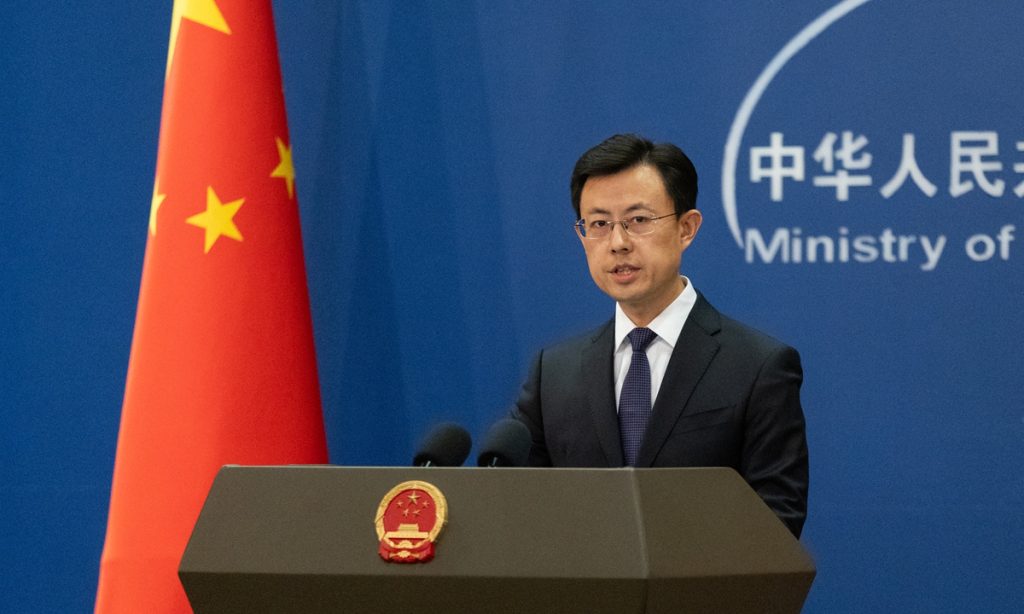
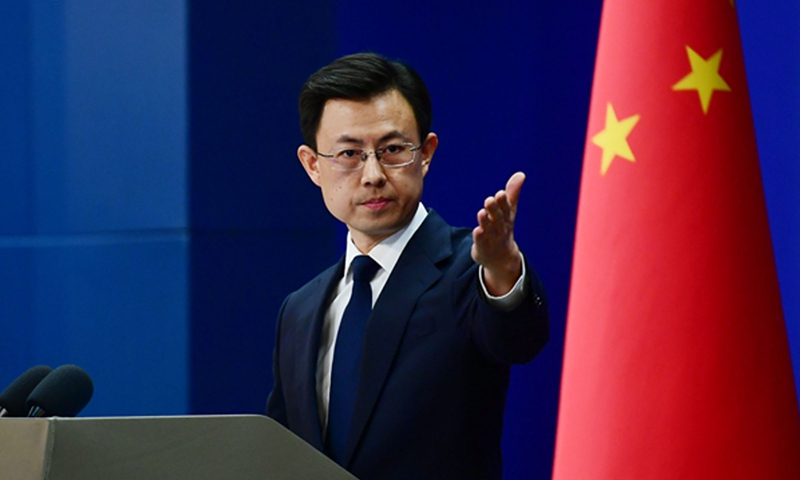
When asked to comment on reports that the US is planning to deploy the Typhon mid-range missile system at Kanoya Air Base in Kagoshima Prefecture, Japan, from June to September for joint military drills, and relocate the system to US military bases in Japan after the exercises, Chinese Foreign Ministry spokesperson Guo Jiakun said on Friday that China has noted the relevant reports and firmly opposes the deployment of mid-range missile systems by the US in Asian countries and had repeatedly voiced concerns over the issue.
Guo said the Typhon missile system is a strategically offensive weapon. It undermines the legitimate security interests of other nations, endangers regional strategic security, and heightens the risks of military confrontation and arms races, bringing nothing but harm to regional peace and stability. People across many Asian countries, including Japan, have long voiced persistent opposition.
China urges the US and Japan to heed calls from regional countries, rectify erroneous moves, and take concrete actions to safeguard regional peace and stability, Guo told a regular press conference.
The spokesperson added that this move serves as further evidence of Japan's accelerating remilitarization. Multiple signs indicate that right-wing forces in Japan are seeking an overall overhaul of military capabilities to prepare for "protracted warfare." Such acts essentially hollow out constraints set by Japan's constitution, international law and domestic legislation, and challenge the post-war international order, running counter to Japan's self-proclaimed identity as a peace-loving nation.
The rising "neo-militarism" in Japan poses grave hazards and risks triggering regional turmoil once again. The international community must draw lessons from history, stay highly vigilant and jointly curb such tendencies, Guo said.
"No mountain or ocean can distance people who have shared aspirations." This powerful message underscores the force of friendship and cooperation in bridging hearts across nations, cultures and civilizations.
People from diverse backgrounds and fields, united by common goals and dreams, traverse mountains and oceans to connect with each other. Through letters, face-to-face dialogues and vibrant cultural events, they are collectively weaving a magnificent tapestry of building a community with a shared future for humanity.
The Global Times presents "Intertwined Destinies, Shared Paths," a series spotlighting the touching stories written by these "friendship ambassadors." They are scholars pushing the boundaries of research, diplomats advocating for deeper cooperation on the global stage, artists igniting imaginations with their creations and ordinary people extending heartfelt love beyond national borders driven by their genuine sincerity.
Their stories illuminate the spark of cultural exchanges, the driving force of technological innovation, the bountiful harvest of economic cooperation and the enduring warmth of human connection - all contributing to a more peaceful, prosperous and open world. This is the 14th installment of the series.
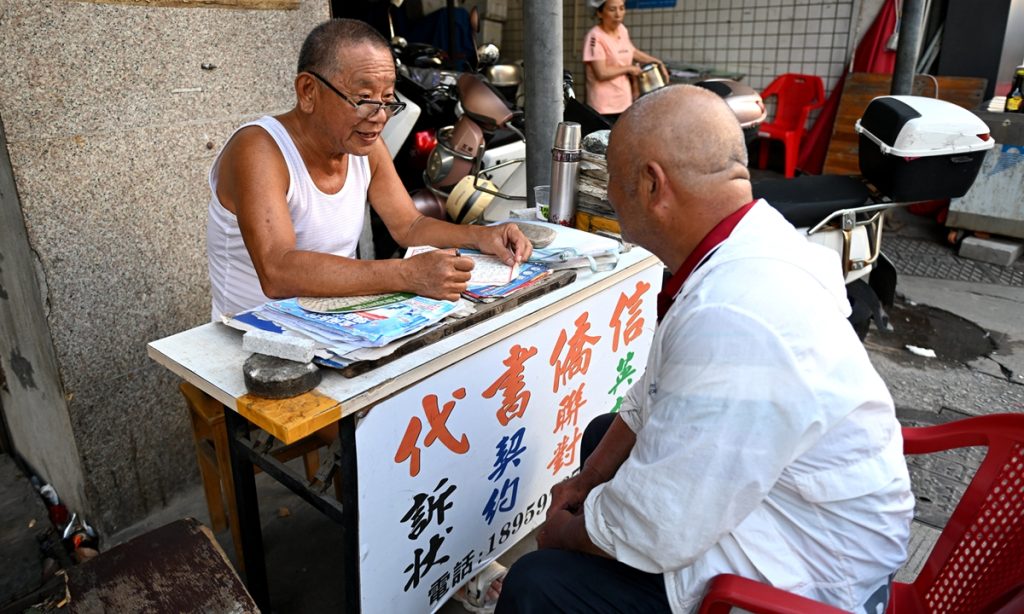
For nearly six decades, 77-year-old Jiang Mingdian has written hundreds of thousands of qiaopi - a unique form of personal mail - for local men in his hometown to send to their loved ones around the world.
Despite his words having traveled far and wide, Jiang had never once left Quanzhou in East China's Fujian Province - until last Sunday, when he was invited to Beijing for a special screening of the hit film Dear You.
Jiang was invited in his capacity as a veteran qiaopi scribe. The heartwarming film Dear You explores cross-border family ties between the Chaoshan region in South China's Guangdong Province - a region where generations of people in the past often left to seek work overseas - and Thailand, using authentic qiaopi as its central narrative thread.
Made with a modest budget of merely 14 million yuan ($2 million) and mainly spoken in local Chaoshan dialect, the low-budget production has turned into a phenomenal cultural hit, grossing over 600 million yuan at the domestic box office as of press time, according to Chinese ticketing platform Maoyan. Its sweeping popularity among audiences at home and abroad has finally brought qiaopi into mainstream public view.
These unique qiaopi - which usually combine a personal letter with a remittance sent home - have emerged as invaluable historical records, embodying the profound love and longing that generations of overseas Chinese felt for their families and homeland.
For Jiang, his life has spanned the evolution of this tradition. In the past, qiaopi served as vital lifelines for survival, carrying both emotional messages and essential financial support. Today, this heritage is preserved in the qiaopi archives, which were inscribed on UNESCO's Memory of the World Register.
Boosted by the hit movie, cultural and creative products and the youth craze for ancestral root-seeking, these century-old memories have been revived, gaining new vitality through inheritance and innovation.
Letters full of devotion
The 10-hour high-speed rail trip from Fujian to Beijing was a breeze for Jiang, as his daily routine has long trained him to sit for hours on end.
During the interview with the Global Times, he talked about his work routine. He opens his street stall at 9 am and stays until dusk, always ready to help whenever clients reach out. His humble workspace features only an old yellowed wooden table on a Quanzhou street. Armed with just a fountain pen and a few tattered Chinese-English dictionaries, he has stayed devoted to this craft for decades.
Right after the film screening ended, he hurried to head back home. Eager to embark on another 10-hour high-speed rail journey, he worried his regular clients would not be able to reach him for letter-writing services.
This sense of duty took root in the mid-20th century, when nearly every household in Quanzhou had relatives that had emigrated abroad. These overseas Chinese sent home their hard-earned savings along with endless concerns via remittance letters. Since most local residents were illiterate back then, professional writers like him helped locals read incoming letters and write replies.
Among the hundreds of thousands of letters Jiang has handled, some stories haunt him. He remembers a woman from the county-level city Jinjiang surnamed Cai, whose husband had moved to the Philippines. Every month, she came to Jiang to write a letter pleading for her husband's return. Unbeknownst to her, her husband had long since died in a shipwreck. To protect her, her son began writing back in his father's name, sending small remittances to keep her hope alive.
Many such poignant stories are kept in old qiaopi archives. At the Qiaopi Museum in Shantou, Guangdong, a historic letter stands out with a huge Chinese character meaning "hardship" taking up most of the page. While it lays bare the day-to-day struggles of overseas emigrants, every line of the letters also shows their unshakable resolve to support their families through all hardships.
Wang Yujiao, a Southeast Asia-based qiaopi researcher, has found more touching facts through historical studies and field interviews. Many overseas Chinese laborers did not get paid on time, yet they still needed to support their families. Local qiaopi agencies would offer advance funds to help them send money home. Even in hardship, overseas Chinese never abandoned their families, and local agencies always lent a helping hand.
Apart from family affection, archived qiaopi records also bear witness to the profound patriotism the overseas Chinese felt for their motherland. For instance, as reported by the People's Daily Overseas Edition, in 1939 amid Chinese People's War of Resistance Against Japanese Aggression, overseas Chinese Tan Yixi in Havana, Cuba raised 165 Hong Kong dollars to support the homeland, writing that all Chinese descendants ought to fulfill their civic duties for the motherland. Another letter tells of a father sending his son to the US to study aviation, believing aircraft technology was vital to defeating foreign invaders.
Wang also shared an impressive interview experience during her research. "A descendant of a historic qiaopi agency told me that running this type of business barely brought in a profit with only slim service fees charged. Even running at a loss, his father kept the agency going and covered the deficits with income from other businesses. For them, running a qiaopi agency was more about bonding fellow townsfolk and shouldering social responsibilities," she told the Global Times.
This same sense of responsibility has kept Jiang sticking to his post all these years.
Official data shown in the film Dear You indicates that before qiaopi agencies faded away in the 1980s, more than 30 million qiaopi letters had been received nationwide. Between 1864 and 1980, overseas Chinese remittances topped over $10.8 billion.
"During the war, overseas Chinese donated money via qiaopi to buy warplanes, medicine, grain and other supplies to back the domestic resistance cause," Jiang said. "In later peaceful years, billions of annual overseas remittances were used to build local bridges, roads and schools, fueling hometown development," he added.
Heritage lives on
With the advance of communication technologies, fewer people sought Jiang's qiaopi writing services, yet he has never been idle.
"Client numbers dropped in the 1980s and 1990s, but I grew busier," he recalled. In the early days of China's reform and opening-up, many Quanzhou locals headed overseas to reunite with family members. Jiang then turned to helping them translate immigration paperwork.
Now his stall draws new groups of visitors. Some ask him to pen letters informing overseas kin of China's fast development and thriving life back home. Others, overseas Chinese returning for family visits, entrust him to organize historical records that chronicle how their forebears supported the motherland, aiming to tell more people about this period of history.
In April 2025, Jiang set up an account on social media platform Xiaohongshu (RedNote) to share his decades of experiences writing qiaopi. Thanks to online influence, he reconnected with many old acquaintances in rural Quanzhou. Though years have altered their looks, Jiang still vividly remembers their family backgrounds and former overseas addresses.
The rising public attention on qiaopi also inspires Wang. Fueled by the hit film Dear You, her book Money and Bloodlines: The Rise and Transformation of Thailand's Remittance Empire, 1850s-1990s (Chinese version) has nearly sold out in Thailand and Singapore, with reprints scheduled and a Chinese mainland release due this summer. Netizens in Malaysia and the Philippines have also left messages on her social media platforms, expecting such research works to reach their countries as well.
Her live streams also attract huge audiences, as they are more curious about specific historical details than grand historical narratives. They often ask how people sent money from Southeast Asia to China without modern banks and internet, how remittance services kept running during wars and how ordinary people built such solid cross-border trust.
"People are deeply touched not only by the homesickness and warmth in these letters, but also by how ordinary people built cross-border connections in old times," she told the Global Times. Having long resided in Southeast Asia, Wang views qiaopi far beyond mere historical relics. "People built connections via qiaopi, ports and trading firms over a century ago, while modern financial systems, logistics and industrial networks sustain such ties today. This historical continuity is truly touching."
Listed on the UNESCO Memory of the World Register in 2013, these cross-ocean memories have become shared cultural treasures of humanity, and their touching stories are still being passed down and enriched day by day.
Preserve in innovative ways
Jiang's modest stall has evolved alongside the qiaopi tradition itself.
Today, young people travel across China to find him. They no longer come just for traditional remittance letters; they come to entrust him with their innermost thoughts. Some ask him to draft love letters or messages to their future selves; others share the pressures of modern life. For many, writing a qiaopi has become a way to process grief or celebrate heritage. Jiang's small table has become a window into history, keeping a centuries-old craft alive in the digital age.
In his spare time, Jiang volunteers as a docent at the Wulin Qiaopi Museum, where he demonstrates the art of letter writing for visitors. This spirit of revival is echoing across the country through the "Write Home Again" campaign. In nearby Fuzhou and Xiamen, local illustrator Zou Yuansheng has joined forces with Tanto, a fourth-generation Chinese Indonesian from Bandung, to launch immersive qiaopi -themed exhibitions and workshops.
Raised in an overseas Chinese household, Zou witnessed the final years of the qiaopi era. In an interview with the Global Times, he said he hoped to present these historical stories in an approachable way. He later met Tanto who has long sought his ancestral roots. qiaopi serves as his key connection to his family history, and the two eventually partnered to revive this precious cultural legacy. Zou and his team revitalize qiaopi with comics and lanterns: Cute cat comics depict overseas Chinese migrating south, sending money home and longing for their homeland; lanterns feature clan origins, hometown sites and family messages - a vital Minnan cultural symbol, each lantern a visible letter. At events, he acts as a traditional letter writer, teaching classic formats and recreating qiaopi scenes.
"For young people today, writing qiaopi is a romantic ritual, a tribute to ancestors and a way to inherit Chinese culture," Zou said.
What left a deep impression on Zou was a young girl from Central China's Henan Province who came to Fujian for the event. "I guided her to write a letter to her late grandfather. I turned her words into a classical-style family letter, and when I read it to her, she burst into tears… She said she never knew writing a letter could feel so meaningful, and that longing could be expressed with such solemnity."
In March, Zou created a special lantern for Tanto, inscribing a modern qiaopi to his grandmother on it. It reads: "Your grandson has returned to our ancestral home in Fujian, started a family and built a career. I have inherited the flavors of our Indonesian-Chinese heritage and opened a restaurant in our hometown. I invite guests to enjoy the delicacies of Southeast Asia together, using food as a bridge to foster cultural exchanges between China and Indonesia."
This timeless spirit of qiaopi can also be fully seen in the letters Jiang writes for young people today. Letters now carry wishes for the future and love for the nation, not just longing for distant kin. Times change, but some things stay the same: his letters to young people always encourage self-reliance and devotion to the country, just like the hopes and love for the motherland held by the self-reliant overseas Chinese decades ago.
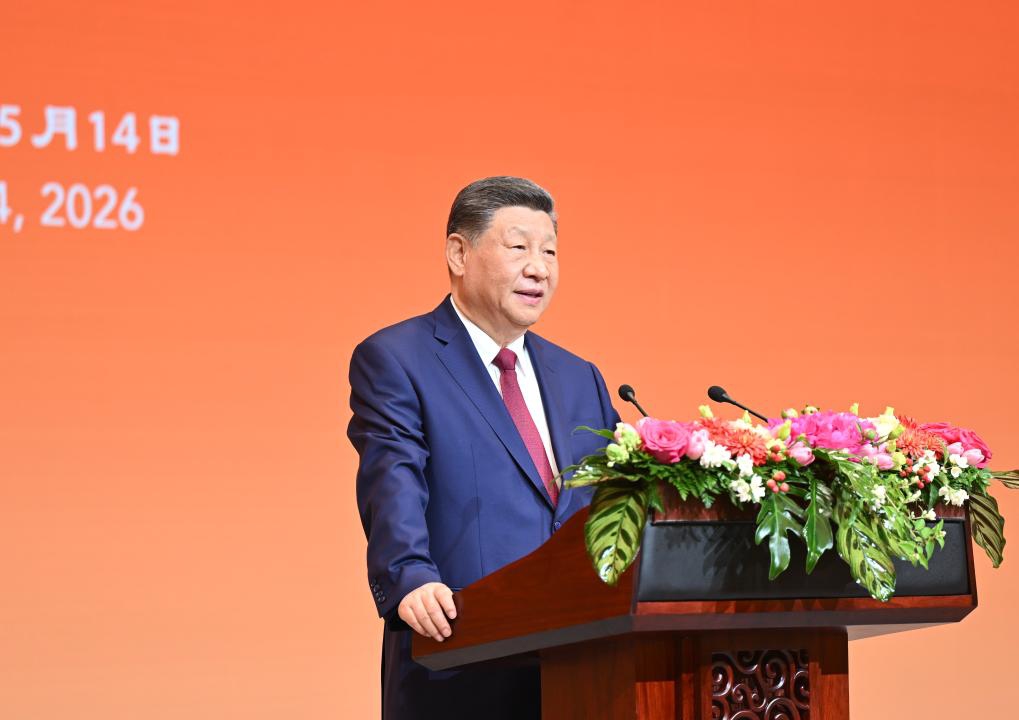
Chinese President Xi Jinping on Thursday held a banquet at the Great Hall of the People in Beijing to welcome U.S. President Donald Trump on his state visit to China.
Addressing the banquet, Xi said the China-U.S. relationship is the most important bilateral relationship in the current world.
"We must make it work, and never mess it up," Xi said, adding that both China and the United States stand to gain from cooperation and lose from confrontation.
"Our two countries should be partners rather than rivals," he added.
Xi also said that the two sides agreed to build a constructive China-U.S. relationship of strategic stability to promote the steady, sound, and sustainable development of China-U.S. relations, and bring more peace, prosperity and progress to the world.
"Looking back at the course of China-U.S. relations, whether or not we could have mutual respect, peaceful coexistence, and win-win cooperation is the key to whether the relationship can advance steadily," Xi said.
Noting that China-U.S. relations concern the well-being of the over 1.7 billion people of both countries and affect the interests of the over 8 billion people of the world, Xi said both sides should rise up to this historical responsibility and steer the giant ship of China-U.S. relations forward steadily and in the right direction.
In his remarks at the banquet, Trump said the two sides had positive and constructive conversations.
Noting that the U.S.-China relationship is the most consequential bilateral relationship in the world, Trump said the two countries should strengthen cooperation to create a better future for the world.
China on Friday successfully sent PowerChina-1, the country's first dedicated satellite for energy engineering, into its predetermined orbit with a Lijian-1 Y13 carrier rocket at the Dongfeng commercial space innovation pilot zone in northwest China, the Global Times learned from the developer on Friday.
As China's first dedicated X-band Synthetic Aperture Radar (SAR) satellite for the energy infrastructure sector, the successful launch fills the gap in dedicated space-based monitoring satellites for the energy sector, building an independently controllable "space security guardian" for major national energy projects, according to a statement the developer, the PowerChina Chengdu Engineering Corporation, sent to the Global Times.
According to the statement, PowerChina-1 was developed over two years under the lead of the PowerChina Chengdu Engineering Corporation, in collaboration with China University of Geosciences (Wuhan) and Chinese commercial satellite developer Spacety Co. Ltd. The satellite weighs approximately 300 kilograms.
Equipped with an advanced planar phased array radar system, it achieves a spotlight imaging resolution better than 0.5 meters and a scanning width of up to 200 kilometers, boasting powerful all-weather, all-time observation capabilities that can penetrate clouds and rain. Unlike traditional optical satellites, it operates in a 500-kilometer low-Earth orbit relying on low-orbit X-band interferometric radar technology and repeat-track interferometry.
Adopting time-series InSAR technology with atmospheric correction, it can precisely capture millimeter-level subtle deformations of the ground surface and large structures, accurately identifying tiny displacement changes as small as the diameter of a human hair, per the statement.
For a long time, major infrastructure projects such as hydropower stations, highways and railways in remote mountain valleys of western China have been plagued by insufficient ground monitoring coverage, poor continuity and high operation and maintenance costs. Traditional optical satellites are vulnerable to cloud and rain interference, and core monitoring data once relied heavily on foreign sources for a long time. In contrast, PowerChina-1 acts like an orbital CT scanner for engineering projects, effectively solving long-standing monitoring bottlenecks in the industry. Zhang Shishu, Chief Scientist of the PowerChina-1 satellite, chief technical expert at PowerChina and Chairman of the PowerChina Chengdu Engineering Co, introduced that after entering orbit smoothly, the satellite will fully support the full-life-cycle safety guarantee of major national infrastructure including hydropower, water conservancy, transportation and new energy. It can identify potential geological hazards such as landslides, rock collapses and ground subsidence on a large scale with high precision, helping shift disaster prevention and mitigation from passive emergency response to active early warning.
Meanwhile, it conducts non-contact planar continuous deformation monitoring on key structures including dams, bridges, tunnels and high slopes, providing high-precision data support for engineering health diagnosis and predictive maintenance. By accumulating spatio-temporal deformation big data through long-term continuous observation, it also facilitates engineering design optimization and long-term operation and maintenance, and boosts the construction of an integrated intelligent perception system covering space, low altitude, ground, underground and underwater, Zhang said.
The complete success of the launch marks that PowerChina has built a full industrial chain covering satellite development to data application, realizing full independent controllability of core technologies and data resources.
The Global Times learned that PowerChina-2, a low-orbit microwave link rainfall measurement satellite, has entered the development phase. In the future, PowerChina-1 will form a constellation with PowerChina-2 and other follow-up satellites, gradually establishing a spatial information support system covering the entire life cycle of energy engineering survey, design, construction and operation. This will achieve a major strategic shift from reliance on foreign data to self-developed dedicated satellite constellations, according to the statement.
In response to a media inquiry over relevant remarks made by US President Donald Trump ahead of his visit to China, Chinese Foreign Ministry spokesperson Guo Jiakun stated on Wednesday that heads-of-state diplomacy plays an irreplaceable role in providing strategic guidance for China-US relations, and that China welcomes President Trump for a state visit to China.
During the visit, the two heads of state will engage in in-depth exchanges of views on major issues concerning China-US relations as well as world peace and development. China stands ready to work with the US to expand cooperation and manage differences in the spirit of equality, respect and mutual benefit, and provide more stability and certainty for a transforming and volatile world, the spokesperson said.
The Chinese Embassy in Serbia on Thursday held a commemorative event marking the 27th anniversary of NATO's bombing of the Chinese Embassy in the Federal Republic of Yugoslavia, with Chinese and Serbian officials deeply mourning the three Chinese martyrs and pledging to carry forward the two countries' ironclad friendship while jointly safeguarding peace, justice and the UN-centered international order.
Chinese Ambassador Li Ming, Serbian Minister of Labor, Employment, Veterans' and Social Affairs Milica Djurdjevic Stamenkovski, Deputy Mayor of Belgrade Vesna Vidović, representatives from Serbia's Ministry of Foreign Affairs, journalists' associations, veterans' associations and other sectors, all staff members of the Chinese Embassy in Serbia, as well as representatives of Chinese media outlets, Chinese-funded institutions, Chinese students and teachers, and overseas Chinese in Serbia attended the event.
Ambassador Li said that NATO's atrocity 27 years ago seriously violated China's sovereignty and grossly trampled on international law and the basic norms governing international relations. Today, 27 years later, hegemonism and power politics are still eroding the foundation of the international order and threatening world peace.
Remembering history is aimed at better defending peace and safeguarding justice. China is willing to work with Serbia to carry forward friendship, strengthen mutual trust, firmly uphold the UN-centered international system, and take concrete actions to build a community with a shared future for mankind, said Li.
Minister Stamenkovski said that 27 years ago, NATO launched a barbaric aggression against the Federal Republic of Yugoslavia, seriously violating the UN Charter and international law. The peoples of Serbia and China firmly defended their national dignity, and forged an ironclad friendship that proves true in adversity with blood and lives, Stamenkovski said.
Today, Serbia has risen from the ashes and is moving toward prosperity, becoming China's most sincere partner in Europe. Serbia is willing to continue deepening its traditional friendship with China and work together for the noble cause of peace and development, Stamenkovski said.