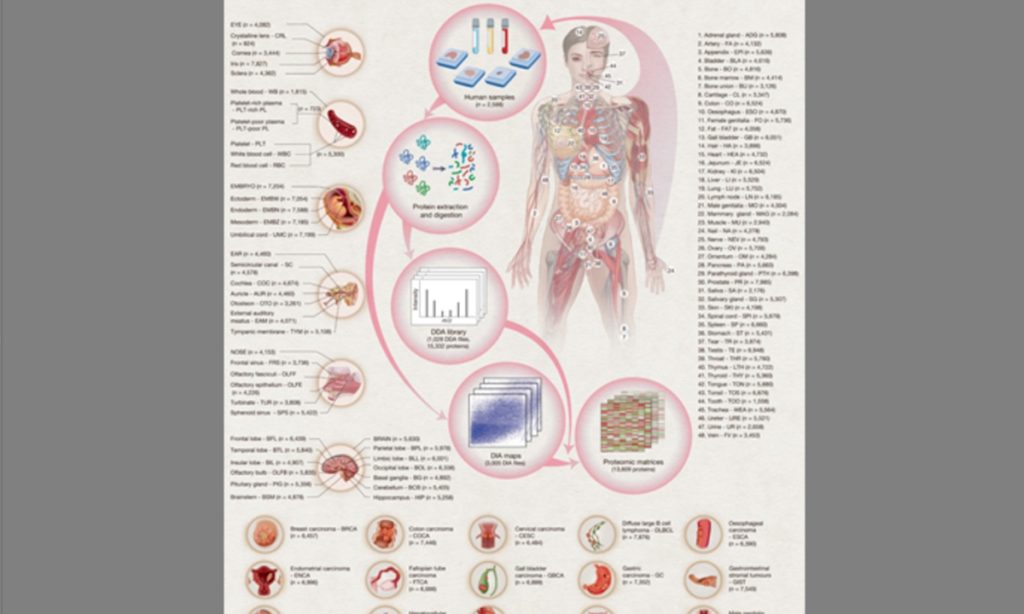
Chinese researchers have drawn the highest-resolution and most comprehensive "spatial map" of the human proteome to date, a breakthrough that could accelerate drug discovery and advance precision medicine, the Science and Technology Daily reported on Sunday.
The study, led by Professor Guo Tiannan of Westlake University's School of Medicine in collaboration with multiple research institutions, analyzed nearly 3,000 human tissue samples covering 58 normal tissue types and 25 types of cancer. The team conducted quantitative analyses of more than 13,000 proteins to build what researchers described as the most detailed spatial atlas of the human proteome so far.
The findings were recently published in the journal Nature, and all data from the study have been made publicly available through an open-access database for researchers worldwide.
To enable the large-scale project, Guo's team developed a proteomics analysis platform capable of processing extremely small tissue samples. Using the new method, researchers can perform standardized proteomic analyses with tissue samples as small as a sesame seed.
According to the university, the approach increases analytical speed by about tenfold while significantly reducing experimental costs, laying the technical foundation for large-scale, high-throughput proteomics research.
After years of sample collection and experimental work, the team established a database containing 15,332 proteins and conducted precise quantitative analyses of 13,609 of them, ultimately generating a high-resolution map of the human proteome.
Guo said the findings could help transform drug development from a process of "exploring a black box" into one guided by a detailed map.
By analyzing the spatial proteome atlas, researchers can identify potential drug targets more accurately, making drug development more precise and efficient, he said. The map could also help scientists uncover new therapeutic targets for existing medicines, opening new possibilities for drug repurposing.
A sustained heatwave has afflicted several European countries, including France, Italy, and Germany, in recent weeks, subjecting local Chinese nationals to scorching conditions and prompting some of them to share cooling tips on Chinese social media platform Xiaohongshu.
France's average temperature broke a record for the month of June, as the country closed over 1,350 schools due to the extreme heat, France 24 reported on Tuesday. The country for the first time issued its highest heat warning across half the country for Monday, with forecasters warning the extreme weather episode could end up being as serious as a 2003 heatwave that claimed the lives of nearly 15,000 people nationwide, according to the report.
At least 18 people died in France, including two children left in a hot car, as a heatwave hung over Europe, smashing temperature records in several cities on Monday, Reuters reported. Some 13 people drowned across the country at the weekend, a civil defense official said, urging against unsupervised swimming to cool off, per France 24.
Given the recent sweltering heatwave sweeping France, Chinese diplomatic missions in the country have issued an advisory for Chinese tourists traveling to France to take heatstroke prevention measures and reduce outdoor activities during peak temperature hours, the Chinese Embassy in France said in a notice posted on its official WeChat account.
The diplomatic missions also advise travelers to stay hydrated, keep heat-stroke medication, and dial the relevant French authorities for assistance should any physical discomfort arise.
Liya Pan, a Chinese national who has been residing in Marseille, France, for nearly seven years, recalled that extreme heat previously lasted merely around one week each year, a spell she could easily endure by leaving her windows open overnight. Now, however, she has been scrolling through shopping apps for a suitable air conditioner to purchase.
"It has been unbearably hot since as early as June this year, with temperatures above 40 C for almost an entire week," Liya told the Global Times on Tuesday. "Every day when I do my skincare routine, I can feel my face burning hot."
Liya said that local authorities have ordered temporary school closures and opened some public swimming pools to offer residents a respite from the swelter. Nevertheless, she added that, as far as she knows, many companies have yet to issue work-from-home notices, and the majority of French offices are not equipped with air conditioning either.
On Chinese social media platform Xiaohongshu, also known as Rednote, some Chinese netizens based in France have been sharing their tips for coping with the sweltering heat. Some place frozen water bottles in front of electric fans to create cooler airflow; others share air-conditioned public venues in Paris where people can seek shelter from the scorching weather, while many more post firsthand experiences on purchasing air-conditioners.
In addition to France, numerous countries are also grappling with relentless heatwaves. A new study published Monday in the journal Nature Climate Change found that Mexico, Kenya, Italy and other nations around the world are experiencing one to two more months of heat stress than they were several decades ago.
Liao Jiaxin, who is set to embark on a trip to Rome in mid-July, has closely followed news of the unrelenting heatwave. She told the Global Times that she has stocked up on sunscreen, portable fans and cooling balm to help prevent heatstroke.
Temperatures in Belgium are expected to be "the hottest ever recorded" in the coming week, France's Le Monde quoted David Dehenauw, head of forecasting at the IRM meteorological institute, as saying. Liz Bentley, the chief executive of Britain's Royal Meteorological Society, predicted that existing UK heat records for June would be "annihilated," as had already happened in May, per the report.
The New York Times reported that the heat wave is being driven by a strong area of high pressure parked over continental Europe. This phenomenon is often referred to as a "heat dome,"which is a large, persistent area of high pressure high up in the atmosphere that allows heat to build over a region for several days or longer.
The year 2026 marks the start of the 15th Five-Year Plan period (2026-30). The outline of the 15th Five-Year Plan dedicates a chapter to "accelerating the green transition across the board and building a Beautiful China."
From the guiding philosophy that "lucid waters and lush mountains are invaluable assets," to the strategic guidance of China's "dual carbon" goals, and further to the systematic arrangements for comprehensive green transition, China has, under the guidance of Xi Jinping Thought on Ecological Civilization, accelerated its green and low-carbon transition and continued to improve the quality of its ecological environment.
The book series Xi Jinping: The Governance of China includes a number of President Xi's important ideas on ecological conservation. These ideas profoundly reflect the inheritance, enrichment and development of the theoretical framework for ecological civilization construction, as well as the continuity, elevation and focus of its goals and tasks.
Volume V of the book series includes "The Beautiful China Initiative" as a dedicated topic, systematically expounding the thinking and arrangements for building a Beautiful China.
In the 25th installment of the special series "Decoding the Book Xi Jinping: The Governance of China," the Global Times, along with the People's Daily Overseas Edition, continues to invite Chinese and foreign scholars, translators of Xi's works, practitioners with firsthand experience, and international readers to focus on the theme of "accelerating the green transition across the board and building a Beautiful China." Together, they explore the vivid practices through which China, under the guidance of Xi Jinping Thought on Ecological Civilization, applies the concept of green development throughout the process of economic and social development, and discuss its major practical significance and contemporary value.
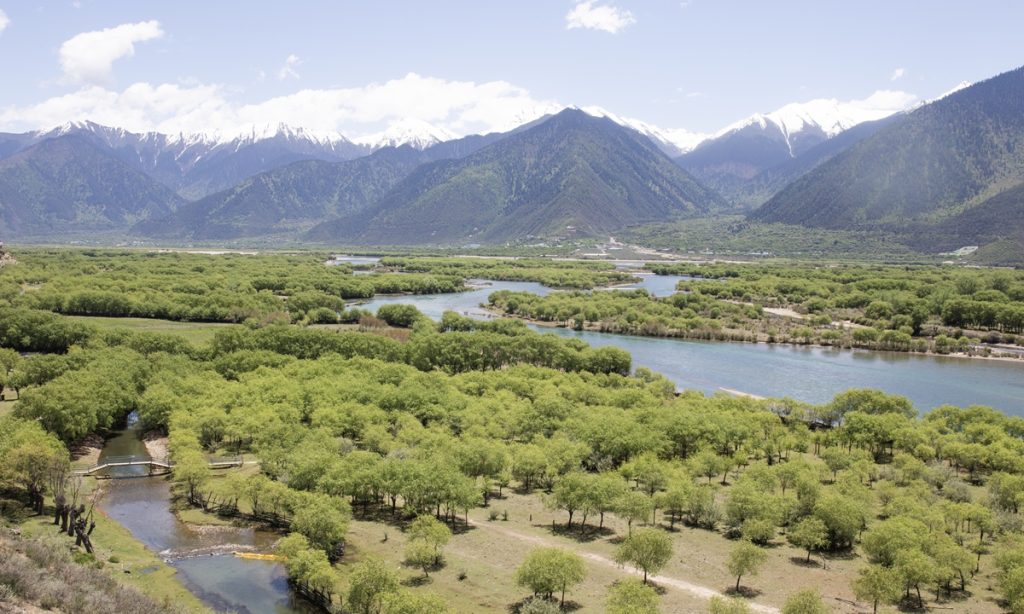
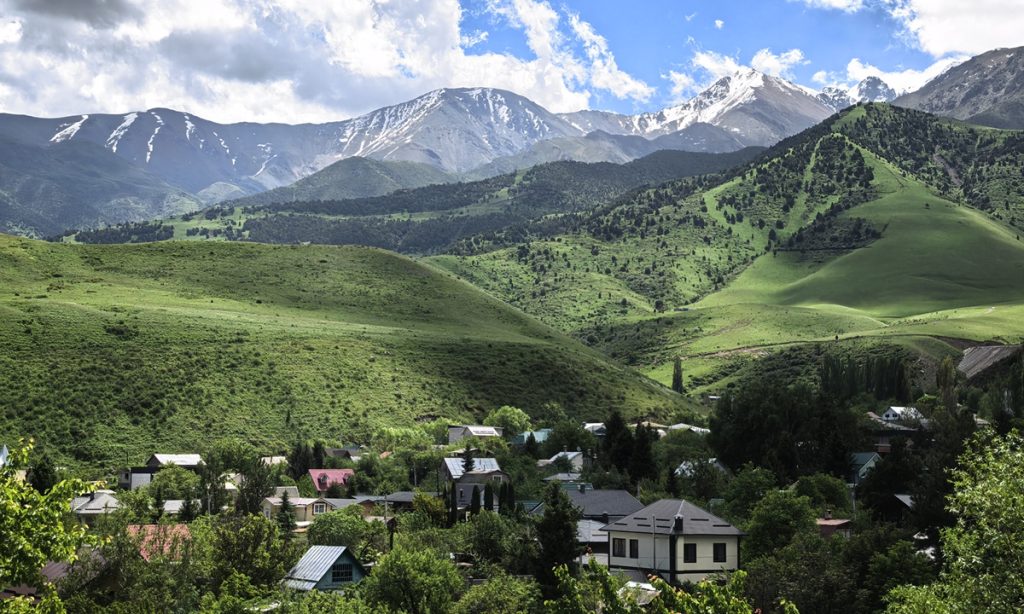
This is the 23rd installment of "Practitioners' Insights." We visited the banks of the Nyang River in Nyingchi, Southwest China's Xizang Autonomous Region, to interview grassroots wetland rangers and officials from the local departments of ecology and environment, forestry, and grassland. The Nyang River is an important ecological corridor in Nyingchi, and also a window for observing the construction of ecological civilization in Xizang. The protection practices carried out along this river record local grassroots explorations in safeguarding the plateau's pure land and maintaining the national ecological security barrier. In May, the sunlight in Nyingchi is bright and strong. Looking out from the viewing platform of the Yani national wetland park, the valley ahead is open and flat, with the Nyang River winding through vast stretches of willow forest into the distance. Mountains rise layer upon layer in the distance, their peaks still capped with snow. The blue sky, snowy mountains, river, woodland and villages all appear within the same field of vision, forming a distinctive plateau ecological landscape along the Nyang River.
This quiet, open valley is a scenic landscape for tourists, but it is also part of everyday life for people living along the river. In recent years, as wetland protection, river management and public participation have continued to advance, the water has become clearer, the trees denser, and the birds more numerous.
In July 2021, Chinese President Xi Jinping arrived at the Nyingchi Mainling Airport and went to the Nyang River Bridge, where he learned about the ecological preservation of the Yarlung Zangbo River and its tributary Nyang, as well as the construction of nature reserves. He underscored the importance of protecting and restoring the ecology of major river basins, according to the Xinhua News Agency.
"The eco-environment has no substitutes. We tend to be neglectful of this when we exploit it, yet it is irretrievable once lost. Our eco-environment is crucial for the quality of economic development, and exerts a profound impact on the wellbeing of all individuals. The preservation of China's blue skies, lush mountains, and lucid waters can only be ensured through collective action, the fulfillment of individual responsibilities, and a society-wide dedication to environmental stewardship." This important statement appears in the article "Balance Major Relationships Concerning Eco-Civilization," included in the fifth volume of Xi Jinping: The Governance of China.
His earnest instructions are being transformed into concrete practices on both banks of the Nyang River.
Pajia, a 31-year-old wetland ranger from Zhongsaba village in Bayi district, Nyingchi, is both a witness to the ecological changes in his hometown and a participant in the daily protection of the Nyang River wetland. Recently, Pajia and several other grassroots practitioners involved in the ecological protection of the Nyang River shared their stories of protecting clear waters and wetlands on the snowy plateau with the Global Times.
A pair of eyes by the river
By early morning, sunlight has already lit up large stretches of willow forest along the Nyang River. Pajia sets out from his village and slowly walks along the wetland. Snowy mountains stand in the distance, while river water and woodland lie before him. Under his feet is a path that villagers pass by every day. For him, this river flowing past his home is both a familiar landscape and a place that needs daily protection.
The Nyang River, a tributary of the Yarlung Zangbo River, means "tears of a goddess" in the Tibetan language. Stretching 307.5 kilometers, it is known as the mother river of the Kongpo area of Xizang. In 2016, the Yani national wetland park, located at the confluence of the Yarlung Zangbo River and the Nyang River, was officially established. Local authorities selected 45 residents from villages around the wetland to serve as wetland rangers, allowing people who live by the river to participate in its daily protection.
Five years ago, Zhongsaba village voted to select two wetland rangers, one being Pajia. Since then, the wetland beside the Nyang River has had an extra pair of local eyes watching over it.
The work may not seem complicated, but it is specific and requires long-term commitment.
During their daily patrols, Pajia and his colleague walk around the wetland to check whether there is illegal grazing or damage to wetland fences. If a fence is damaged, they repair it straight away. If there is garbage along the riverbank, they clean it up. When tourists or villagers fail to pay attention to environmental protection, they step forward to offer a reminder. They also keep a lookout for any injured animals in the wetland, and report any such cases immediately.
In addition to patrol work, Pajia also farms, herds cattle and drives a truck for freight transport. He walks along the riverbank in the morning and returns to his fields and cattle during the day. His life is closely connected with this wetland.
Pajia remembers that there used to be more garbage in the river channel and around the corners of the village. Later, under the organization of forestry and grassland authorities, local residents carried out river garbage cleanups, and the village gradually established a garbage collection and transfer mechanism. Today, there is much less garbage in the river channel, and villagers have gradually developed the habit of putting garbage into the trash cans. Now, when Pajia patrols the wetland again, he sees clearer river water, cleaner banks and more water birds stopping in the wetland. Black-necked cranes, ruddy shelducks and bar-headed geese are no longer rare sights for local residents.
As the wetland environment has improved, more tourists have come for sightseeing. Some villagers have opened guesthouses and restaurants, while others have increased their incomes through providing transport, farming and animal husbandry. In 2025, Yani national wetland park received a total of 150,000 tourist visits, generating more than 10 million yuan ($1.48 million) in additional income.
During patrols, Pajia also explains the importance of wetland protection to tourists and villagers. He said many tourists come here to see the wetland, the river and the plateau scenery, therefore, it is vital that everyone understands the importance of not littering or damaging the wetland environment.
In Pajia's view, protecting the wetland is also connected with the natural values passed down among local people from generation to generation. His words are simple: "I do this work not only for myself, but for future generations."
Coordinated protection
The daily patrols carried out by Pajia and his colleague represent the part of Nyang River protection work that is closest to the riverbank. Viewed within the broader protection practices of the whole watershed, local authorities have followed the concept of integrated protection and systematic governance of mountains, rivers, forests, farmland, lakes, grasslands, deserts and glaciers, gradually forming a protection pattern involving multiple participants and coordinated efforts.
According to the Ministry of Ecology and Environment, the overall ecological environment of the Nyang River Basin is relatively good, but the basin has also faced problems such as uneven distribution of water resources across time and space, a fragile and sensitive ecosystem, and relatively prominent non-point source pollution in rural areas. Ecological issues including the shrinkage of floodplain forests and grasslands, declining water conservation capacity, grassland degradation and soil erosion have also been observed in the basin.
Kelsang Tashi, director of the Nyingchi ecology and environment bureau's Bayi district branch, told the Global Times that in recent years, Nyingchi has further clarified the responsibilities of different departments in wetland and watershed protection through an environmental protection responsibility list.
Kelsang Tashi said that since 2021, local authorities have further strengthened ecological governance. In the past, there were some small sand mining sites along the Nyang River. These were gradually rectified to restore the areas around the river to their original natural ecology as much as possible.
In his view, governing a river requires not only projects, but also public understanding and participation. Kelsang Tashi and his colleagues have translated concepts related to ecological civilization to help local residents better understand why ecological protection matters. He said local people now have a clear understanding that "the purpose of prioritizing ecology is to benefit the people."
Judging from the governance case released by the Ministry of Ecology and Environment, Nyang River governance is a "package of coordinated measures," jointly advanced through water resource protection, water environment treatment, aquatic ecological restoration and daily maintenance. Local authorities have completed the Nyang River comprehensive governance and protection project, with 45.29 kilometers of river channels comprehensively treated. From 2018 to 2023, a total of 912,000 fish fry were released.
Another important part of wetland protection is scientific monitoring. Drolma Tsering, a staff member of the Nyingchi forestry and grassland bureau, told the Global Times that in 2021, local authorities signed an agreement with Xizang University to jointly build the Xizang Yani wetland ecosystem positioning observation and research station, monitoring the ecological environment in terms of water quality, soil, climate and birds.
Kelsang Tashi said protecting the ecological environment here is an important part of maintaining the ecological security barrier of the Qinghai-Xizang Plateau. "In the final analysis, prioritizing ecology is about benefiting the people and better protecting this pure land," he said.
Green practices on snowy plateau
At multiple ecological protection sites in Xizang, the Global Times found that more and more people across the Qinghai-Xizang Plateau are taking part in efforts to protect and restore the ecology of major river basins.
In Lhasa, the greening project for the northern and southern mountains is changing the appearance of the mountains surrounding the city. Lozang Yonten, head of the No. 32 section of the greening project, told the Global Times that the area he is responsible for covers about 120 hectares of planted land, with main tree species including Chinese pine, Qilian spruce and sea buckthorn, all native species suited to cold, high-altitude conditions.
Planting trees on slopes at an altitude of 3,700 to 4,400 meters is not easy. As the mountain roads are steep, the project once tried to transport saplings by mule. Later, drones were used to carry saplings to designated points, where workers then planted them. This method proved to be more efficient.
"At present, the survival rate of the saplings can be guaranteed at above 95 percent," Lozang Yonten said.
In Medog, a remote border county that is difficult to access, ecological protection is also being carried out in great detail. Located deep in the Yarlung Zangbo River Grand Canyon, Medog has huge elevation differences and rich biodiversity.
In recent years, researchers have entered the dense forests to collect samples, preserve seeds and monitor wildlife activity. They also use infrared cameras, drones and remote sensing technologies to record ecological changes. Since 2021, more than 50 new species have been discovered there. This area is being understood and protected in a more scientific way.
According to Xinhua, since the 18th National Congress of the Communist Party of China, Xizang has upheld ecological protection as a priority, built 22 ecological functional protection zones and provided 700,000 ecological jobs for local residents. Xizang has also established a protected natural area system with national parks as the mainstay, bringing more than 600,000 square kilometers of land under ecological protection red lines.
Walking along the wetland and looking at every familiar plant and tree, with the Nyang River behind him, flowing through the open and quiet valley, winding toward the distance, Pajia feels a deep sense of satisfaction and pride.
The owner of numerous rare, precious ornamental fish, amused the public for an upbeat perspective as after the glass tank burst and several fish died, he had two of the deceased fish cooked and invited close friends to enjoy a "meal worth hundreds of thousands of yuan," (roughly tens of thousands of US dollars).
The story happened in Wuxi, East China's Jiangsu Province, where a large fish tank in the owner's office, after being used for five years, reached its structural breaking point after its sealant degraded over time and the tank filled up to capacity.
Du, a close friend of the tank owner, said the tank had long housed an array of premium rare ornamental fish: eight golden and red arowanas measuring 60 to 65 centimeters in length, three tiger fish, two black-and-white pearl stingrays, and one Satanoperca.
The collective worth of the entire school of fish exceeded 300,000 yuan ($44,397), said Du.
The tank burst at just past six in the morning, with water surging out quickly, and the office's staff did not discover the incident until around eight o'clock when they arrived for work, by which the window for rescue had long closed, domestic news site gmw.cn reported.
Emergency efforts saved only one golden arowana, one black-and-white pearl stingray and three tiger fish; all the rest died, the report said.
Although these precious fish had died, the owner maintained a positive and resilient attitude. In a video he posted on short-video platform Douyin, the owner said, "What cannot be saved should not go to waste," and sent two of the fish to a restaurant and invited friends for a feast on the fish.
According to videos posted by several of the owner's friends, the group joked that they were having a "meal worth several hundred thousand yuan" and commenting that the fish was "not bad," per gmw.cn.
In the footage shared by the owner, the group also raised their glasses to toast a fresh chapter from the loss of the fish.
Du said he and the owner have long been aquarium enthusiasts, so their reaction to the tank rupture was relatively composed, adding that they will restock the tank with new fish in the future.
China has consistently advocated that regional countries should take their future and destiny into their own hands, and hopes to explore, through dialogue and consultation, a peace and security architecture that is jointly participated in by all countries in the Middle East, Chinese Foreign Minister Wang Yi said on Tuesday.
Wang made the remarks in a phone conversation with Pakistan's Deputy Prime Minister and Foreign Minister Mohammad Ishaq Dar.
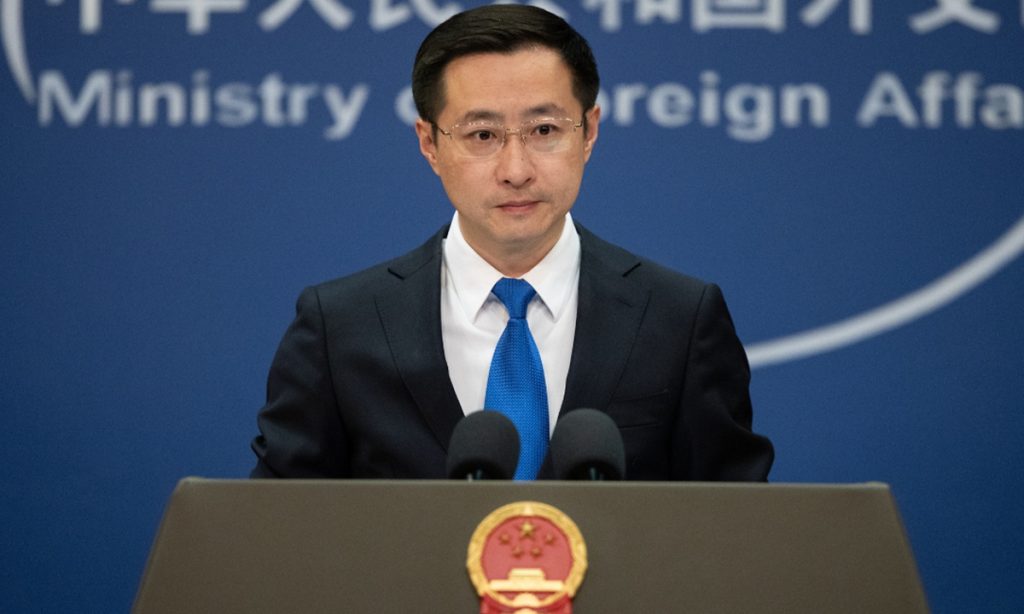
Taking into account the actual conditions of relevant countries, China has decided to deliver a new batch of humanitarian assistance to Iran and Lebanon in the near term to further help people of the two countries advance rehabilitation and reconstruction and improve economic well-being, Chinese Foreign Ministry spokesperson Lin Jian said on Wednesday, in response to a question regarding whether China plans to continue providing assistance to Middle Eastern countries affected by the conflicts involving the US-Israel strikes on Iran.
In March this year, China provided emergency humanitarian assistance to Iran and other countries, said Lin. As a good friend of Middle Eastern nations and a responsible major country, China will keep offering support and assistance within its capacity, and will also step up efforts to promote peace talks and play an active role in realizing peace in the Middle East at an early date, Lin added.
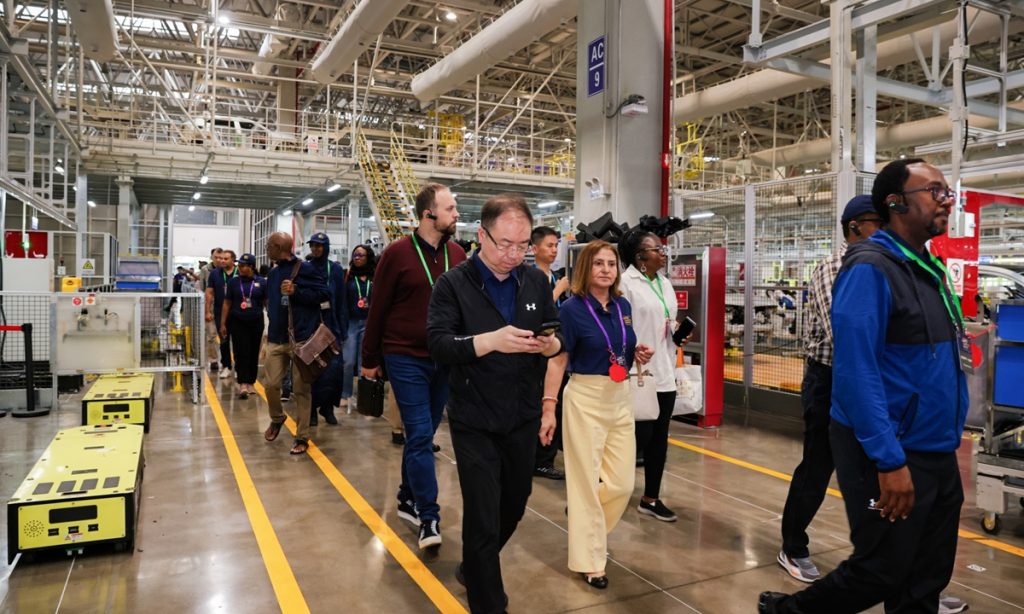
The Human Rights Action in China · 2026 Chongqing Tour hosted by China's State Council Information Office just concluded with human rights experts from 20 countries and international organizations, including Peru, Nepal, Argentina and the African Union, gathered in Southwest China's Chongqing over the past three days. Several experts praised China's exemplary role in advancing human rights through development, the Global Times reporter learned on Wednesday.
At the AVATR Digital Intelligence Factory of Changan Automobile in Chongqing, one of the stops during the visit, Mohamed Abdelrahman Mohamed Moussa, Minister Plenipotentiary of the Ministry of Foreign Affairs, International Cooperation and Expatriates of Egypt, was constantly taking photos of the factory's automated facilities and intelligent production lines with his mobile phone. After the visit, he told the Global Times that the factory is "a tangible outcome of the right to development," adding that the right to development is "something that Egypt espouses very much." He further explained that when pursued, development elevates all other human rights along with it, which is why countries of the Global South have consistently stressed the importance of the right to development.
According to a report recently released by the China Society for Human Rights Studies that evaluates the progress of the Human Rights Action Plan of China (2021-25), China has promoted human rights through development and met people's growing needs for various rights.
Another human rights expert, Indira Rana, member of the Federal Parliament of Nepal, was also awed by China's practices in leveraging digital technologies to create opportunities for vulnerable groups, including the elderly, persons with disabilities, women and children, and helps ensure that no one is left behind in the development process after touring the Bayu New Public-Welfare Digital Talent Incubation Program, launched by the Chongqing Land-Sea International Communication Public-Welfare Foundation.
Adhering to the principle of leaving no one behind, the program develops public welfare digital solutions to address social challenges and equips vulnerable groups including elders and children with digital literacy skills, according to the program organizers.
Nandjede Abba Daoud, director of the foreign affairs office of the Commission of the Senate of Chad, shared his reflections during the academic seminar held at Southwest University of Political Science and Law. He said that after Chad gained independence from French colonial rule, discussions of human rights in his country largely focused on political rights, leading him to view human rights primarily as a Western concept. However, after observing life in both China's rural and urban communities during the three-day visit, he gained a deeper appreciation of China's emphasis on the right to development, which he believes is exactly what many African countries need.
Speaking with the Global Times at the end of the tour, Radhia Jerbi Ep Chiha, President of the National Union of Tunisian Women, said the experience helped her realize that "human rights are not abstract articles or resolutions, but a kind of dignified life that can be implemented in everyone's daily life." Drawing on what she had seen and heard throughout the visit, she noted that the "liberty to say or do what one wants" alone is not sufficient to fully realize human rights without economic development and improved living standards. She added that China has played an exemplary role in demonstrating a broader understanding of human rights by advancing human rights through development.
"It's not just my own opinion, but a consensus shared by many members of the delegation," Jerbi told the Global Times. She added that the relationship between development and human rights is expected to be a key topic at the 2026 Forum on Global Human Rights Governance, which will be held in Beijing on Thursday.
Kyrgyzstan, China's neighbor linked by mountains and rivers, is this year's rotating chair of the Shanghai Cooperation Organisation (SCO).
Although the two countries are geographically very close, the Chinese public as a whole seems far less familiar with this western neighbor than with Japan and South Korea to the east. For some, their impression of the country may be limited to the idea that the legendary poet Li Bai might have been born in Suyab city over a thousand years ago. What is Kyrgyzstan like today? How do local people view China? In late May, a team of Global Times reporters visited Bishkek, capital of Kyrgyzstan. What left the deepest impression was not only the snow-capped mountains visible almost everywhere in the city, but also China-related signs throughout the journey, as well as the positive and optimistic attitudes shown by local residents and Chinese people living there when talking about relations between the two countries.
Li Bai, Suyab and Tokmok
Driving east from Bishkek toward Issyk-Kul Lake for a little over an hour brings you to Tokmok, a town in the Chuy Valley. It is a must-visit destination for many Chinese travelers to Kyrgyzstan, because it is home to the ruins of an ancient city known as Ak-Beshim, which is listed as a World Cultural Heritage site. Chinese visitors know it better by its Chinese name, Suiyecheng or Suyab, and many believe it was the birthplace of Li Bai.
"My Chinese name is Li Bai," 28-year-old Kyrgyz tour guide Mitrofanov Leonid Dmitrievich told the Global Times. He spoke excellent Chinese and had spent many years studying and living in Xiamen, East China's Fujian Province. "Look, this is my Xiaohongshu (RedNote) account. It's called 'Li Bai, a Kyrgyzstan tour guide,'" he said.
The Suyab where Global Times reporters met "Li Bai" has long since lost the appearance of a city. What remains are a few stretches of earthen wall wrapped in green grass, along with several signs put up in recent years telling visitors what once stood here. In the middle of the site is a very important set of monitoring equipment: an observation station jointly established by China's Dunhuang Academy and Kyrgyzstan's local cultural and heritage protection authorities for environmental monitoring and data collection.
Just then, a bus pulled up. A group of archaeologists from Central Asian countries arrived at the site, having just attended a joint archaeological meeting in Bishkek. The experts from China and Central Asia began exchanging ideas beside the site's ramparts - a scene poet Li Bai could hardly have imagined in his lifetime.
"Are you Chinese?" The reporters' thoughts were interrupted by familiar Chinese. More than a dozen Chinese tourists had appeared at Suyab. They were part of the tour group led by Leonid, coming from Jiangsu and other provinces across China. Kyrgyzstan was the second stop on their Central Asia tour.
"Since you're reporters, you should really point this out - the sign for Li Bai's birthplace is only in Kyrgyz and Russian, not a single Chinese character," one man in the group said.
'Signs of China' everywhere in the city Kyrgyzstan uses both Kyrgyz and Russian as official languages. Road signs across Bishkek usually display Kyrgyz on the top line and Russian below. As a former Soviet republic, many street scenes here are reminiscent of the Russian Far East. But construction sites are everywhere in the city, and many cranes can be seen on the skyline, showing that the real estate sector is just taking off and urban development is in a phase of rapid construction.
During interviews, local people told the Global Times that many building projects are undertaken by Chinese companies. However, at three construction sites, we found that all of the workers working that day were locals.
Why did we pay attention to these details? On the flight to Bishkek, we had read foreign media reports from the past year or two about China-Kyrgyzstan relations. Many of them sounded alarming - headlines like "A clash reveals growing anti-Chinese sentiment in Kyrgyzstan," "An influx of cheap Chinese labor leaves Kyrgyz people jobless," and "Chinese design and technology rob Kyrgyz cities of their Central Asian character." Yet during the reporters' brief four-day reporting trip, the information shared by more than 20 interviewees from both China and Kyrgyzstan made these foreign media claims sound very much outside the mainstream.
The Global Times found that the signs of China are everywhere in Bishkek. Many of the green buses running through the city have the word "ZHONGTONG" on the back. According to a Global Times report on May 22, 2023, the first batch of 1,000 Zhongtong buses purchased by Kyrgyzstan rolled off the production line in Liaocheng, East China's Shandong Province, on May 20 that year, Kyrgyz President Sadyr Japarov attended the ceremony.
The cars on the streets of Bishkek are highly varied. Some brands look quite old and carry a distinctly Soviet-era feel. There are also many cars from Japan and South Korea. "But more than 40 percent of the new cars sold in Kyrgyzstan come from China," Lu Yunran, CEO of 212 Off-Road Vehicle Co., Ltd., which is preparing to enter the Kyrgyz market, told the Global Times at the 2026 China-Kyrgyzstan Media Cooperation Forum held on May 27. The reason Chinese carmakers are entering the Kyrgyz market, he said, is simple: "There is demand here."
In a shopping mall in central Bishkek, as the escalator slowly carried the reporters up to the sportswear section on the third floor, the three brands that came into view from left to right were Li-Ning, Xtep and Anta. Taking the elevator up another three floors, we also found Lanzhou hand-pulled noodles and Chinese ice cream and beverage chain Mixue.
Another Chinese imprint in Bishkek is traditional Chinese medicine (TCM).
At the China-Kyrgyzstan Qihuang Traditional Chinese Medicine Center, located at 120 Umitalieva Street, Bishkek, a patient in his 50s was undergoing acupuncture. "I'm from Bishkek," he told the Global Times. "I have a pretty severe spinal misalignment. Tomorrow marks my fifth day of acupuncture treatment, and I've already felt immense relief."
Another patient, who was receiving cupping therapy for polyarthritis, shared a similar sentiment: "TCM works wonders for me." During the interviews, both patients vouched for the effectiveness of TCM and praised the Chinese doctors for being even more dedicated than local physicians. "They are genuinely here to help the local people," one patient noted.
Aishoola Rysbekova, a 31-year-old Chinese language lecturer at the Kyrgyz National University, goes by the Chinese name "Xinyue," which means "new moon." She told the Global Times that Bishkek's economy has been booming over the past two years, mirroring a broader national economic uptick. Consequently, university faculty salaries have seen a major boost - "nearly doubling," she said. The current average salary is now equivalent to over 5,000 yuan ($738). "Our economic and trade cooperation with China has played a massive role in this," the Kyrgyz woman added.
During the interviews, many Chinese people living in Bishkek also expressed a positive outlook on the country.
Within the local Chinese community, the Guoying supermarket is well-known. Spanning roughly 500 square meters, the store is divided into three sections: Chinese-made daily necessities, Chinese snacks and Chinese fast food. Walking through the Guoying supermarket feels like being back in China, with shelves packed with everything from dried noodles to snacks, milk tea, and even the popular Chinese brand Mind Act Upon Mind tissues.
Zhao Shulin, who leases the supermarket's food section, told the Global Times that while Kyrgyzstan had previously gone through periods of political instability due to a sluggish economy, recent years have seen strong economic growth. As a result, the public mind-set has become more rational. Living here, you really feel the locals are very friendly, Zhao said.
Not far from where Zhao stood, three local middle school girls were choosing Chinese snacks. "Chinese is a beautiful language," one of the girls said, in English, as she told the reporters about her plans to study Chinese. Exporting high-quality development opportunities
"The most valuable advantage for Kyrgyzstan is to be the neighbor of China," Kyrgyz President Japarov told the Chinese top leader on August 31, 2025, during his visit to Tianjin for the SCO Summit 2025 and the commemoration of the 80th anniversary of the victory of the Chinese People's War of Resistance Against Japanese Aggression and the World Anti-Fascist War. He emphasized that China is a good neighbor and a good friend of Kyrgyzstan.
At the 2026 China-Kyrgyzstan Media Cooperation Forum, Kyrgyz commentator Ismail Dairov echoed this sentiment when discussing bilateral ties: "Geography is destiny." Fellow panelist and commentator Kurmanbek Mambetov noted that China and Kyrgyzstan are harmonious neighbors. "You might fight with relatives, and you might lose friends, but the bond of being neighbors is something that never changes," he said.
Explaining the booming trade ties and the strengthening cooperation between the two countries, Mambetov pointed out that their strategic interests are perfectly aligned. "China needs a stable Kyrgyzstan, and the stronger China becomes, the more opportunities open up for Kyrgyzstan."
Zhu Yongbiao, executive director of the Research Center for the Belt and Road at Lanzhou University, told the Global Times that practical cooperation between China and Kyrgyzstan is not a one-way transfer of benefits. Rather, it is a healthy, mutually beneficial relationship built on the strong complementarity of the two countries' trade and economic structures.
Zhu said this complementarity is also a common feature of cooperation among SCO member states, making China-Kyrgyzstan cooperation representative, replicable and worth promoting. In his view, the Chinese presence the reporters observed in Bishkek shows that what China is exporting today is not only culture, but also high-quality development opportunities.
Of course, this does not mean there are no bottlenecks in bilateral cooperation. During the interviews, people from both China and Kyrgyzstan mentioned that the two peoples still do not know enough about each other and media coverage between the two sides remains insufficient.
Four days of reporting in Bishkek was clearly not enough to gain a deep understanding of Kyrgyzstan. Nevertheless, the trip provided some firsthand knowledge of China's friendly neighbor. On the flight back to Beijing from Bishkek, the reporters found that most of the passengers were also Chinese. Among them were people selling agricultural machinery in Kyrgyzstan, employees of state-owned enterprises, business visitors, and tourists. Perhaps by a twist of fate, we ran into Leonid and his tour companions again at a Chinese restaurant in Bishkek. Regarding foreign media descriptions of negative sentiment between the Chinese and Kyrgyz peoples, Leonid said that if such feelings do exist, it must be because those people have not worked hard enough and are jealous of those who have benefited from China-Kyrgyzstan cooperation.
Uruguayan Foreign Minister Mario Lubetkin announced Thursday that Uruguay will waive visa requirements for Chinese citizens holding ordinary passports.
In May 2025, China and Latin American countries jointly launched five major programs covering solidarity, development, civilization, peace, and people-to-people connectivity. One year later, the China Public Diplomacy Association hosted the "Linjia No. 7 Salon" on Friday under the theme "The First Anniversary of the Five Programs for Building a China-LAC Community with a Shared Future: Implementation and Prospects," taking stock of achievements and exploring future prospects.
Global Times reporters observed at the event that journalists from Latin American countries were highly active, frequently raising their hands to ask questions, and even held discussions with Chinese experts after the meeting, demonstrating their strong interests in the trajectory of China-Latin America cooperation.
External pressure and changes in Latin American governments are among the two most closely watched issues by Latin American media. Foreign media have raised the question of whether the overlap of these two variables could lead to fluctuations in China-Latin America cooperation. However, the solid results achieved over the past year in implementing the five major programs have provided a powerful answer.
Latin American media professionals told the Global Times said that over the past year, with China's support and bilateral cooperation, Latin American countries have accelerated infrastructure development and local technological advancement. The changes brought by cooperation are tangible, and they expect more positive outcomes from future collaboration.
Currently, Latin American countries are in an electoral cycle, with Brazil, Colombia, Peru and others either having recently held or soon to hold elections. Policy uncertainties brought by leadership changes, and whether such changes will affect international cooperation projects, have become a major concern in Latin American public discourse.
At the event, a journalist from Colombia asked how China-Latin America cooperation agreements could be steadily implemented amid political party rotation in Latin American countries. In response, Zhang Run, director-general of the Latin American and Caribbean Affairs Department of China's Foreign Ministry, stated that China-Latin America friendship is rooted in the people, and that China's policy toward Latin America will remain consistent and stable regardless of changes in internal or external conditions.
Geopolitical containment is another major concern of Latin American journalists. At the salon, reporters from Brazil, Venezuela, Mexico, Cuba, and Costa Rica jointly asked how China assesses changes in the external geopolitical environment one year after the implementation of the five major programs under the China-Latin America community with a shared future framework.
"In a context of increasing global uncertainty, instability, and unpredictability, China and Latin America are jointly advancing the five major programs, sending a strong message of solidarity and self-strengthening among Global South countries, and injecting stability and positive energy into a turbulent world," Zhang said.
He noted that from January to April this year, China-Latin America trade grew strongly by 18.5 percent year-on-year, with China's imports from the region increasing by 29.4 percent. China's visa-free policy for certain Latin American countries has also boosted travel: six months later, visits from Peru to China rose by 80 percent, while those from Argentina, Brazil, Chile, and Uruguay increased by 55 percent, 48 percent, 41 percent, and 34 percent respectively.
Nelson de Sá of Brazil's UOL media group, who has worked in China for two and a half years, told the Global Times that trade restrictions and geopolitical containment measures run counter to market principles and continuously erode Latin American economic interests. However, he believes that external pressure and political turnover cannot change the long-term positive trajectory of China-Latin America cooperation. "No matter how governments change, this cooperation trend will not be significantly affected. The natural complementarity of both economies will continue to drive economic integration," he said.
In his view, the development of Chinese-funded industries in Brazil illustrates this clearly: After Ford closed its plant in Brazil, BYD took over and resumed production, restoring lost jobs; after Mercedes-Benz halted production, Great Wall Motors took over the factory and began operations; after France's Alstom scaled down and suspended rail operations in Brazil, CRRC established local factories to fill the gap, restoring and even expanding manufacturing jobs. Nelson said these companies not only took over factories but also absorbed employment and drove upstream and downstream industrial chains. The service sector is also following suit: Meituan's Keeta and Mixue Ice Cream & Tea are accelerating entry into the Brazilian consumer market, continuously expanding local employment opportunities in services.
It is precisely through strong industrial complementarity and tangible livelihood projects that China-Latin America cooperation demonstrates strong resilience. Zhang stated in his speech that China-Latin America trade has maintained steady growth, reaching 549 billion US dollars in 2025, a record high. The 66-billion-yuan credit line China pledged to Latin America is being implemented ahead of expectations.
In addition, a number of landmark infrastructure projects have taken root: The Belo Monte Ultra-High Voltage Direct Current transmission project undertaken by Chinese enterprises in Brazil spans five states and 81 cities, easing north-to-south power transmission bottlenecks and benefiting 22 million people; the Mexico City Metro Line 1 renovation project has been fully completed and opened to traffic, increasing daily passenger capacity to 1.2 million; the Bogotá Metro Line 1 project in Colombia has progressed by more than 70 percent, and upon completion will significantly improve transportation for nearly 2.9 million residents.
"Many friends from Latin America and the Caribbean have told me that 'China studies' and Chinese language learning are booming in the region," Zhang said. China has completed ahead of schedule the provision of 1,000 "Chinese Bridge" program slots, and has provided 1,752 Chinese government scholarships and 4,000 training opportunities for Latin American countries, with 254 recipients admitted under the International Chinese Language Teachers Scholarship.
The "China-Brazil Cultural Year" has been held in both countries in turn. China has established three new Confucius Institutes in Honduras, Chile, and Brazil, and Brazil has established the first Confucius Institute alliance in Latin America. The region's first Luban Workshop has been inaugurated in Nicaragua. Currently, the exhibition "Maize, Gold, Jaguar - Ancient Civilizations of the Maya and Andes" is being held at the Capital Museum in Beijing, serving as another platform for China-Latin America civilizational exchange.
"Cooperation between Uruguay and China covers not only education exchanges such as student mobility, but also high-tech and medical fields. A large number of Uruguayan medical workers are now coming to China for training," said Florencia Pujadas, a journalist from Uruguay's Channel Canal 4, in an interview with the Global Times. As both a Uruguayan citizen and journalist, she believes both peoples must make further efforts to promote mutual understanding and the healthy integration and development of different cultures and systems.
Shi Yi, a vice president of China Foreign Affairs University and researcher at the Center for a Community with a Shared Future for Mankind, shared the story of Brazilian professor Marcus Vinicius De Freitas. In 2018, Marcus joined China Foreign Affairs University. Over eight years, he has moved between classrooms in China and Brazil, think tank platforms in Morocco, and global English-language podcasts and Brazilian mainstream media, presenting an objective account of China's path to modernization. In his view, China's development is not an abstract theoretical model in textbooks, but a vivid practice of exploring modernization in a complex geopolitical and developmental environment.
During the Q&A session, Zhang noted a phenomenon he observed: Walking through the streets and tourist sites of Beijing, Spanish and Portuguese can be heard everywhere; on social media, a wave of Latin American youth is enthusiastically experiencing Chinese lifestyles, with both "China fever" and "Latin America fever" shaping a new landscape of people-to-people exchanges.
Song Junying, director in the Department for Latin American and Caribbean Studies at the China Institute of International Studies, analyzed the deeper drivers of such cooperation from a macro perspective. He argued that China-Latin America exchanges on modernization are driven by strong internal momentum for three main reasons: First, both share similar historical experiences and a strong aspiration for independent modernization and catch-up development; second, they share similar civilizational foundations, providing cultural support for mutual learning; third, amid global transformations unseen in a century, both face similar historical missions, as the collective rise of the Global South shifts the balance of global power in a more favorable direction for developing countries.
"Advancing China-Latin America modernization exchanges and mutual learning requires building a China-Latin America community with a shared future and implementing the five major programs on the basis of high-quality Belt and Road cooperation to align development strategies," Song said.