Across the linked Tianshan Mountains, 'seeing China' in Kyrgyzstan

Kyrgyzstan, China's neighbor linked by mountains and rivers, is this year's rotating chair of the Shanghai Cooperation Organisation (SCO).

Although the two countries are geographically very close, the Chinese public as a whole seems far less familiar with this western neighbor than with Japan and South Korea to the east. For some, their impression of the country may be limited to the idea that the legendary poet Li Bai might have been born in Suyab city over a thousand years ago. What is Kyrgyzstan like today? How do local people view China? In late May, a team of Global Times reporters visited Bishkek, capital of Kyrgyzstan. What left the deepest impression was not only the snow-capped mountains visible almost everywhere in the city, but also China-related signs throughout the journey, as well as the positive and optimistic attitudes shown by local residents and Chinese people living there when talking about relations between the two countries.

Li Bai, Suyab and Tokmok

Driving east from Bishkek toward Issyk-Kul Lake for a little over an hour brings you to Tokmok, a town in the Chuy Valley. It is a must-visit destination for many Chinese travelers to Kyrgyzstan, because it is home to the ruins of an ancient city known as Ak-Beshim, which is listed as a World Cultural Heritage site. Chinese visitors know it better by its Chinese name, Suiyecheng or Suyab, and many believe it was the birthplace of Li Bai.

"My Chinese name is Li Bai," 28-year-old Kyrgyz tour guide Mitrofanov Leonid Dmitrievich told the Global Times. He spoke excellent Chinese and had spent many years studying and living in Xiamen, East China's Fujian Province. "Look, this is my Xiaohongshu (RedNote) account. It's called 'Li Bai, a Kyrgyzstan tour guide,'" he said.

The Suyab where Global Times reporters met "Li Bai" has long since lost the appearance of a city. What remains are a few stretches of earthen wall wrapped in green grass, along with several signs put up in recent years telling visitors what once stood here.
In the middle of the site is a very important set of monitoring equipment: an observation station jointly established by China's Dunhuang Academy and Kyrgyzstan's local cultural and heritage protection authorities for environmental monitoring and data collection.

Just then, a bus pulled up. A group of archaeologists from Central Asian countries arrived at the site, having just attended a joint archaeological meeting in Bishkek. The experts from China and Central Asia began exchanging ideas beside the site's ramparts - a scene poet Li Bai could hardly have imagined in his lifetime.

"Are you Chinese?" The reporters' thoughts were interrupted by familiar Chinese. More than a dozen Chinese tourists had appeared at Suyab. They were part of the tour group led by Leonid, coming from Jiangsu and other provinces across China. Kyrgyzstan was the second stop on their Central Asia tour.

"Since you're reporters, you should really point this out - the sign for Li Bai's birthplace is only in Kyrgyz and Russian, not a single Chinese character," one man in the group said.

'Signs of China' everywhere in the city
Kyrgyzstan uses both Kyrgyz and Russian as official languages. Road signs across Bishkek usually display Kyrgyz on the top line and Russian below. As a former Soviet republic, many street scenes here are reminiscent of the Russian Far East. But construction sites are everywhere in the city, and many cranes can be seen on the skyline, showing that the real estate sector is just taking off and urban development is in a phase of rapid construction.

During interviews, local people told the Global Times that many building projects are undertaken by Chinese companies. However, at three construction sites, we found that all of the workers working that day were locals.

Why did we pay attention to these details? On the flight to Bishkek, we had read foreign media reports from the past year or two about China-Kyrgyzstan relations. Many of them sounded alarming - headlines like "A clash reveals growing anti-Chinese sentiment in Kyrgyzstan," "An influx of cheap Chinese labor leaves Kyrgyz people jobless," and "Chinese design and technology rob Kyrgyz cities of their Central Asian character." Yet during the reporters' brief four-day reporting trip, the information shared by more than 20 interviewees from both China and Kyrgyzstan made these foreign media claims sound very much outside the mainstream.

The Global Times found that the signs of China are everywhere in Bishkek. Many of the green buses running through the city have the word "ZHONGTONG" on the back. According to a Global Times report on May 22, 2023, the first batch of 1,000 Zhongtong buses purchased by Kyrgyzstan rolled off the production line in Liaocheng, East China's Shandong Province, on May 20 that year, Kyrgyz President Sadyr Japarov attended the ceremony.

The cars on the streets of Bishkek are highly varied. Some brands look quite old and carry a distinctly Soviet-era feel. There are also many cars from Japan and South Korea. "But more than 40 percent of the new cars sold in Kyrgyzstan come from China," Lu Yunran, CEO of 212 Off-Road Vehicle Co., Ltd., which is preparing to enter the Kyrgyz market, told the Global Times at the 2026 China-Kyrgyzstan Media Cooperation Forum held on May 27. The reason Chinese carmakers are entering the Kyrgyz market, he said, is simple: "There is demand here."

In a shopping mall in central Bishkek, as the escalator slowly carried the reporters up to the sportswear section on the third floor, the three brands that came into view from left to right were Li-Ning, Xtep and Anta. Taking the elevator up another three floors, we also found Lanzhou hand-pulled noodles and Chinese ice cream and beverage chain Mixue.

Another Chinese imprint in Bishkek is traditional Chinese medicine (TCM).

At the China-Kyrgyzstan Qihuang Traditional Chinese Medicine Center, located at 120 Umitalieva Street, Bishkek, a patient in his 50s was undergoing acupuncture. "I'm from Bishkek," he told the Global Times. "I have a pretty severe spinal misalignment. Tomorrow marks my fifth day of acupuncture treatment, and I've already felt immense relief."

Another patient, who was receiving cupping therapy for polyarthritis, shared a similar sentiment: "TCM works wonders for me." During the interviews, both patients vouched for the effectiveness of TCM and praised the Chinese doctors for being even more dedicated than local physicians. "They are genuinely here to help the local people," one patient noted.

Aishoola Rysbekova, a 31-year-old Chinese language lecturer at the Kyrgyz National University, goes by the Chinese name "Xinyue," which means "new moon." She told the Global Times that Bishkek's economy has been booming over the past two years, mirroring a broader national economic uptick. Consequently, university faculty salaries have seen a major boost - "nearly doubling," she said. The current average salary is now equivalent to over 5,000 yuan ($738). "Our economic and trade cooperation with China has played a massive role in this," the Kyrgyz woman added.

During the interviews, many Chinese people living in Bishkek also expressed a positive outlook on the country.

Within the local Chinese community, the Guoying supermarket is well-known. Spanning roughly 500 square meters, the store is divided into three sections: Chinese-made daily necessities, Chinese snacks and Chinese fast food. Walking through the Guoying supermarket feels like being back in China, with shelves packed with everything from dried noodles to snacks, milk tea, and even the popular Chinese brand Mind Act Upon Mind tissues.

Zhao Shulin, who leases the supermarket's food section, told the Global Times that while Kyrgyzstan had previously gone through periods of political instability due to a sluggish economy, recent years have seen strong economic growth. As a result, the public mind-set has become more rational. Living here, you really feel the locals are very friendly, Zhao said.

Not far from where Zhao stood, three local middle school girls were choosing Chinese snacks. "Chinese is a beautiful language," one of the girls said, in English, as she told the reporters about her plans to study Chinese.
Exporting high-quality development opportunities

"The most valuable advantage for Kyrgyzstan is to be the neighbor of China," Kyrgyz President Japarov told the Chinese top leader on August 31, 2025, during his visit to Tianjin for the SCO Summit 2025 and the commemoration of the 80th anniversary of the victory of the Chinese People's War of Resistance Against Japanese Aggression and the World Anti-Fascist War. He emphasized that China is a good neighbor and a good friend of Kyrgyzstan.

At the 2026 China-Kyrgyzstan Media Cooperation Forum, Kyrgyz commentator Ismail Dairov echoed this sentiment when discussing bilateral ties: "Geography is destiny." Fellow panelist and commentator Kurmanbek Mambetov noted that China and Kyrgyzstan are harmonious neighbors. "You might fight with relatives, and you might lose friends, but the bond of being neighbors is something that never changes," he said.

Explaining the booming trade ties and the strengthening cooperation between the two countries, Mambetov pointed out that their strategic interests are perfectly aligned. "China needs a stable Kyrgyzstan, and the stronger China becomes, the more opportunities open up for Kyrgyzstan."

Zhu Yongbiao, executive director of the Research Center for the Belt and Road at Lanzhou University, told the Global Times that practical cooperation between China and Kyrgyzstan is not a one-way transfer of benefits. Rather, it is a healthy, mutually beneficial relationship built on the strong complementarity of the two countries' trade and economic structures.

Zhu said this complementarity is also a common feature of cooperation among SCO member states, making China-Kyrgyzstan cooperation representative, replicable and worth promoting. In his view, the Chinese presence the reporters observed in Bishkek shows that what China is exporting today is not only culture, but also high-quality development opportunities.

Of course, this does not mean there are no bottlenecks in bilateral cooperation. During the interviews, people from both China and Kyrgyzstan mentioned that the two peoples still do not know enough about each other and media coverage between the two sides remains insufficient.

Four days of reporting in Bishkek was clearly not enough to gain a deep understanding of Kyrgyzstan. Nevertheless, the trip provided some firsthand knowledge of China's friendly neighbor. On the flight back to Beijing from Bishkek, the reporters found that most of the passengers were also Chinese. Among them were people selling agricultural machinery in Kyrgyzstan, employees of state-owned enterprises, business visitors, and tourists.
Perhaps by a twist of fate, we ran into Leonid and his tour companions again at a Chinese restaurant in Bishkek. Regarding foreign media descriptions of negative sentiment between the Chinese and Kyrgyz peoples, Leonid said that if such feelings do exist, it must be because those people have not worked hard enough and are jealous of those who have benefited from China-Kyrgyzstan cooperation.
China vows stable Latin America policy amid geopolitical pressure and political transitions, journalists’ top concerns

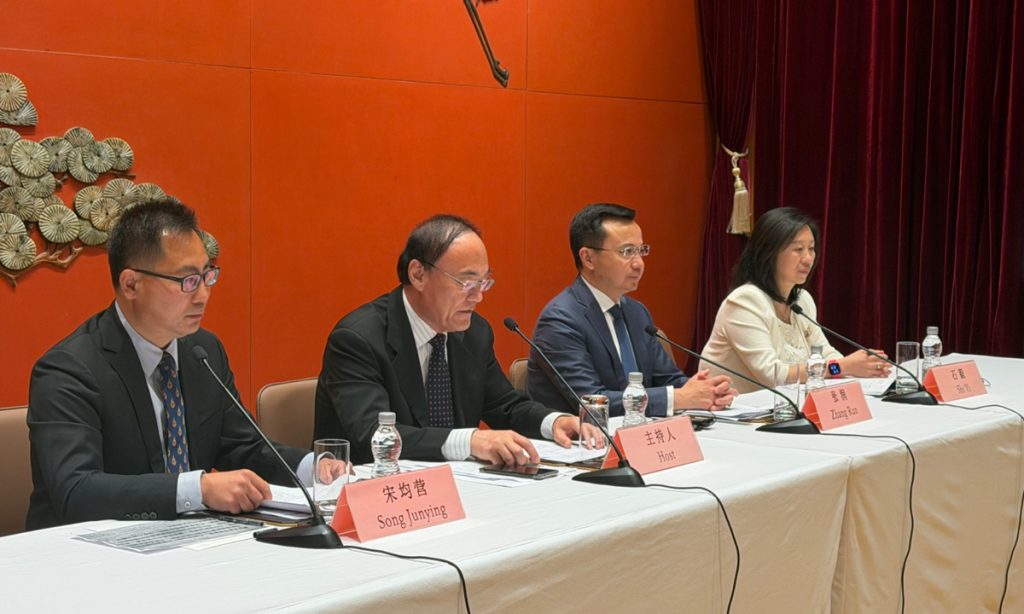
In May 2025, China and Latin American countries jointly launched five major programs covering solidarity, development, civilization, peace, and people-to-people connectivity. One year later, the China Public Diplomacy Association hosted the "Linjia No. 7 Salon" on Friday under the theme "The First Anniversary of the Five Programs for Building a China-LAC Community with a Shared Future: Implementation and Prospects," taking stock of achievements and exploring future prospects.

Global Times reporters observed at the event that journalists from Latin American countries were highly active, frequently raising their hands to ask questions, and even held discussions with Chinese experts after the meeting, demonstrating their strong interests in the trajectory of China-Latin America cooperation.

External pressure and changes in Latin American governments are among the two most closely watched issues by Latin American media. Foreign media have raised the question of whether the overlap of these two variables could lead to fluctuations in China-Latin America cooperation. However, the solid results achieved over the past year in implementing the five major programs have provided a powerful answer.

Latin American media professionals told the Global Times said that over the past year, with China's support and bilateral cooperation, Latin American countries have accelerated infrastructure development and local technological advancement. The changes brought by cooperation are tangible, and they expect more positive outcomes from future collaboration.

Currently, Latin American countries are in an electoral cycle, with Brazil, Colombia, Peru and others either having recently held or soon to hold elections. Policy uncertainties brought by leadership changes, and whether such changes will affect international cooperation projects, have become a major concern in Latin American public discourse.

At the event, a journalist from Colombia asked how China-Latin America cooperation agreements could be steadily implemented amid political party rotation in Latin American countries. In response, Zhang Run, director-general of the Latin American and Caribbean Affairs Department of China's Foreign Ministry, stated that China-Latin America friendship is rooted in the people, and that China's policy toward Latin America will remain consistent and stable regardless of changes in internal or external conditions.

Geopolitical containment is another major concern of Latin American journalists. At the salon, reporters from Brazil, Venezuela, Mexico, Cuba, and Costa Rica jointly asked how China assesses changes in the external geopolitical environment one year after the implementation of the five major programs under the China-Latin America community with a shared future framework.

"In a context of increasing global uncertainty, instability, and unpredictability, China and Latin America are jointly advancing the five major programs, sending a strong message of solidarity and self-strengthening among Global South countries, and injecting stability and positive energy into a turbulent world," Zhang said.

He noted that from January to April this year, China-Latin America trade grew strongly by 18.5 percent year-on-year, with China's imports from the region increasing by 29.4 percent. China's visa-free policy for certain Latin American countries has also boosted travel: six months later, visits from Peru to China rose by 80 percent, while those from Argentina, Brazil, Chile, and Uruguay increased by 55 percent, 48 percent, 41 percent, and 34 percent respectively.

Nelson de Sá of Brazil's UOL media group, who has worked in China for two and a half years, told the Global Times that trade restrictions and geopolitical containment measures run counter to market principles and continuously erode Latin American economic interests. However, he believes that external pressure and political turnover cannot change the long-term positive trajectory of China-Latin America cooperation. "No matter how governments change, this cooperation trend will not be significantly affected. The natural complementarity of both economies will continue to drive economic integration," he said.

In his view, the development of Chinese-funded industries in Brazil illustrates this clearly: After Ford closed its plant in Brazil, BYD took over and resumed production, restoring lost jobs; after Mercedes-Benz halted production, Great Wall Motors took over the factory and began operations; after France's Alstom scaled down and suspended rail operations in Brazil, CRRC established local factories to fill the gap, restoring and even expanding manufacturing jobs. Nelson said these companies not only took over factories but also absorbed employment and drove upstream and downstream industrial chains. The service sector is also following suit: Meituan's Keeta and Mixue Ice Cream & Tea are accelerating entry into the Brazilian consumer market, continuously expanding local employment opportunities in services.

It is precisely through strong industrial complementarity and tangible livelihood projects that China-Latin America cooperation demonstrates strong resilience. Zhang stated in his speech that China-Latin America trade has maintained steady growth, reaching 549 billion US dollars in 2025, a record high. The 66-billion-yuan credit line China pledged to Latin America is being implemented ahead of expectations.

In addition, a number of landmark infrastructure projects have taken root: The Belo Monte Ultra-High Voltage Direct Current transmission project undertaken by Chinese enterprises in Brazil spans five states and 81 cities, easing north-to-south power transmission bottlenecks and benefiting 22 million people; the Mexico City Metro Line 1 renovation project has been fully completed and opened to traffic, increasing daily passenger capacity to 1.2 million; the Bogotá Metro Line 1 project in Colombia has progressed by more than 70 percent, and upon completion will significantly improve transportation for nearly 2.9 million residents.

"Many friends from Latin America and the Caribbean have told me that 'China studies' and Chinese language learning are booming in the region," Zhang said. China has completed ahead of schedule the provision of 1,000 "Chinese Bridge" program slots, and has provided 1,752 Chinese government scholarships and 4,000 training opportunities for Latin American countries, with 254 recipients admitted under the International Chinese Language Teachers Scholarship.

The "China-Brazil Cultural Year" has been held in both countries in turn. China has established three new Confucius Institutes in Honduras, Chile, and Brazil, and Brazil has established the first Confucius Institute alliance in Latin America. The region's first Luban Workshop has been inaugurated in Nicaragua. Currently, the exhibition "Maize, Gold, Jaguar - Ancient Civilizations of the Maya and Andes" is being held at the Capital Museum in Beijing, serving as another platform for China-Latin America civilizational exchange.

"Cooperation between Uruguay and China covers not only education exchanges such as student mobility, but also high-tech and medical fields. A large number of Uruguayan medical workers are now coming to China for training," said Florencia Pujadas, a journalist from Uruguay's Channel Canal 4, in an interview with the Global Times. As both a Uruguayan citizen and journalist, she believes both peoples must make further efforts to promote mutual understanding and the healthy integration and development of different cultures and systems.

Shi Yi, a vice president of China Foreign Affairs University and researcher at the Center for a Community with a Shared Future for Mankind, shared the story of Brazilian professor Marcus Vinicius De Freitas. In 2018, Marcus joined China Foreign Affairs University. Over eight years, he has moved between classrooms in China and Brazil, think tank platforms in Morocco, and global English-language podcasts and Brazilian mainstream media, presenting an objective account of China's path to modernization. In his view, China's development is not an abstract theoretical model in textbooks, but a vivid practice of exploring modernization in a complex geopolitical and developmental environment.

During the Q&A session, Zhang noted a phenomenon he observed: Walking through the streets and tourist sites of Beijing, Spanish and Portuguese can be heard everywhere; on social media, a wave of Latin American youth is enthusiastically experiencing Chinese lifestyles, with both "China fever" and "Latin America fever" shaping a new landscape of people-to-people exchanges.

Song Junying, director in the Department for Latin American and Caribbean Studies at the China Institute of International Studies, analyzed the deeper drivers of such cooperation from a macro perspective. He argued that China-Latin America exchanges on modernization are driven by strong internal momentum for three main reasons: First, both share similar historical experiences and a strong aspiration for independent modernization and catch-up development; second, they share similar civilizational foundations, providing cultural support for mutual learning; third, amid global transformations unseen in a century, both face similar historical missions, as the collective rise of the Global South shifts the balance of global power in a more favorable direction for developing countries.

"Advancing China-Latin America modernization exchanges and mutual learning requires building a China-Latin America community with a shared future and implementing the five major programs on the basis of high-quality Belt and Road cooperation to align development strategies," Song said.

Chinese envoy calls for immediate cease-fire, Israeli withdrawal from Lebanon at UN Security Council meeting

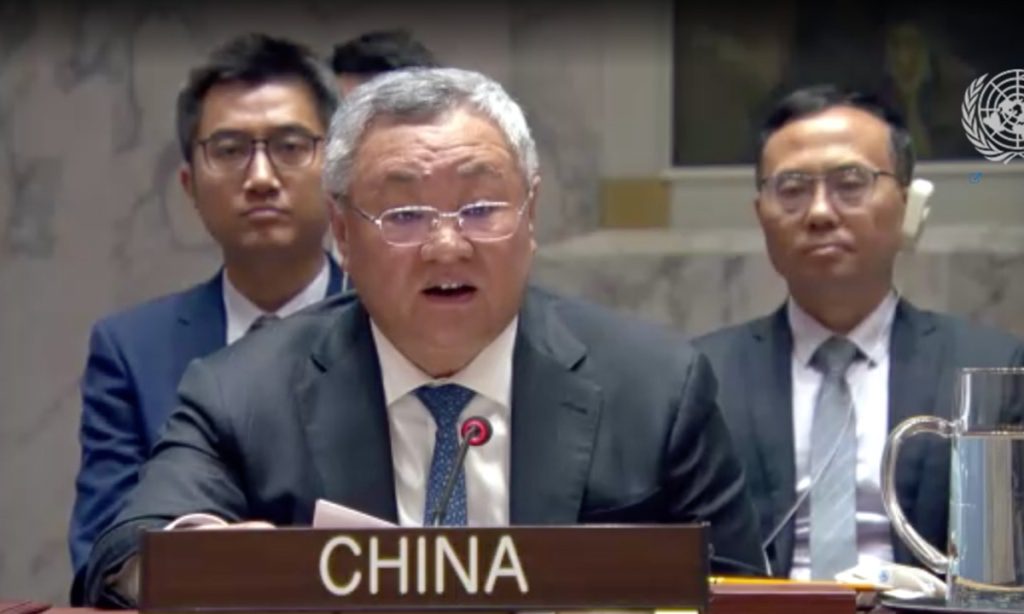
Lebanon’s sovereignty, security and territorial integrity must be respected, and Israel should immediately withdraw all its troops from Lebanon, Fu Cong, China’s permanent representative to the United Nations, said at an emergency UN Security Council meeting on the Lebanon-Israel situation on Monday afternoon local time, calling for an immediate cease-fire to end the fighting and ease tensions, according to a video released by CCTV News.

Israel’s continued advancement of its war machine has caused the deaths of more than 3,400 people in Lebanon. Force is not the way to solve the problem, and expanding occupation will not bring lasting security. All parties concerned, especially Israel, must immediately cease hostilities, fully abide by the temporary cease-fire arrangements, implement UN Security Council Resolution 1701 and other relevant resolutions, and work to de-escalate the situation as soon as possible, said Fu.

“We have noted that the parties concerned are holding negotiations toward a cease-fire, and we welcome all efforts aimed at peace. We hope that countries with important influence over the parties concerned will take active steps to help achieve a cease-fire as soon as possible,” said Fu, according to CCTV News. 

Fu said Israel has also claimed that it will further expand its ground operations, and that the intentions behind this move, as well as its serious consequences, have caused deep concern in the international community. The Lebanon-Israel cease-fire now exists in name only, and the international community must take urgent action before the situation slides into an even more dangerous abyss, the Chinese envoy said, per CCTV News. 

Fu called for an immediate cease-fire to end the fighting and ease tensions, greater support for Lebanon to help stabilize its domestic situation, and guarantees that the UN Interim Force in Lebanon can fulfill its mandate and help maintain regional stability, according to CCTV News.

GT investigates: What US’ inglorious $1.6B anti-China info campaign budget is about and where the money goes

Editor's Note:

"Cognitive Warfare" has become a new form of confrontation between states, and a new security threat. With new technological means, it sets agendas and spreads disinformation, changing people's perceptions and altering their self-identity. Launching cognitive warfare against China is an important means for Western anti-China forces to attack and discredit the country.

Some politicians and media outlets have publicly smeared China's image by propagating false narratives in an attempt to incite and provoke dissatisfaction with China among people in certain countries. These means all serve the US strategy to contain China's rise and maintain its hegemony. The Global Times is publishing a series of articles to reveal the intrigues of the US and its allies' China-targeted cognitive warfare and expose its lies and vicious intentions.

In the 18th installment of the series, the Global Times focuses on a recently passed act by US Congress, which is widely regarded as a funding mechanism for the US to badmouth China in the international community. As a latest case in the US’ high-profile cognitive warfare against China, this article discusses in detail the aspects of China that this act may seek to defame and slander, as well as where the substantial sum of $1.6 billion will ultimately be directed.

Spending vast amounts of taxpayer money to discredit another country seems inglorious, yet it has appeared more than once in public official documents of the US. Recently, the US Congress passed the H.R. 1157 to authorize more than $1.6 billion in five years to badmouth China, which has sparked questions and criticism both within the US and internationally.

According an act passed on September 9, the Congress authorized appropriations for the “Countering the People’s Republic of China Malign Influence Fund,” which planned to appropriate $325,000,000 for each of fiscal years 2023 through 2027 - $1.625 billion in total - to counter the so-called “malign influence” of China. Or in other words, to counter any aspects that the US perceives as unfavorable from China.

For many years, the US government has expended vast human and material resources globally to support so-called “independent media” and civic organizations, inciting anti-China sentiment due to a deep sense of crisis and fear regarding China's rapid development, said Wang Yiwei, a professor at the School of International Relations at Renmin University of China.

“American politicians are desperate to maintain a world order in which they are the hegemonic monopoly, even if this order exists only in the discourse and propaganda narratives they construct,” Wang told the Global Times.

A widely questioned bill

$1.6 billion is a staggering amount, allegedly double the annual operating expenditure of a major media outlet in the US like CNN.

Behind the huge amount, content of the act is filled with clichés attacking the China’s political system under the guise of threatening US’ “national security” “economic security” and disrupting “international order.” Specifically, it mentioned the Belt and Road Initiative (BRI) as a main target, saying some of the money will be used in supporting civil society and independent media to counter against BRI’s “malign influence.”

The term “malign influence” is vague and subjective, leaving a lot of room for interpretation, said Diao Daming, a professor at the School of International Studies, Renmin University of China. “Additionally, this act involves a massive funding arrangement spanning several years, suggesting that [the US] is planning a big layout to suppress, contain and discredit China on a global scale in the coming years,” Diao told the Global Times.

Unsurprisingly, some scholars and opinion leaders within the US have questioned and criticized the act. Marcus Stanley, director of studies at US think tank Quincy Institute for Responsible Statecraft, said the definition of “malign influence” in the bill is extremely broad. “For example, program funds could support any effort to highlight the ‘negative impact’ of Chinese economic and infrastructure investment in a foreign country,” Stanley wrote in his article House passes $1.6 billion to deliver anti-China propaganda overseas on September 11.

In a September 27 opinion piece titled Wars, Propaganda Wars and Funding Them, US novelist and journalist Eve Ottenberg said that China’s BRI connects the world through beneficial infrastructure investments, while the US does something vaguely similar though far less helpful with its 800 foreign military bases.

“…the contrast between the two approaches at planetary linkage has reflected rather poorly on Washington in the Global South,” wrote Ottenberg. “Hence this target in the US propaganda war: take down BRI, no matter how much good it’s doing, because it’s a bad look for Uncle Sam.”

In addition, the transparency of this bill has also been widely questioned.

This just passed act authorized to appropriate $325,000,000 “for each of fiscal years 2023 through 2027,” it required an annual summary “not later than September 30, 2023” and “annually thereafter for five years.” It suggested the fund had been put into use probably as early as October 2022, long before it was officially allowed to.

The act doesn’t seem to contain any requirement that US government financing to foreign media be made transparent to citizens of foreign countries, Stanley pointed out. Thus, it’s possible that the program could in some cases be used to subsidize covert anti-Chinese messaging, he said.

Where the money flows to?

H.R. 1157 didn’t explicitly mention who would operate the massive fund.

Nonetheless, based on the act itself, some analysis of US scholars, and open documents of certain US institutions, it is likely that the money has flowed, or will flow, to a few infamous US government affiliated or backed organizations, such as the State Department’s Global Engagement Center (GEC), and federal agency the United States Agency for International Development (USAID), which may use this money to support the overseas media and organizations engaged in anti-China activities.

USAID has been reported to fund subversive and opposition forces in many countries. The agency is largely involved in the $1.6-billion fund, as the act directly mentioned that the administrator of USAID must designate a senior official as the “assistant coordinator” of the program.

USAID’s website shows that making grants to foreign media and civil society organizations is a key part of its efforts. Under this guise, USAID was found to have repeatedly funded both domestic and overseas groups to smear China.

In November 2023, for instance, a research lab at US-based William & Mary’s Global Research Institute named AidData released a report slandering the BRI. AidData’s website shows USAID is its major partner and funder.

According to a document from the US Department of State in April 2020, GEC is an institution set to “lead, synchronize, and coordinate efforts of the Federal Government to recognize, understand, expose, and counter foreign state and non-state propaganda and disinformation efforts aimed at undermining United States national security interests.”

At a congressional hearing in March 2020, Lea Gabrielle, the US special envoy and coordinator of GEC, bluntly said that their efforts include “increasing awareness of the problematic aspects of the Belt and Road Initiative,” and they had programs “to build global resilience to PRC disinformation through media training and support to investigative journalists.” She also mentioned the US government-back media literacy programs that support pro-US media outlets and individuals.

Ironically, a main way GEC supports and trains overseas media and journalists to counter “China disinformation,” is by paying them to create and spread lies attacking China.

In September 2021, Zimbabwe’s largest daily newspaper The Herald revealed that the US was funding and training local reporters to write anti-China stories and discredit Chinese investments, the Xinhua News Agency reported in October that year.

Noting that a local workshop drawing about a dozen private media journalists was held on 14-15 September 2021, The Herald article said that the journalists were asked to portray Chinese companies as “causing harm to communities, environment and workers,” and to produce and spread such content in the media, receiving payment of $1,000 per story from the US embassy through its proxy.
Carefully woven delusions

H.R.1157 was introduced by Republican Barr Andy, a member of a so-called House select committee on the strategic competition between the US and China.

Diao believed that introducing such an act is an attempt by some anti-China some politicians to take credit, and also a sort of an “exam answer sheet” submitted by the committee to assert itself. “After all, it is not certain that there will be such a committee in the next Congress,” he told the Global Times.

This was not the first time in recent years that the US allocated a large budget for cognitive warfare against China. In the Strategic Competition Act of 2021, Congress authorized $1.5 billion over the five years for a “Countering Chinese Influence Fund,” to globally counter the so-called 'malign influence' of China.

Wang pointed out that in the information age, when most people in many countries struggle to discern the truth among vast amounts of information, the US government attempts to spread false information in the international community, manipulating public opinion to discredit China, having a detrimental impact on the international discourse environment.

Yet these slanders are not as effective as some in the US hope they would be, with an increasing number of global visitors coming to see a real China in person today under the recently loosened entry policy?

The US has launched too many absurd public perception campaigns for the international community to ignore, Wang said. “Many countries have already seen through the true nature of the US and are beginning to resist its rampant behavior. The delusions carefully woven by the US will no longer succeed as easily,” he told the Global Times.

Bayer builds 'double engine' to drive innovation throughout the full chain of China's biomedical industry

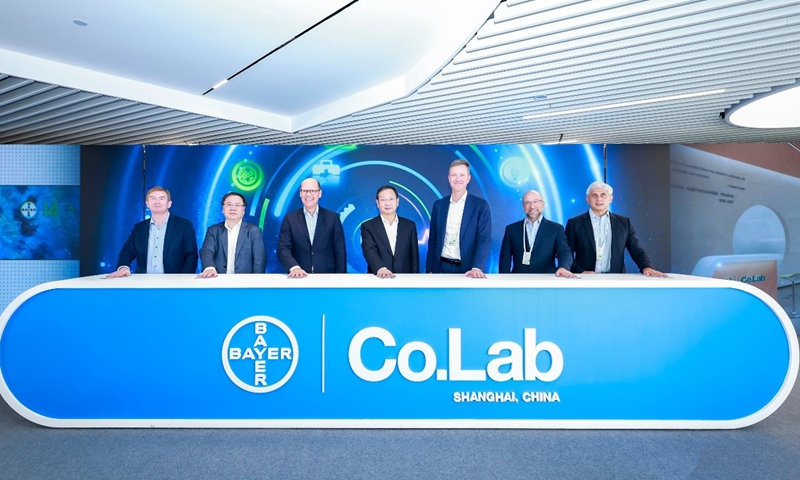
As the world's second-largest and one of the fastest-growing economies, China has a vibrant and vast market, and continues to provide new opportunities for the world through new developments. As China continuous to develop, its biomedical industry is undergoing an important phase. Strategic opportunities are attracting more multinational pharmaceutical companies to expand their footprint in China, demonstrating the strong pull of the country's market. Following Bayer's first innovation center's establishment in Beijing in 2023, Bayer Co.Lab China, a global life sciences co-creation platform, celebrated its grand opening in Shanghai on September 26. At this point, Bayer's "innovation double engine" in China's cutting-edge life sciences sector has been officially completed, giving the Chinese market a "vote of confidence" with its actions, marking a new step forward in Bayer's innovation strategy in China.
Guests unveiled Bayer Co.Lab China, from left: Friedemann Janus, Senior Vice President, Head of Regional Business Development & Licensing, Co.Lab and Divestitures, Pharmaceuticals Division at Bayer; Wu Qiang, Member of the Standing Committee of the CPC Pudong New Area Committee, Deputy Governor of Pudong New Area, and Deputy Director of the China (Shanghai) Pilot Free Trade Zone Administration; Sebastian Guth, Chief Operating Officer of Bayer Pharmaceuticals; Zhu Zhisong, Member of the Standing Committee of the CPC Shanghai Municipal Committee, Secretary of the CPC Pudong New Area Committee, and Director of the China (Shanghai) Pilot Free Trade Zone Administration; Juergen Eckhardt, Head of Business Development, Licensing and Open Innovation at Bayer AG's Pharmaceuticals Division; Seth Ettenberg, President and Chief Executive Officer of BlueRock Therapeutics; and Gustavo Pesquin, Chief Executive Officer of AskBio.

The "Bayer Yizhuang Open Innovation Center" aims to deepen the integration of production, academics and research. It seeks to accelerate pioneering fields of the biomedical industry, such as cell and gene therapies, and help upgrade the local biopharmaceutical industry. As part of Bayer's global strategic innovation ecosystem, the Bayer Co.Lab co-creation platform will provide exclusive space and tailored support services for Chinese startups, promote open innovation and collaboration in the biotech ecosystem and play an important part of Bayer's efforts to promote local R&D and innovation throughout the whole chain. Bayer Co.Lab China will empower eight to 10 start-ups, focusing on state-of-the-art innovations, including cell and gene therapies, oncology and new technology platforms. Previously, Bayer Co.Lab has been strategically deployed in innovation hotspots around the world, such as the United States, Japan and Germany.

Open collaboration empowers source innovation in whole chain

Bayer Co.Lab China relies on the dominant position of China's local pharmaceutical industry cluster and the resources of the whole industry chain. It is located in Shanghai Innovation (SH-INNO), which hosts first-class universities and top scientific research institutions. With the open, shared and collaborative innovation of the industrial ecosystem around SH-INNO, Bayer Co.Lab will provide end-to-end full-chain support for residents, helping local companies improve their sci-tech innovation-sourcing capabilities in advanced areas, such as cell and gene therapies, and empower local innovation.

Co.Lab China will not only provide an ideal co-creation space for residents but will also leverage Bayer's global R&D network and expertise to help biotech startups connect to a global innovation collaboration network, providing international perspectives and resources. Bayer Co.Lab China hosts a wealth of internal and external expert resources to accelerate innovation transformation through professional guidance and consultation. As an important component of Bayer's open innovation strategy, Co.Lab China will not only inject new momentum into Bayer's global R&D and innovation but also will become an important window for the globalization of China's innovation.

"China has become an important source of innovation in global life sciences," said Juergen Eckhardt, Head of Business Development, Licensing and Open Innovation at Bayer AG's Pharmaceuticals Division. "We are honored to bring the Bayer Co.Lab platform to China, and we hope that through multiparty collaboration, we can quickly identify and drive early-stage innovations to jointly explore solutions to major health problems and unmet medical needs, so that more ideas can be put into practice in China."
Expand footprint, dive into innovation and development of China's pharmaceutical industry

Bayer has long regarded the Chinese market as one of the most resilient growth engines in the world. With more than 140 years of experience in China, Bayer has continued to expand its innovation footprint. In 1995, Bayer Pharmaceuticals established a production and packaging plant in Beijing - the company's first of its kind in China - and continued to invest heavily in expansion, greatly increasing the Beijing site's production capacity. In 2009, Bayer established a global R&D center for prescription drugs in Beijing. Through this R&D center, China is included in more than 80 percent of Bayer's pivotal multicenter clinical trials, including early and late-stage clinical development programs. After nearly 30 years of development, Bayer is the only biomedical company in Beijing with an output value exceeding 10 billion yuan ($1.42 billion) for 11 consecutive years. It is also one of the few foreign-funded enterprises in Beijing that has both a "world-class product supply center" and a "global R&D center".

In addition, by deepening its strategic partnerships with well-known local academic institutions, especially Tsinghua University and Peking University, Bayer is committed to accelerating the transformation of basic research results into new drug R&D, and helping to improve China's pharmaceutical R&D and innovation capabilities. To date, Bayer has carried out more than 100 joint research projects with these two universities. These partnerships have become a model of collaborative development and innovation of "industry-university research" in China's domestic pharmaceutical and medical sectors.

The scale of China's biomedical market ranks second in the world, and the pipelines of pharmaceutical innovation ranks among the top of the world's second echelon. Its drug research and industrial development are entering a new stage of innovation and are consequently leapfrogging. As for cell and gene therapies, oncology and other innovative areas, China has shown great potential and innovative vitality, and occupies an increasingly important position in the global pharmaceutical industry chain.

Based on a deep understanding of China's pharmaceutical innovation potential and a strong recognition of local innovative forces, Bayer's Co.Lab's growth in China marks another major move by Bayer to increase its investment in innovation in the country, demonstrating its firm determination to take root in the Chinese market. Bayer will continue to enhance local collaboration to accelerate innovation and co-creation in China, work with more local companies to promote innovation and development in the medical and health industry in China and even the world, further stimulate the innovative vitality of China's pharmaceutical industry and attain a stronger footing in the global pharmaceutical innovation stage.

#

About Bayer

Bayer is a global company with core competencies in health and agriculture in the life sciences sector. The company is committed to helping people and the planet thrive through products and services that help people overcome the major challenges posed by a growing and aging global population. Bayer is committed to driving sustainability and making a positive impact on its business. At the same time, the Group is also improving profitability and creating value through technological innovation and business growth. Globally, the Bayer brand stands for trustworthiness, reliability and quality. In fiscal 2023, Bayer will have approximately 100,000 employees and sales of 47.6 billion euros. R&D investment, excluding special projects, amounted to EUR 5.8 billion. See www.bayer.com for more information.

China’s A-share market rallies strongly on Thursday, with Shanghai market index exceeding 3,000 points

China's Shanghai Composite Index surged more than 100 points, closing above 3,000 points on Thursday, the first time above the key benchmark since July 2, following a series of pro-growth policy measures rolled out by policymakers that help lift up investor confidence. 

The rally came after a key Communist Party of China (CPC) leadership meeting on Thursday that stressed the need to boost the country's capital market, while actively promote medium- and long-term funds to enter the market, the Xinhua News Agency reported.

The Political Bureau of the CPC Central Committee held a meeting on Thursday to analyze and study the current economic situation and make further arrangements for economic work. It was noted at the meeting that the fundamentals of the Chinese economy and the favorable conditions such as a vast market, strong economic resilience and great potential have remained unchanged, Xinhua said. 

All three major stock indices for the A shares posted gains of over 3 percent, with the Shanghai Composite Index rising by 3.61 percent, the Shenzhen Component Index up by 4.44 percent, and the ChiNext Index rising by 4.42 percent. 

This marks the third straight day that all three indices finished with gains.

Trading volume at the Shanghai and Shenzhen bourses reached a total of 1.1625 trillion yuan ($165.6 billion) on Thursday, 5.1 billion yuan higher than a day ago.

More than 5,100 stocks reported gains in prices, with more than 100 stocks reaching their daily upper limit. The real estate companies led the rally, followed by liquor, food, banks and securities companies. 

"With multiple favorable policies being released, we are witnessing a remarkable rally in market expectations. Three consecutive days of gains suggest the A-share market is now entering a new upward phase," Yang Delong, chief economist at Shenzhen-based First Seafront Fund, told the Global Times on Thursday.

Chinese financial regulators on Tuesday released a slew of favorable policies to support the capital market which has lifted investor confidence.

China will issue a guideline to encourage medium and long-term funds to enter the capital market, the country's top securities regulator said on Tuesday. The China Securities Regulatory Commission (CSRC) plans to release six measures to promote corporate mergers and acquisitions, and work with various parties to facilitate the circulation of private equity and venture capital funds.

And, China's central bank, the People's Bank of China, will introduce new monetary policy tools to support the stock market's growth. The central bank will set up a swap program allowing securities, funds, and insurance companies to secure liquidity using asset collateral, said Pan Gongsheng, governor of the People's Bank of China, on Tuesday.

China-Australia relations see more high-level exchanges, conducive to avoid amplifying difference: experts

China-Australia relations have seen positive progress with more recent high-level exchanges, and observers noted that strengthened communication between the two sides can effectively avoid amplifying differences. The two countries' top diplomats met on Tuesday, meanwhile the fourth China-Australia Strategic Economic Dialogue is scheduled to be held in Beijing.

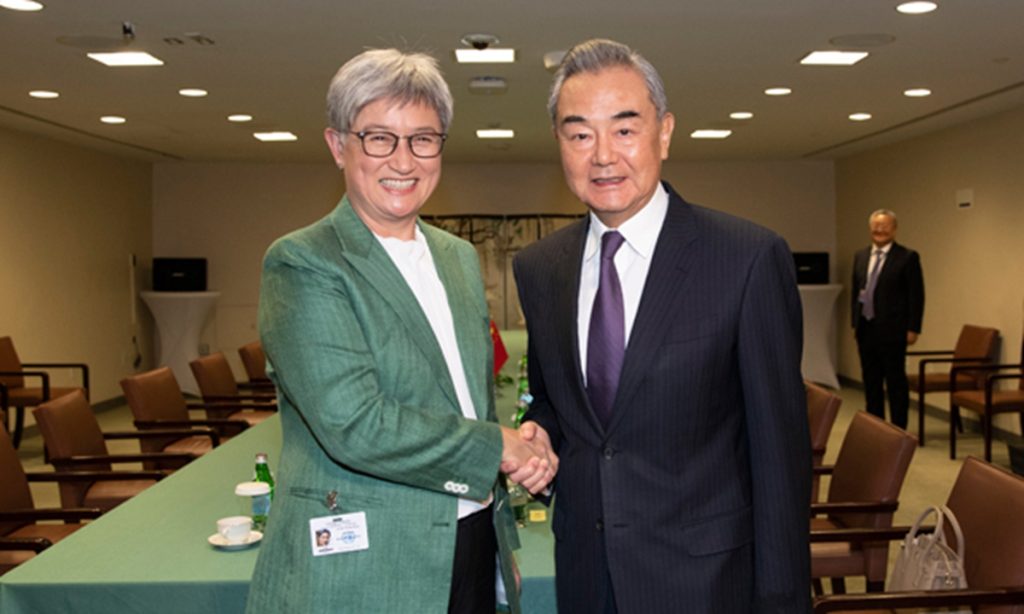
According to Xinhua News Agency on Wednesday, Chinese Foreign Minister Wang Yi met with his Australian counterpart, Penny Wong, on the sidelines of the United Nations General Assembly in New York on Tuesday.

Wang, also a member of the Political Bureau of the Communist Party of China Central Committee, told Wong that both sides should continue to build a more mature, stable, and fruitful comprehensive strategic partnership.

Both sides should properly handle the issues in bilateral exchanges and not define China-Australia relations from the perspective of differences, Wang said, hoping Australia joins hands with China to ensure that bilateral relations go on the right track and achieve more results.

Wong said Australia is ready to work with China to strengthen economic and trade cooperation, engage in constructive communication on issues of differences, and promote the stable development of bilateral relations. The Australian side's adherence to the one-China policy has not changed, Wong said.

Chen Hong, executive director of the Asia Pacific Studies Center at East China Normal University, spoke positively of the meeting, stressing that during the gradual improvement of China-Australia relations, increased high-level communication between the two sides has been beneficial in steering the overall direction of their relationship, highlighting the importance both parties place on enhancing ties. 

With the US election due in November and an Australian federal election next year, shifts in the political landscape may lead to policy uncertainties especially when it comes to China policy, making it even more crucial for China and Australia to deepen and strengthen high-level dialogue, as it can help avoid misunderstandings and misjudgments, Chen noted.

Analysts have also set high expectations for Australian Treasurer Jim Chalmers' upcoming visit to China.

On Wednesday, China's National Development and Reform Commission announced that according to the agreement between China and Australia, Australian Treasurer Jim Chalmers will visit China from Thursday to Friday. During this visit, Zheng Shanjie, head of the National Development and Reform Commission, will co-chair the fourth China-Australia Strategic Economic Dialogue with Chalmers.

As the treasurer, Chalmers oversees Australia's economic direction, Chen pointed out.

His visit to China is expected to not only promote bilateral economic and trade relations but also to enhance the overall bilateral relationship, Chen noted.

Additionally, there may be opportunities for breakthroughs in cooperation between the two nations in new areas, particularly in addressing climate change and clean energy initiatives, Chen said.

However, experts also warned that the recent negative dynamics in the Quad leaders' summit regarding China are not conducive to the steady and healthy development of China-Australia relations.

Ancient Chinese clothing exhibition in Berlin reveals Confucian elegance

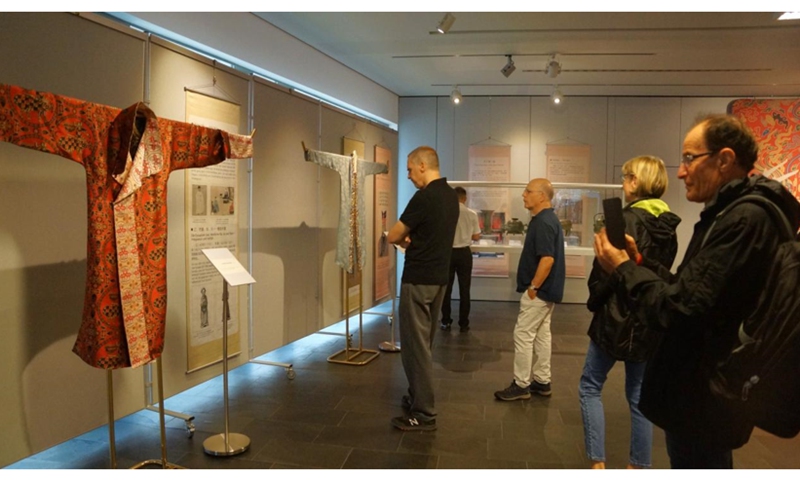
A new exhibition on ancient Chinese clothing was held in German capital Berlin. The exhibition traces the history of Chinese clothing, highlighting how the Confucian core value of “ritual” is expressed in Chinese clothing culture.

Set to run until October 9, this exhibition on ancient Chinese clothing culture is part of the 2024 Confucius international cultural exchange series.

“Chinese clothing culture has evolved over different historical periods, forming a comprehensive system of development. It reflects the transmission of civilization and encapsulates historical moments,” said Sun Qinhang, director of the China Cultural Center in Berlin.

“We hope this exhibition serves as a bridge between the ancient and modern, East and West, fostering exchanges and enhancing mutual understanding between civilizations,” Sun noted.

The exhibition features a special selection of heirloom garments from the Confucius temple back in Qufu, Shandong Province. These ancient Ming Dynasty (1368-1644) outfits, renowned for their vibrant colors, exquisite craftsmanship, and unique designs, vividly showcase the splendor of Ming Dynasty clothing culture, while also deeply reflecting the lasting influence of Confucianism on social life.

During the live clothing display segment, models dressed in traditional Chinese attire brought the elegance of these ancient garments to life. As they gracefully walked through the exhibition hall, guests eagerly took photos with them, capturing the charm and beauty of the ancient clothing.

"This exhibition allows our German friends to experience up close the beauty and intricacy of ancient Chinese garments, as well as the Confucian values embodied in the clothing, enhancing their understanding and appreciation of Chinese culture," said Hua Jingang, the curator of the exhibition.

The opening ceremony also featured interactive activities and a display area for cultural and creative products related to intangible cultural heritage. Visitors could try on ancient Chinese Hanfu clothing and pose for photos and, under the guidance of heritage artisans, learn traditional crafts such as Lu Embroidery, fabric knotting, and rope art.

Multiple foreign enterprises express confidence in China market as CIFTIS concludes with fruitful outcomes

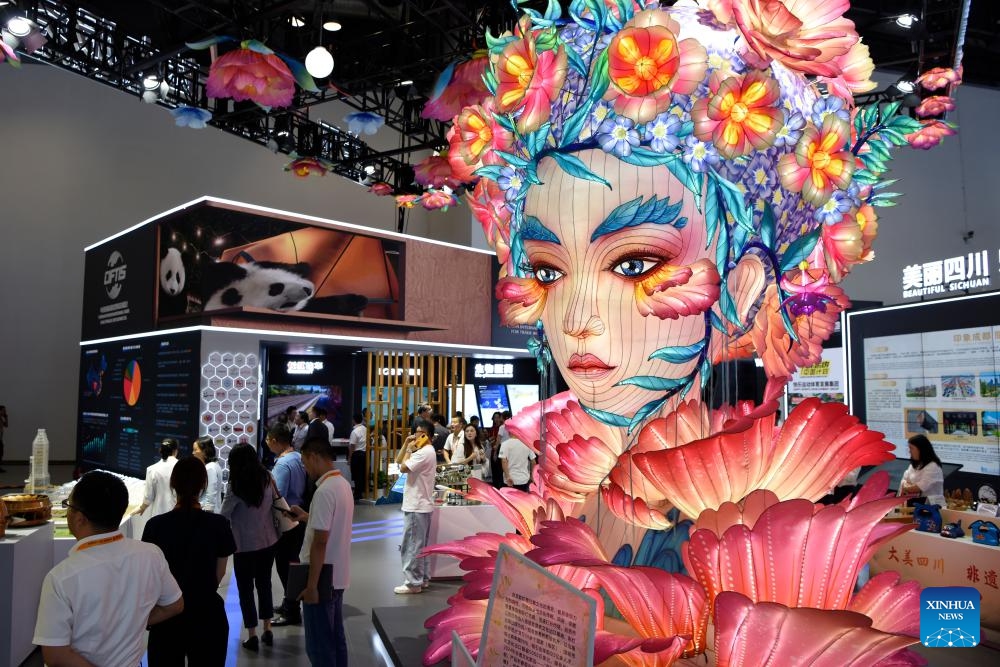
The 2024 China International Fair for Trade in Services (CIFTIS) concluded in Beijing on Monday, achieving some 1,000 practical outcomes in deals and investments, with more than 20 percent of its on-site exhibitors being international companies.

Multiple foreign-funded enterprises showcased their latest innovations at the expo, while expressing confidence in exploring the Chinese market.

The outcomes achieved during this year's CIFTIS include transactions and investments in fields such as construction, finance and business services. During the event, 56 sessions were held, including international cooperation project negotiation and promotion meetings, according to the organizer.

A total of 111 enterprises and institutions, including Fortune Global 500 companies and industry leaders, announced 219 achievements in the fields of digitalization, artificial intelligence, healthcare and more, an increase of 80 compared with the previous edition, Piao Xuedong, head of the Beijing Municipal Commerce Bureau, said at a press conference on Monday.

The fruitful results of the CIFTIS demonstrate China's firm determination to boost high-quality development through high-level opening-up, and these results reflect a broad, important consensus on deepening the global services industry and services trade cooperation, and reflect outstanding achievements in the innovative development of services trade, Wang Bo, an official of the Ministry of Commerce, said at the conference.

"This is our first time to participate in the CIFTIS and we had many conversations surrounding our environmental services and learning from the experts in attendance about the opportunities in providing ESG-related services," Frank Hammes, global CEO of Swiss air quality technology company IQAir, told the Global Times on the sidelines of the CIFTIS.

China is one of the most dynamic economies in the world. Intense competition among companies within China and a growing internal market has made China highly competitive in nearly every product category. As a foreign enterprise in China, this situation is both an opportunity and a challenge, Hammes said.

"China will continue to be an important part of our business," he said.

Jiang Lei, general manager of French pilot training center operator Simaero, noted the fast growth of the company's business amid China's continuous opening-up process.

"Our company provides training services for civil aviation pilots with a simulation cockpit, and our revenues and business scope have expanded at a great speed since the establishment of our first joint venture in China in 2021," Jiang told the Global Times.

"There is a long list of Chinese localities that we plan to expand our business cooperation with to meet the growing demand of China's fast-growing civil aviation industry."

China's National Development and Reform Commission, the country's top economic planner, recently issued the 2024 negative list for foreign investment access, with restrictions on foreign investment in the manufacturing sector to be completely lifted, in a latest effort to promote wider opening-up to the outside world.