Across the linked Tianshan Mountains, 'seeing China' in Kyrgyzstan

Kyrgyzstan, China's neighbor linked by mountains and rivers, is this year's rotating chair of the Shanghai Cooperation Organisation (SCO).

Although the two countries are geographically very close, the Chinese public as a whole seems far less familiar with this western neighbor than with Japan and South Korea to the east. For some, their impression of the country may be limited to the idea that the legendary poet Li Bai might have been born in Suyab city over a thousand years ago. What is Kyrgyzstan like today? How do local people view China? In late May, a team of Global Times reporters visited Bishkek, capital of Kyrgyzstan. What left the deepest impression was not only the snow-capped mountains visible almost everywhere in the city, but also China-related signs throughout the journey, as well as the positive and optimistic attitudes shown by local residents and Chinese people living there when talking about relations between the two countries.

Li Bai, Suyab and Tokmok

Driving east from Bishkek toward Issyk-Kul Lake for a little over an hour brings you to Tokmok, a town in the Chuy Valley. It is a must-visit destination for many Chinese travelers to Kyrgyzstan, because it is home to the ruins of an ancient city known as Ak-Beshim, which is listed as a World Cultural Heritage site. Chinese visitors know it better by its Chinese name, Suiyecheng or Suyab, and many believe it was the birthplace of Li Bai.

"My Chinese name is Li Bai," 28-year-old Kyrgyz tour guide Mitrofanov Leonid Dmitrievich told the Global Times. He spoke excellent Chinese and had spent many years studying and living in Xiamen, East China's Fujian Province. "Look, this is my Xiaohongshu (RedNote) account. It's called 'Li Bai, a Kyrgyzstan tour guide,'" he said.

The Suyab where Global Times reporters met "Li Bai" has long since lost the appearance of a city. What remains are a few stretches of earthen wall wrapped in green grass, along with several signs put up in recent years telling visitors what once stood here.
In the middle of the site is a very important set of monitoring equipment: an observation station jointly established by China's Dunhuang Academy and Kyrgyzstan's local cultural and heritage protection authorities for environmental monitoring and data collection.

Just then, a bus pulled up. A group of archaeologists from Central Asian countries arrived at the site, having just attended a joint archaeological meeting in Bishkek. The experts from China and Central Asia began exchanging ideas beside the site's ramparts - a scene poet Li Bai could hardly have imagined in his lifetime.

"Are you Chinese?" The reporters' thoughts were interrupted by familiar Chinese. More than a dozen Chinese tourists had appeared at Suyab. They were part of the tour group led by Leonid, coming from Jiangsu and other provinces across China. Kyrgyzstan was the second stop on their Central Asia tour.

"Since you're reporters, you should really point this out - the sign for Li Bai's birthplace is only in Kyrgyz and Russian, not a single Chinese character," one man in the group said.

'Signs of China' everywhere in the city
Kyrgyzstan uses both Kyrgyz and Russian as official languages. Road signs across Bishkek usually display Kyrgyz on the top line and Russian below. As a former Soviet republic, many street scenes here are reminiscent of the Russian Far East. But construction sites are everywhere in the city, and many cranes can be seen on the skyline, showing that the real estate sector is just taking off and urban development is in a phase of rapid construction.

During interviews, local people told the Global Times that many building projects are undertaken by Chinese companies. However, at three construction sites, we found that all of the workers working that day were locals.

Why did we pay attention to these details? On the flight to Bishkek, we had read foreign media reports from the past year or two about China-Kyrgyzstan relations. Many of them sounded alarming - headlines like "A clash reveals growing anti-Chinese sentiment in Kyrgyzstan," "An influx of cheap Chinese labor leaves Kyrgyz people jobless," and "Chinese design and technology rob Kyrgyz cities of their Central Asian character." Yet during the reporters' brief four-day reporting trip, the information shared by more than 20 interviewees from both China and Kyrgyzstan made these foreign media claims sound very much outside the mainstream.

The Global Times found that the signs of China are everywhere in Bishkek. Many of the green buses running through the city have the word "ZHONGTONG" on the back. According to a Global Times report on May 22, 2023, the first batch of 1,000 Zhongtong buses purchased by Kyrgyzstan rolled off the production line in Liaocheng, East China's Shandong Province, on May 20 that year, Kyrgyz President Sadyr Japarov attended the ceremony.

The cars on the streets of Bishkek are highly varied. Some brands look quite old and carry a distinctly Soviet-era feel. There are also many cars from Japan and South Korea. "But more than 40 percent of the new cars sold in Kyrgyzstan come from China," Lu Yunran, CEO of 212 Off-Road Vehicle Co., Ltd., which is preparing to enter the Kyrgyz market, told the Global Times at the 2026 China-Kyrgyzstan Media Cooperation Forum held on May 27. The reason Chinese carmakers are entering the Kyrgyz market, he said, is simple: "There is demand here."

In a shopping mall in central Bishkek, as the escalator slowly carried the reporters up to the sportswear section on the third floor, the three brands that came into view from left to right were Li-Ning, Xtep and Anta. Taking the elevator up another three floors, we also found Lanzhou hand-pulled noodles and Chinese ice cream and beverage chain Mixue.

Another Chinese imprint in Bishkek is traditional Chinese medicine (TCM).

At the China-Kyrgyzstan Qihuang Traditional Chinese Medicine Center, located at 120 Umitalieva Street, Bishkek, a patient in his 50s was undergoing acupuncture. "I'm from Bishkek," he told the Global Times. "I have a pretty severe spinal misalignment. Tomorrow marks my fifth day of acupuncture treatment, and I've already felt immense relief."

Another patient, who was receiving cupping therapy for polyarthritis, shared a similar sentiment: "TCM works wonders for me." During the interviews, both patients vouched for the effectiveness of TCM and praised the Chinese doctors for being even more dedicated than local physicians. "They are genuinely here to help the local people," one patient noted.

Aishoola Rysbekova, a 31-year-old Chinese language lecturer at the Kyrgyz National University, goes by the Chinese name "Xinyue," which means "new moon." She told the Global Times that Bishkek's economy has been booming over the past two years, mirroring a broader national economic uptick. Consequently, university faculty salaries have seen a major boost - "nearly doubling," she said. The current average salary is now equivalent to over 5,000 yuan ($738). "Our economic and trade cooperation with China has played a massive role in this," the Kyrgyz woman added.

During the interviews, many Chinese people living in Bishkek also expressed a positive outlook on the country.

Within the local Chinese community, the Guoying supermarket is well-known. Spanning roughly 500 square meters, the store is divided into three sections: Chinese-made daily necessities, Chinese snacks and Chinese fast food. Walking through the Guoying supermarket feels like being back in China, with shelves packed with everything from dried noodles to snacks, milk tea, and even the popular Chinese brand Mind Act Upon Mind tissues.

Zhao Shulin, who leases the supermarket's food section, told the Global Times that while Kyrgyzstan had previously gone through periods of political instability due to a sluggish economy, recent years have seen strong economic growth. As a result, the public mind-set has become more rational. Living here, you really feel the locals are very friendly, Zhao said.

Not far from where Zhao stood, three local middle school girls were choosing Chinese snacks. "Chinese is a beautiful language," one of the girls said, in English, as she told the reporters about her plans to study Chinese.
Exporting high-quality development opportunities

"The most valuable advantage for Kyrgyzstan is to be the neighbor of China," Kyrgyz President Japarov told the Chinese top leader on August 31, 2025, during his visit to Tianjin for the SCO Summit 2025 and the commemoration of the 80th anniversary of the victory of the Chinese People's War of Resistance Against Japanese Aggression and the World Anti-Fascist War. He emphasized that China is a good neighbor and a good friend of Kyrgyzstan.

At the 2026 China-Kyrgyzstan Media Cooperation Forum, Kyrgyz commentator Ismail Dairov echoed this sentiment when discussing bilateral ties: "Geography is destiny." Fellow panelist and commentator Kurmanbek Mambetov noted that China and Kyrgyzstan are harmonious neighbors. "You might fight with relatives, and you might lose friends, but the bond of being neighbors is something that never changes," he said.

Explaining the booming trade ties and the strengthening cooperation between the two countries, Mambetov pointed out that their strategic interests are perfectly aligned. "China needs a stable Kyrgyzstan, and the stronger China becomes, the more opportunities open up for Kyrgyzstan."

Zhu Yongbiao, executive director of the Research Center for the Belt and Road at Lanzhou University, told the Global Times that practical cooperation between China and Kyrgyzstan is not a one-way transfer of benefits. Rather, it is a healthy, mutually beneficial relationship built on the strong complementarity of the two countries' trade and economic structures.

Zhu said this complementarity is also a common feature of cooperation among SCO member states, making China-Kyrgyzstan cooperation representative, replicable and worth promoting. In his view, the Chinese presence the reporters observed in Bishkek shows that what China is exporting today is not only culture, but also high-quality development opportunities.

Of course, this does not mean there are no bottlenecks in bilateral cooperation. During the interviews, people from both China and Kyrgyzstan mentioned that the two peoples still do not know enough about each other and media coverage between the two sides remains insufficient.

Four days of reporting in Bishkek was clearly not enough to gain a deep understanding of Kyrgyzstan. Nevertheless, the trip provided some firsthand knowledge of China's friendly neighbor. On the flight back to Beijing from Bishkek, the reporters found that most of the passengers were also Chinese. Among them were people selling agricultural machinery in Kyrgyzstan, employees of state-owned enterprises, business visitors, and tourists.
Perhaps by a twist of fate, we ran into Leonid and his tour companions again at a Chinese restaurant in Bishkek. Regarding foreign media descriptions of negative sentiment between the Chinese and Kyrgyz peoples, Leonid said that if such feelings do exist, it must be because those people have not worked hard enough and are jealous of those who have benefited from China-Kyrgyzstan cooperation.
China vows stable Latin America policy amid geopolitical pressure and political transitions, journalists’ top concerns

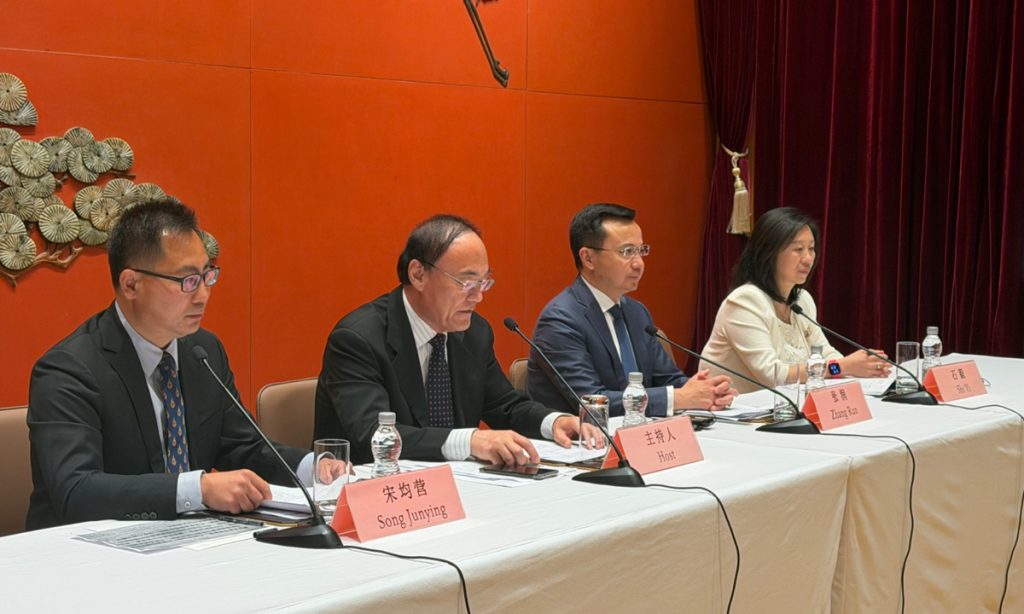
In May 2025, China and Latin American countries jointly launched five major programs covering solidarity, development, civilization, peace, and people-to-people connectivity. One year later, the China Public Diplomacy Association hosted the "Linjia No. 7 Salon" on Friday under the theme "The First Anniversary of the Five Programs for Building a China-LAC Community with a Shared Future: Implementation and Prospects," taking stock of achievements and exploring future prospects.

Global Times reporters observed at the event that journalists from Latin American countries were highly active, frequently raising their hands to ask questions, and even held discussions with Chinese experts after the meeting, demonstrating their strong interests in the trajectory of China-Latin America cooperation.

External pressure and changes in Latin American governments are among the two most closely watched issues by Latin American media. Foreign media have raised the question of whether the overlap of these two variables could lead to fluctuations in China-Latin America cooperation. However, the solid results achieved over the past year in implementing the five major programs have provided a powerful answer.

Latin American media professionals told the Global Times said that over the past year, with China's support and bilateral cooperation, Latin American countries have accelerated infrastructure development and local technological advancement. The changes brought by cooperation are tangible, and they expect more positive outcomes from future collaboration.

Currently, Latin American countries are in an electoral cycle, with Brazil, Colombia, Peru and others either having recently held or soon to hold elections. Policy uncertainties brought by leadership changes, and whether such changes will affect international cooperation projects, have become a major concern in Latin American public discourse.

At the event, a journalist from Colombia asked how China-Latin America cooperation agreements could be steadily implemented amid political party rotation in Latin American countries. In response, Zhang Run, director-general of the Latin American and Caribbean Affairs Department of China's Foreign Ministry, stated that China-Latin America friendship is rooted in the people, and that China's policy toward Latin America will remain consistent and stable regardless of changes in internal or external conditions.

Geopolitical containment is another major concern of Latin American journalists. At the salon, reporters from Brazil, Venezuela, Mexico, Cuba, and Costa Rica jointly asked how China assesses changes in the external geopolitical environment one year after the implementation of the five major programs under the China-Latin America community with a shared future framework.

"In a context of increasing global uncertainty, instability, and unpredictability, China and Latin America are jointly advancing the five major programs, sending a strong message of solidarity and self-strengthening among Global South countries, and injecting stability and positive energy into a turbulent world," Zhang said.

He noted that from January to April this year, China-Latin America trade grew strongly by 18.5 percent year-on-year, with China's imports from the region increasing by 29.4 percent. China's visa-free policy for certain Latin American countries has also boosted travel: six months later, visits from Peru to China rose by 80 percent, while those from Argentina, Brazil, Chile, and Uruguay increased by 55 percent, 48 percent, 41 percent, and 34 percent respectively.

Nelson de Sá of Brazil's UOL media group, who has worked in China for two and a half years, told the Global Times that trade restrictions and geopolitical containment measures run counter to market principles and continuously erode Latin American economic interests. However, he believes that external pressure and political turnover cannot change the long-term positive trajectory of China-Latin America cooperation. "No matter how governments change, this cooperation trend will not be significantly affected. The natural complementarity of both economies will continue to drive economic integration," he said.

In his view, the development of Chinese-funded industries in Brazil illustrates this clearly: After Ford closed its plant in Brazil, BYD took over and resumed production, restoring lost jobs; after Mercedes-Benz halted production, Great Wall Motors took over the factory and began operations; after France's Alstom scaled down and suspended rail operations in Brazil, CRRC established local factories to fill the gap, restoring and even expanding manufacturing jobs. Nelson said these companies not only took over factories but also absorbed employment and drove upstream and downstream industrial chains. The service sector is also following suit: Meituan's Keeta and Mixue Ice Cream & Tea are accelerating entry into the Brazilian consumer market, continuously expanding local employment opportunities in services.

It is precisely through strong industrial complementarity and tangible livelihood projects that China-Latin America cooperation demonstrates strong resilience. Zhang stated in his speech that China-Latin America trade has maintained steady growth, reaching 549 billion US dollars in 2025, a record high. The 66-billion-yuan credit line China pledged to Latin America is being implemented ahead of expectations.

In addition, a number of landmark infrastructure projects have taken root: The Belo Monte Ultra-High Voltage Direct Current transmission project undertaken by Chinese enterprises in Brazil spans five states and 81 cities, easing north-to-south power transmission bottlenecks and benefiting 22 million people; the Mexico City Metro Line 1 renovation project has been fully completed and opened to traffic, increasing daily passenger capacity to 1.2 million; the Bogotá Metro Line 1 project in Colombia has progressed by more than 70 percent, and upon completion will significantly improve transportation for nearly 2.9 million residents.

"Many friends from Latin America and the Caribbean have told me that 'China studies' and Chinese language learning are booming in the region," Zhang said. China has completed ahead of schedule the provision of 1,000 "Chinese Bridge" program slots, and has provided 1,752 Chinese government scholarships and 4,000 training opportunities for Latin American countries, with 254 recipients admitted under the International Chinese Language Teachers Scholarship.

The "China-Brazil Cultural Year" has been held in both countries in turn. China has established three new Confucius Institutes in Honduras, Chile, and Brazil, and Brazil has established the first Confucius Institute alliance in Latin America. The region's first Luban Workshop has been inaugurated in Nicaragua. Currently, the exhibition "Maize, Gold, Jaguar - Ancient Civilizations of the Maya and Andes" is being held at the Capital Museum in Beijing, serving as another platform for China-Latin America civilizational exchange.

"Cooperation between Uruguay and China covers not only education exchanges such as student mobility, but also high-tech and medical fields. A large number of Uruguayan medical workers are now coming to China for training," said Florencia Pujadas, a journalist from Uruguay's Channel Canal 4, in an interview with the Global Times. As both a Uruguayan citizen and journalist, she believes both peoples must make further efforts to promote mutual understanding and the healthy integration and development of different cultures and systems.

Shi Yi, a vice president of China Foreign Affairs University and researcher at the Center for a Community with a Shared Future for Mankind, shared the story of Brazilian professor Marcus Vinicius De Freitas. In 2018, Marcus joined China Foreign Affairs University. Over eight years, he has moved between classrooms in China and Brazil, think tank platforms in Morocco, and global English-language podcasts and Brazilian mainstream media, presenting an objective account of China's path to modernization. In his view, China's development is not an abstract theoretical model in textbooks, but a vivid practice of exploring modernization in a complex geopolitical and developmental environment.

During the Q&A session, Zhang noted a phenomenon he observed: Walking through the streets and tourist sites of Beijing, Spanish and Portuguese can be heard everywhere; on social media, a wave of Latin American youth is enthusiastically experiencing Chinese lifestyles, with both "China fever" and "Latin America fever" shaping a new landscape of people-to-people exchanges.

Song Junying, director in the Department for Latin American and Caribbean Studies at the China Institute of International Studies, analyzed the deeper drivers of such cooperation from a macro perspective. He argued that China-Latin America exchanges on modernization are driven by strong internal momentum for three main reasons: First, both share similar historical experiences and a strong aspiration for independent modernization and catch-up development; second, they share similar civilizational foundations, providing cultural support for mutual learning; third, amid global transformations unseen in a century, both face similar historical missions, as the collective rise of the Global South shifts the balance of global power in a more favorable direction for developing countries.

"Advancing China-Latin America modernization exchanges and mutual learning requires building a China-Latin America community with a shared future and implementing the five major programs on the basis of high-quality Belt and Road cooperation to align development strategies," Song said.

Chinese envoy calls for immediate cease-fire, Israeli withdrawal from Lebanon at UN Security Council meeting

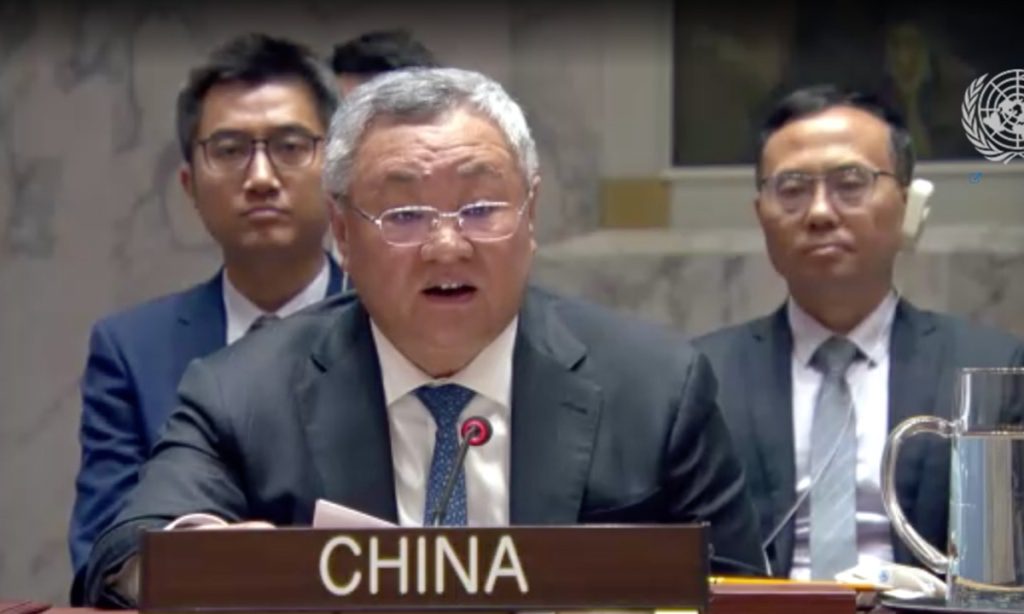
Lebanon’s sovereignty, security and territorial integrity must be respected, and Israel should immediately withdraw all its troops from Lebanon, Fu Cong, China’s permanent representative to the United Nations, said at an emergency UN Security Council meeting on the Lebanon-Israel situation on Monday afternoon local time, calling for an immediate cease-fire to end the fighting and ease tensions, according to a video released by CCTV News.

Israel’s continued advancement of its war machine has caused the deaths of more than 3,400 people in Lebanon. Force is not the way to solve the problem, and expanding occupation will not bring lasting security. All parties concerned, especially Israel, must immediately cease hostilities, fully abide by the temporary cease-fire arrangements, implement UN Security Council Resolution 1701 and other relevant resolutions, and work to de-escalate the situation as soon as possible, said Fu.

“We have noted that the parties concerned are holding negotiations toward a cease-fire, and we welcome all efforts aimed at peace. We hope that countries with important influence over the parties concerned will take active steps to help achieve a cease-fire as soon as possible,” said Fu, according to CCTV News. 

Fu said Israel has also claimed that it will further expand its ground operations, and that the intentions behind this move, as well as its serious consequences, have caused deep concern in the international community. The Lebanon-Israel cease-fire now exists in name only, and the international community must take urgent action before the situation slides into an even more dangerous abyss, the Chinese envoy said, per CCTV News. 

Fu called for an immediate cease-fire to end the fighting and ease tensions, greater support for Lebanon to help stabilize its domestic situation, and guarantees that the UN Interim Force in Lebanon can fulfill its mandate and help maintain regional stability, according to CCTV News.

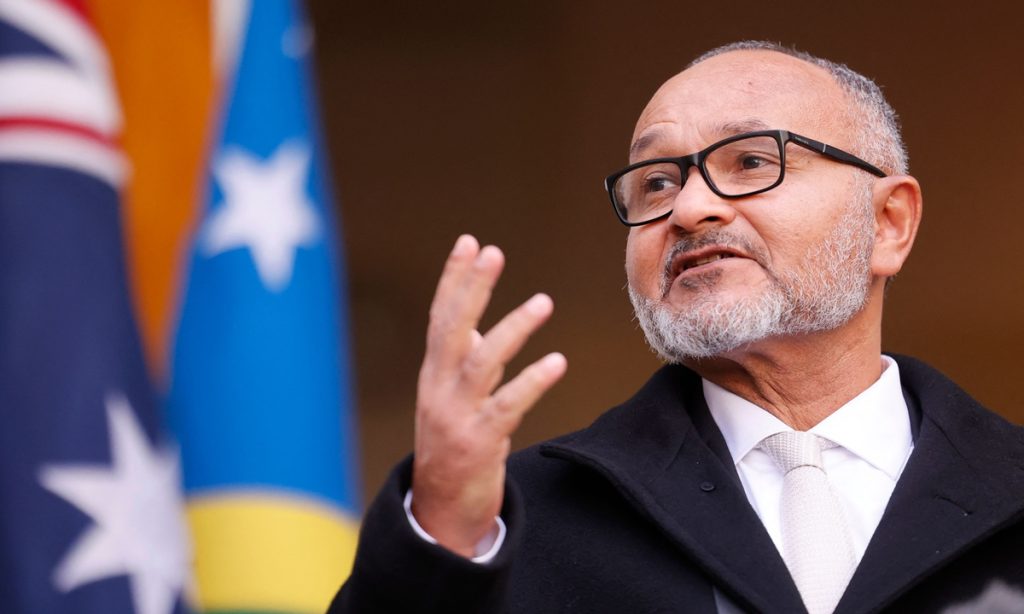
Solomons PM reportedly to review security pact with China amid Western media hype; Chinese FM says China stands ready to expand practical cooperation with its new government

China and the Solomon Islands are comprehensive strategic partners featuring mutual respect and common development for a new era. " We stand ready to work with the new government of the Solomon Islands to expand practical cooperation in various fields and better benefit the people of both countries," Chinese Foreign Ministry spokesperson Mao Ning said on Wednesday.

The remarks were made as Solomon Islands' newly elected Prime Minister Matthew Wale reportedly said on Wednesday he would be "reviewing" his country's 2022 security pact with China, which has been repeatedly hyped up by Canberra and Washington. 

Asked about that pact on Wednesday alongside Australian Prime Minister Anthony Albanese, the Solomons leader said it would be examined by his government. "We are going to be reviewing as we are reviewing other security agreements that we have with many other countries," he said, according to AFP.

According to Sydney Morning Herald, Wale told journalists in Canberra this morning that he hasn't had a good look at it. "I've had a look at it, I'll be honest with you, but I haven't had a good look at it."

Upon friendly consultation of China and Solomon Islands and the approval of the two governments, the two sides initialed the framework agreement between China and Solomon Islands on bilateral security cooperation in March 2022.

However, certain countries have been trying to hype the agreement. AP News claimed in a report in 2022 that a Chinese military presence in the Solomons would put it not only on the doorstep of Australia and New Zealand but also in close proximity to Guam, with its massive US military bases.

An AP report on Wednesday claimed that it would allow the Chinese navy to build a base in the South Pacific.

While normal security cooperation between China and the Solomon Islands has once again been hyped, caution is needed over those manufacturing and amplifying such narratives, Chen Hong, a professor and director of the Australian Studies Centre at East China Normal University, told the Global Times on Wednesday.

An AFP report claimed that Australia is seeking to counter Beijing's influence in the Solomon Islands and has seized the opportunity to rebuild ties after Wale was elected prime minister last month pledging change.

In their joint statement, Wale and Australian Prime Minister Anthony Albanese also reaffirmed that "Pacific peace and security is best led and handled by the Pacific," ABC reported on Wednesday, noting that it is language often used by Australia as part of its push to curb China's so-called security ambitions in the region.

Albanese also claimed Australia should be the Solomons' primary security partner, rather than China, per AP News.

Chen said that the Solomon Islands, as a sovereign and independent state, has the right to engage in police and security cooperation and governance capacity-building with China, and also could review its own external agreements, yet Australia and the US have long regarded the South Pacific as their sphere of influence.

Whenever the Solomon Islands cooperates with China, it gets saddled with unfounded allegations of "supposed security threats" or "secret agreements," Chen said.

The expert also noted that the relationship between China and Solomon Islands should not be narrowly defined by the review process of a pact, and bilateral cooperation between the two sides is mutually beneficial, and has already taken root in multiple fields including infrastructure, development assistance, livelihood projects and multilateral affairs.

One day after Wale became prime minister, Chinese Ambassador to Solomon Islands Cai Weiming met with Wale on May 16, according to the Chinese Foreign Ministry's website.

Wale thanked China for its help and support in various sectors during the past few years, highlighted China as one of its most important bilateral partners, and stressed that his government will continue to firmly adhere to the one-China principle, and work closely with China to promote the all-round friendship and cooperation between the two countries, that will bring more tangible benefit for the people of both countries.

What the Solomon Islands truly needs is development, Chen said. While Australia may improve its ties with the Solomon Islands, it should not make the exclusion of China a precondition for better relations. "The South Pacific has never been certain country's backyard nor a chessboard for rivalry," Chen said.

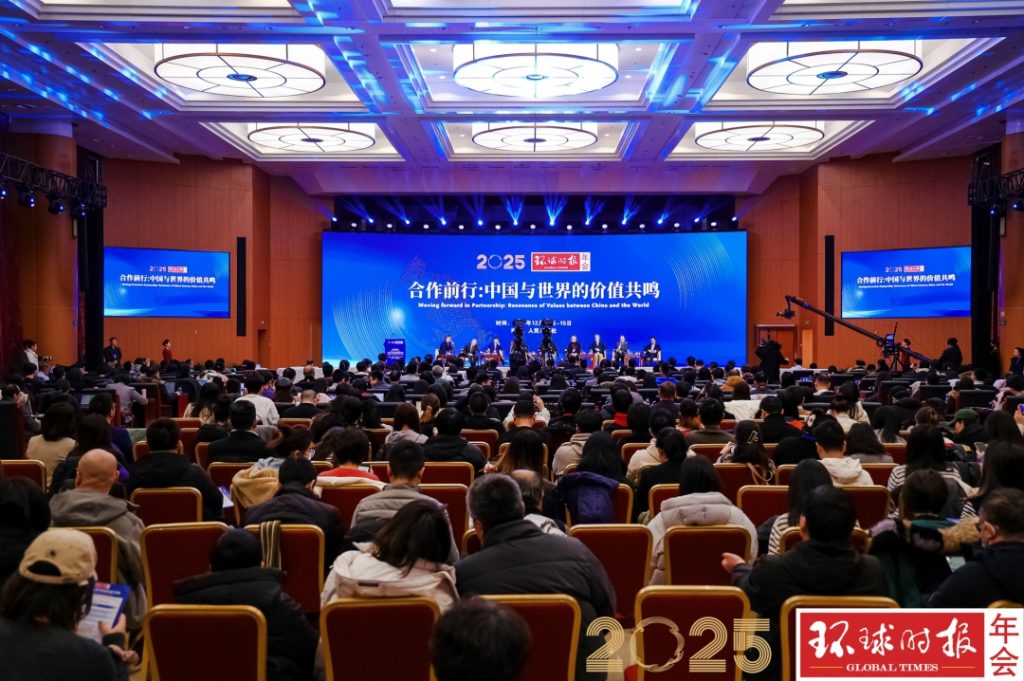
The Global Times Annual Conference 2025 convenes in Beijing, experts and scholars discuss the value resonance between China and the world under great changes

The Global Times Annual Conference 2025, themed "Moving forward in Partnership: Resonance of Values between China and the World," took place in Beijing on Saturday. Cui Shixin, a deputy editor-in-chief of the People's Daily, delivered the keynote speech.
Cui noted that 2025 marks the 10th anniversary of Chinese President Xi Jinping's proposal of the common values of humanity.

"Faced with challenges such as unilateralism and protectionism, China has put forward the common values of humanity, introduced the Global Development Initiative, the Global Security Initiative, and the Global Civilization Initiative, and advocated for taking good care of our home planet," Cui said.

The reason why these efforts have resonated with the majority of nations worldwide is because we uphold principles of win-win cooperation and mutual learning. These ideals not only extend the concept of harmony and unity inherent in the culture of the Chinese nation to a global scale, but also serve as the value-based foundation for multilateralism and a multipolar world, reflecting the shared aspirations of humanity, Cui said.

As Chinese President Xi Jinping has underscored, "Win-win cooperation is the sure way to success in launching major initiatives that benefit all." This is the idea behind this year's theme for the Global Times Annual Conference: "Moving forward in Partnership: Resonance of Values between China and the World," Cui noted.
Cui stressed the importance of pursuing the spirit of "taking good care of our home planet" through collaboration, making unity, cooperation and mutual benefit the main theme of our time.

He urged efforts to realize shared aspirations of people from all countries through collaboration, join hands on the path to modernization, and gather strong synergy to build a better world together.

Furthermore, Cui emphasized promoting the harmonious co-existence of civilizations through collaboration, outlining a vision for the future of human civilization that embraces cultural diversity and global harmony.

China's connection with the world has never been as extensive and close as it is today under the profound changes unseen in a century, and China's influence on global peace and development has never been as comprehensive and far-reaching as it is today, Cui said.

It is an important "must-answer question" for Chinese scholars and media professionals to let the world understand the practical experience and contemporary significance of China and the international community working together to promote modernization and build a community with a shared future, and to tell the win-win stories between China and the world as they continue to expand the points of convergence of ideas and interests, Cui said.

In his welcome speech, Fan Zhengwei, the Global Times Party secretary, president, and editor-in-chief, welcomed guests, experts, and scholars attending the annual conference.
He remarked that this year's annual conference is themed "Moving forward in Partnership: Resonance of Values between China and the World," because unprecedented changes in the world, our times, and history are unfolding, and it is necessary to reaffirm those common values ​​that have been obscured by conflicts and differences, and firmly stand on the right side of history and on the side of the progress of human civilization. This is also the responsibility of the Global Times to "connect China and foreign countries and communicate with the world."

As China advances in cooperation with the world, it requires the confidence of carrying forward its own excellent culture and enhance cultural awareness and confidence while respecting and safeguarding the diversity of human civilization, said Fan.

Fan highlighted the vision of learning from others' excellent cultures to embrace and learn from humanity's finest civilizational achievements and to achieve a broader civilization while cultivating abundant energy for development.

He stressed the need for a mindset of respecting and treasuring other cultures and values, in a bid to promote the advancement of human civilization, world peace and development, based on the traditional Chinese concept that diverse cultures will interact with each other to form a colorful and harmonious world. He hoped the distinguished guests would speak freely, sparking intellectual insights and sharing profound knowledge on the theme, offering insightful and rational perspectives for a world under profound changes.

The Global Times Annual Conference 2025 features four key topics: "Exploring the path of great power relations: differences and consensus," "Addressing the Global Security Deficit: Hotspots and Solutions," "The Resurgence of the Awakening of the Global South: Mutual Learning and Resonance " and "China's economy 'going toward new direction': openness and opportunities." These discussions aim to explore the value resonance between China and the world from various perspectives.

Additionally, the Global Times will organize sub-forums and special events on topics such as "New Quality Productive Forces," "Globalization of Economic and Trade Cooperation," "Overseas Branding," and "Short Video Collection on Ocean Themes."

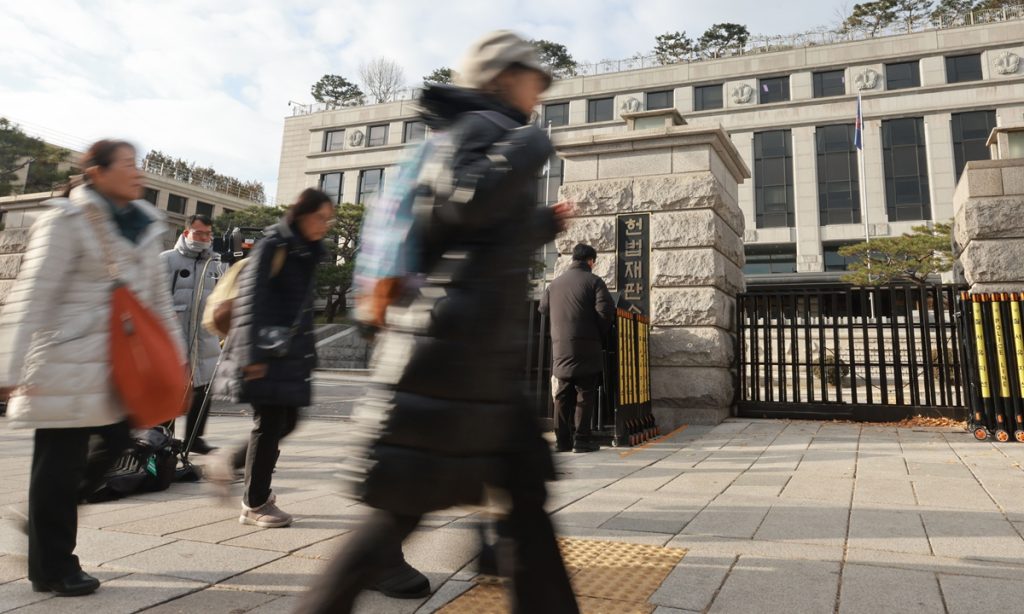
China's policy towards ROK consistent, says Chinese FM on impeachment motion against Yoon

China has taken note of the most recent political developments in the ROK. They are the ROK's internal affairs, and we will not comment on it, Chinese Foreign Ministry spokesperson Lin Jian said on Monday, in response to the South Korean National Assembly passing the impeachment motion against President Yoon Suk-yeol on Saturday. 

China and the ROK are important neighbors and cooperation partners. The sound and steady growth of bilateral relations is in the interest of both sides. China's policy towards the ROK has been consistent, and we have maintained the continuity of that policy, Lin told a routine press conference on Monday.

We hope the ROK will make continued positive efforts with China to actively deepen our friendly cooperation and strategic cooperative partnership. A peaceful and stable Korean Peninsula is in the interest of all parties and requires the concerted and strong effort of all sides, the spokesperson said.

Responding to a question on whether the appointment of a new Chinese ambassador to South Korea be postponed due to the impeachment, Lin said that he has no information to share, and suggested following the Foreign Ministry's website for any update.

The leader of South Korea's ruling People Power Party Han Dong-hoon said Monday he is stepping down amid growing internal strife following the National Assembly's vote to impeach Yoon. Han apologized to all those who suffered from the martial law chaos and Yoon's impeachment but said he has "no regrets" over his decision to support the impeachment, Yonhap reported.

On the same day, South Korea's Constitutional Court said it will hold its first preparatory hearing on the parliamentary impeachment of Yoon on December 27, kicking off the judicial procedure for his impeachment trial.

The top court, which has up to 180 days to deliver its ruling on whether to uphold the impeachment and remove Yoon from office or reinstate him, said it will prioritize Yoon's impeachment trial.

However, according to the Korea JoongAng Daily, the court is currently operating with only six justices, three short of the full nine-member bench. Despite this, the court said that both the review and trial can proceed with the current six justices.

"The proceedings of the Constitutional Court regarding the impeachment result are highly uncertain," Dong Xiangrong, a senior research fellow at the National Institute of International Strategy, Chinese Academy of Social Sciences, told the Global Times on Monday, noting that regardless of whether the six judges support or oppose the impeachment, they face immense pressure from both opposing camps.

"Factors such as public opinion, constitutional provisions, and their personal relationships will all have an impact on the deliberation of the impeachment case," Dong said.

"Another variable is that the South Korean National Assembly may nominate three new justices to fill the nine-member panel in the Constitutional Court, a process that will take time," Dong said, noting that if the nominations are approved and the new justices participate in the rulings, their political leanings will also influence the outcomes of the impeachment result.

If the impeachment result is overturned by the Constitutional Court, the country may experience ongoing turmoil, as the prevailing sentiment among its domestic public is firmly in favor of upholding the impeachment, the expert noted.

Also on Monday, South Korean prosecutors summoned Yoon for questioning for the second time after their botched attempt to subpoena the impeached president last week, the Xinhua News Agency reported.

Dong pointed out that regardless of whether Yoon accepts the summon, it will not significantly affect the impeachment trial's outcome. This is because, in addition to his personal statements, there are many other individuals involved who have received orders or have been asked to provide testimonies, the expert said.

Beyond craze: From boosting tourism, creating jobs to raising ecological awareness, the charm of pandas drives an economic boom across China

Editor's Note:

As one of China's most beloved national treasures, the giant panda has long captured the hearts of people worldwide. But beyond its iconic status, the story of the panda is a tale of ecological revival, cultural pride, and international cooperation.

In this special series, "Walking with the Giant Panda," we take you on an insightful journey through the furry animal's life, from the lush bamboo forests to the global stage, and ultimately, to the ambitious goal of rewilding.

In the first chapter of this exploration, we dive into the stories behind the internet-famous pandas who have attracted throngs of fans to panda reserves. These adorable icons are not only boosting tourism and employment, but also inspiring a new wave of national pride and ecological awareness.
Professional telephoto cameras are all pointed in the same direction, while hundreds of spectators, phones in hand, hold their breath.

"They're here! Over there!" shouts erupt as the onlookers marvels at the sight, accompanied by the rapid clicks of camera shutters.

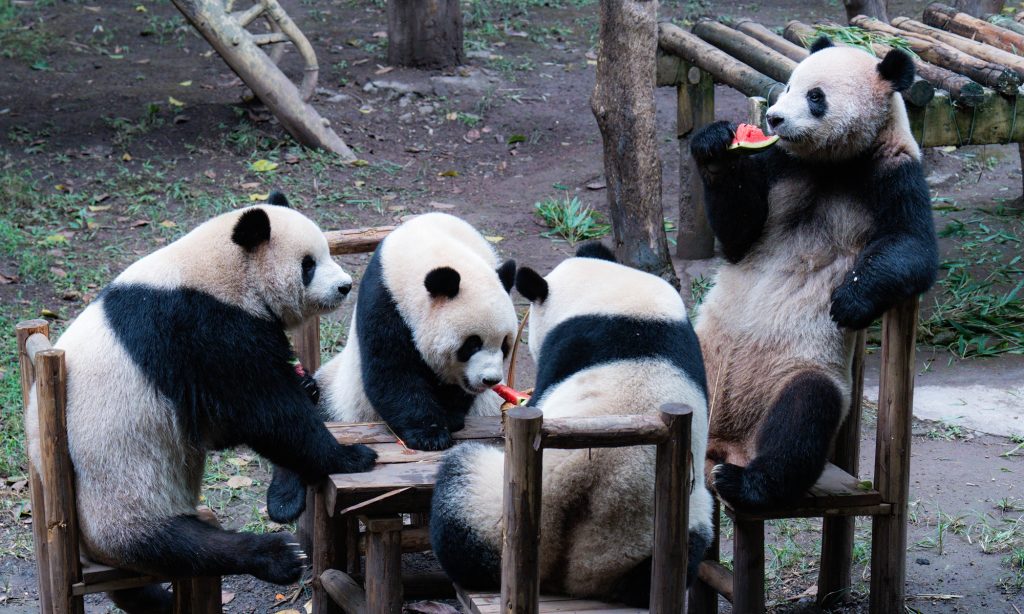
This is not a meet-and-greet for some pop star. It's afternoon tea time at the Chengdu Research Base of Giant Panda Breeding, and five adolescent pandas, each around 2 years old, have come charging out of their indoor shelter like playful calves. Tumbling over each other - sometimes tripping and then looking grumpy at their own clumsiness - they race toward the freshly laid bamboo. As soon as they find their favorite tender shoots or leaves, they settle in to bask in the sun, munching leisurely on their feast.

In China, pandas are true superstars.

In recent years, internet-famous pandas like Hua Hua, Meng Lan, and Qi Zai have drawn massive crowds to panda reserves and zoos across the nation. Devoted fans flock to these locations with some even live-streaming their visits. On social media and short-video platforms, pandas have "super topics" garnering billions of views.

Whether scratching an itch, yawning, or eating bamboo, pandas draw cheers from onlookers and likes on the internet. And if they roll on the ground, fans are overjoyed as if they've won the lottery.

Qing Feng is a professional panda photographer at the Chengdu base. His daily work involves capturing these adorable moments.

There are about 50 photographers regularly stationed at the Chengdu base, Qing told the Global Times. Some are simply fans, while others have turned their passion into a livelihood. They're easily recognizable by the panda stickers adorning their professional telephoto lenses and badges of their favorite pandas pinned to their backpacks.

Since live-streaming isn't permitted in the park, some panda streamers record footage during the day and broadcast it on short-video platforms in the evenings or mornings, engaging with panda fans worldwide and selling panda-related merchandise.

Among these panda celebrities, He Hua, affectionately known as Hua Hua, is undoubtedly the biggest star. This 4-year-old panda stands out with her especially round physique. At the Chengdu base, seeing Hua Hua for just three minutes requires waiting in line for 1 to 3 hours, with some fans queuing as early as 1 am. Even her keepers and security guards have become famous.

"I fell in love with Hua Hua at first sight. She's so beautiful and has such a gentle temperament," Helen, a retiree, gushed about Hua Hua in the gift shop outside her enclosure. In October, Helen moved from Shanghai to Chengdu to be closer to Hua Hua and now, according to her, visits almost daily.

"She seems to have a human soul," Helen told the Global Times.

In April, the Chengdu Culture and Tourism Bureau appointed Hua Hua as the Honorary Director of Chengdu Culture and Tourism, while announcing her resume and educational background.

According to data from the Sichuan Provincial Department of Culture and Tourism, during the 2024 May Day holidays, 264,000 tourists visited the Chengdu Research Base of Giant Panda Breeding, making it the second most popular attraction nationwide. Purchasing a 50 yuan ($7) ticket to the base can stimulate an additional 1,450 yuan ($200) in local spending on transportation, accommodation, and more.

Beyond Hua Hua, panda-housing institutions spare no effort in creating online buzz. For instance, Fei Yun at the Dalian Forest Zoo is known for her sweet smile and has become a beloved figure among panda enthusiasts. Ling Yan, residing at the Luanchuan Bamboo Sea Wildlife Zoo in Henan's Luoyang, has captured hearts with his playful antics, such as pushing toy carts and "dancing." At Guangzhou's Chimelong Safari Park, the panda triplets Ku Ku, Shuai Shuai, and Meng Meng have their own running train.

Giant pandas are accelerating local economic growth and attracting domestic and international tourists. Beyond ticket sales, the growing number of visitors has increased demand for panda-themed products, as well as related hotels and restaurants, leading to increased demand for employment.

However, pandas are more than just that. Their protection and population growth also represent the achievements of China's biodiversity conservation.

This sense of responsibility resonates with many panda fans. While watching pandas, some would advise other visitors to lower their voices, refrain from eating, and learn about the animals. Some would communicate with keepers to ensure the pandas live better lives.

"We are spreading positive energy," Helen says. "We will always accompany these pandas."

China takes countermeasures against US military firms, executives

China is taking countermeasures against 13 US military firms and six senior executives over the US' recent announcement of arms sales to China's Taiwan region, the Chinese Foreign Ministry announced on Thursday.

From big arms dealers to less known supporting companies, China's countermeasures are becoming increasingly precise and comprehensive, and together with the recently announced tightened export controls on dual-use items to the US, China is launching a combo attack, Song Zhongping, a Chinese military expert, told the Global Times on Thursday.

The US recently announced another round of arms sales to China's Taiwan region, which seriously violates the one-China principle and the three China-US joint communiqués, severely interferes in China's internal affairs, and seriously undermines China's sovereignty and territorial integrity, the Chinese Foreign Ministry said in a statement on Thursday.

Pursuant to Articles 3, 4, 5, 6, 9 and 15 of the Law of the People's Republic of China on Countering Foreign Sanctions, China has hereby decided to take countermeasures against the following US military companies and senior executives:

For the 13 listed companies, namely Teledyne Brown Engineering, Inc., BRINC Drones, Inc., Rapid Flight LLC, Red Six Solutions, Shield AI, Inc., SYNEXXUS, Inc., Firestorm Labs, Inc., Kratos Unmanned Aerial Systems, Inc., HavocAI, Neros Technologies, Cyberlux Corporation, Domo Tactical Communications and Group W, their movable and immovable properties, and other kinds of assets within China shall be frozen, and they shall be prohibited from conducting activities such as trade and cooperation with organizations and individuals in China.

For the six listed senior executives, including Barbara Borgonovi, president of Raytheon's Naval Power strategic business unit, Gerard Hueber, vice president of Raytheon's Naval Power strategic business unit, Charles Woodburn, Group Chief Executive Officer of BAE Systems Land and Armament, Richard D. Crawford, founder and CEO of Alliant Techsystems Operation, Beth Edler, president of Data Link Solutions, Inc., and Blake Resnick, founder and CEO of BRINC Drones, their movable and immovable properties, and other kinds of assets within China shall be frozen, they shall be prohibited from conducting activities such as trade and cooperation with organizations and individuals in China, and they shall be denied visas or entry into China (including Hong Kong and Macao).

This decision shall come into force on Thursday, the Chinese Foreign Ministry said.

The latest US arms sales plan to Taiwan island, announced on November 29, includes spare parts for F-16 jets and radars worth $385 million, according to Reuters.

Elaborating on the countermeasures, Foreign Ministry spokesperson Lin Jian said at a regular press conference on Thursday that the Taiwan question is at the core of China's core interests. In recent months, the US has announced multiple arms sales to China's Taiwan region. This gravely violates the one-China principle and the three China-US joint communiqués, interferes in China's internal affairs, and undermines China's sovereignty and territorial integrity. In accordance with the Anti-Foreign Sanctions Law of the People's Republic of China, China decided to take countermeasures against relevant military companies and senior executives of the US. 

Lin stressed that "Taiwan independence" is as incompatible with peace in the Taiwan Strait as fire with water. The US attempts to assist in the "Taiwan independence" agenda by arming Taiwan. This will not shake our firm resolve to oppose "Taiwan independence" and realize national reunification, and will only push Taiwan towards military danger.

China urges the US to abide by the one-China principle and the three China-US joint communiqués, especially the August 17 Communiqué of 1982, act on the US leaders' commitment of not supporting "Taiwan independence," stop arming Taiwan at once, and stop aiding and abetting separatists' attempt to seek "Taiwan independence" through military buildup, Lin said.

The Chinese Foreign Ministry announced decisions several times this year, including in May, July, September and October, to take countermeasures against US military companies and senior executives citing US arms sales to China's Taiwan region.

Song, the military expert, noted that these countermeasures not only cover big brands such as Lockheed Martin and Raytheon, but also relatively small names not commonly known by the general public that produce supporting equipment, drones and data link systems. It showed that China is not only imposing countermeasures on traditional mainstream arms dealers, but also supporting firms, as the Chinese countermeasures become increasingly precise.

A weapons system often includes efforts from many companies, so it is important to counter both the end product company and all other companies involved in comprehensive countermeasures, Song said.

Combo attack

China's Ministry of Commerce on Tuesday announced measures to tighten controls on the export of relevant dual-use items to the US. Under the new measures, China prohibits the export of dual-use items to US military users or for military purposes. It will also strictly control the export of gallium, germanium, antimony, and superhard materials as well as graphite-related dual-use items to the US.

Song said that many US arms firms heavily rely on rare earths from China, and controlling the export of these resources will limit their development.

Calling the latest countermeasures and the tightened export controls a combo attack, Song said that China is strengthening its efforts in countering the US' military-industrial complex, letting them know that if they do not abide by the three China-US joint communiqués and violate the one-China principle, they are bound to be hit.

Xin Qiang, director of the Taiwan Studies Center at Fudan University, said he believes that China's latest countermeasures are aimed at the supply chain of the US' arms industry. He told the Global Times on Thursday that China is expanding the scope of countermeasures and conducting "precision strikes" on smaller companies and the manufacturing of some particular items.

China has already made it routine to take countermeasures over US arms sales to Taiwan island. Basically, every time the US announces an arms sale plan, China will release a list of targets of countermeasures, Xin noted.

If the US continues its arms sales to the island of Taiwan, the scope of China's countermeasures are expected to further expand, as Beijing still has many cards to play in terms of important minerals and supply chains, Xin said.

Xi urges ceasefire, implementation of UNSC resolutions on Palestinian question

Chinese President Xi Jinping said on Tuesday that the pressing task for the Palestinian question is to comprehensively and effectively implement the relevant UN Security Council resolutions to end the war as soon as possible.

The fundamental way out is to implement the two-state solution and promote the political settlement of the Palestinian question, Xi said in his congratulatory message to a UN meeting held on Tuesday to commemorate the International Day of Solidarity with the Palestinian People.