Across the linked Tianshan Mountains, 'seeing China' in Kyrgyzstan

Kyrgyzstan, China's neighbor linked by mountains and rivers, is this year's rotating chair of the Shanghai Cooperation Organisation (SCO).

Although the two countries are geographically very close, the Chinese public as a whole seems far less familiar with this western neighbor than with Japan and South Korea to the east. For some, their impression of the country may be limited to the idea that the legendary poet Li Bai might have been born in Suyab city over a thousand years ago. What is Kyrgyzstan like today? How do local people view China? In late May, a team of Global Times reporters visited Bishkek, capital of Kyrgyzstan. What left the deepest impression was not only the snow-capped mountains visible almost everywhere in the city, but also China-related signs throughout the journey, as well as the positive and optimistic attitudes shown by local residents and Chinese people living there when talking about relations between the two countries.

Li Bai, Suyab and Tokmok

Driving east from Bishkek toward Issyk-Kul Lake for a little over an hour brings you to Tokmok, a town in the Chuy Valley. It is a must-visit destination for many Chinese travelers to Kyrgyzstan, because it is home to the ruins of an ancient city known as Ak-Beshim, which is listed as a World Cultural Heritage site. Chinese visitors know it better by its Chinese name, Suiyecheng or Suyab, and many believe it was the birthplace of Li Bai.

"My Chinese name is Li Bai," 28-year-old Kyrgyz tour guide Mitrofanov Leonid Dmitrievich told the Global Times. He spoke excellent Chinese and had spent many years studying and living in Xiamen, East China's Fujian Province. "Look, this is my Xiaohongshu (RedNote) account. It's called 'Li Bai, a Kyrgyzstan tour guide,'" he said.

The Suyab where Global Times reporters met "Li Bai" has long since lost the appearance of a city. What remains are a few stretches of earthen wall wrapped in green grass, along with several signs put up in recent years telling visitors what once stood here.
In the middle of the site is a very important set of monitoring equipment: an observation station jointly established by China's Dunhuang Academy and Kyrgyzstan's local cultural and heritage protection authorities for environmental monitoring and data collection.

Just then, a bus pulled up. A group of archaeologists from Central Asian countries arrived at the site, having just attended a joint archaeological meeting in Bishkek. The experts from China and Central Asia began exchanging ideas beside the site's ramparts - a scene poet Li Bai could hardly have imagined in his lifetime.

"Are you Chinese?" The reporters' thoughts were interrupted by familiar Chinese. More than a dozen Chinese tourists had appeared at Suyab. They were part of the tour group led by Leonid, coming from Jiangsu and other provinces across China. Kyrgyzstan was the second stop on their Central Asia tour.

"Since you're reporters, you should really point this out - the sign for Li Bai's birthplace is only in Kyrgyz and Russian, not a single Chinese character," one man in the group said.

'Signs of China' everywhere in the city
Kyrgyzstan uses both Kyrgyz and Russian as official languages. Road signs across Bishkek usually display Kyrgyz on the top line and Russian below. As a former Soviet republic, many street scenes here are reminiscent of the Russian Far East. But construction sites are everywhere in the city, and many cranes can be seen on the skyline, showing that the real estate sector is just taking off and urban development is in a phase of rapid construction.

During interviews, local people told the Global Times that many building projects are undertaken by Chinese companies. However, at three construction sites, we found that all of the workers working that day were locals.

Why did we pay attention to these details? On the flight to Bishkek, we had read foreign media reports from the past year or two about China-Kyrgyzstan relations. Many of them sounded alarming - headlines like "A clash reveals growing anti-Chinese sentiment in Kyrgyzstan," "An influx of cheap Chinese labor leaves Kyrgyz people jobless," and "Chinese design and technology rob Kyrgyz cities of their Central Asian character." Yet during the reporters' brief four-day reporting trip, the information shared by more than 20 interviewees from both China and Kyrgyzstan made these foreign media claims sound very much outside the mainstream.

The Global Times found that the signs of China are everywhere in Bishkek. Many of the green buses running through the city have the word "ZHONGTONG" on the back. According to a Global Times report on May 22, 2023, the first batch of 1,000 Zhongtong buses purchased by Kyrgyzstan rolled off the production line in Liaocheng, East China's Shandong Province, on May 20 that year, Kyrgyz President Sadyr Japarov attended the ceremony.

The cars on the streets of Bishkek are highly varied. Some brands look quite old and carry a distinctly Soviet-era feel. There are also many cars from Japan and South Korea. "But more than 40 percent of the new cars sold in Kyrgyzstan come from China," Lu Yunran, CEO of 212 Off-Road Vehicle Co., Ltd., which is preparing to enter the Kyrgyz market, told the Global Times at the 2026 China-Kyrgyzstan Media Cooperation Forum held on May 27. The reason Chinese carmakers are entering the Kyrgyz market, he said, is simple: "There is demand here."

In a shopping mall in central Bishkek, as the escalator slowly carried the reporters up to the sportswear section on the third floor, the three brands that came into view from left to right were Li-Ning, Xtep and Anta. Taking the elevator up another three floors, we also found Lanzhou hand-pulled noodles and Chinese ice cream and beverage chain Mixue.

Another Chinese imprint in Bishkek is traditional Chinese medicine (TCM).

At the China-Kyrgyzstan Qihuang Traditional Chinese Medicine Center, located at 120 Umitalieva Street, Bishkek, a patient in his 50s was undergoing acupuncture. "I'm from Bishkek," he told the Global Times. "I have a pretty severe spinal misalignment. Tomorrow marks my fifth day of acupuncture treatment, and I've already felt immense relief."

Another patient, who was receiving cupping therapy for polyarthritis, shared a similar sentiment: "TCM works wonders for me." During the interviews, both patients vouched for the effectiveness of TCM and praised the Chinese doctors for being even more dedicated than local physicians. "They are genuinely here to help the local people," one patient noted.

Aishoola Rysbekova, a 31-year-old Chinese language lecturer at the Kyrgyz National University, goes by the Chinese name "Xinyue," which means "new moon." She told the Global Times that Bishkek's economy has been booming over the past two years, mirroring a broader national economic uptick. Consequently, university faculty salaries have seen a major boost - "nearly doubling," she said. The current average salary is now equivalent to over 5,000 yuan ($738). "Our economic and trade cooperation with China has played a massive role in this," the Kyrgyz woman added.

During the interviews, many Chinese people living in Bishkek also expressed a positive outlook on the country.

Within the local Chinese community, the Guoying supermarket is well-known. Spanning roughly 500 square meters, the store is divided into three sections: Chinese-made daily necessities, Chinese snacks and Chinese fast food. Walking through the Guoying supermarket feels like being back in China, with shelves packed with everything from dried noodles to snacks, milk tea, and even the popular Chinese brand Mind Act Upon Mind tissues.

Zhao Shulin, who leases the supermarket's food section, told the Global Times that while Kyrgyzstan had previously gone through periods of political instability due to a sluggish economy, recent years have seen strong economic growth. As a result, the public mind-set has become more rational. Living here, you really feel the locals are very friendly, Zhao said.

Not far from where Zhao stood, three local middle school girls were choosing Chinese snacks. "Chinese is a beautiful language," one of the girls said, in English, as she told the reporters about her plans to study Chinese.
Exporting high-quality development opportunities

"The most valuable advantage for Kyrgyzstan is to be the neighbor of China," Kyrgyz President Japarov told the Chinese top leader on August 31, 2025, during his visit to Tianjin for the SCO Summit 2025 and the commemoration of the 80th anniversary of the victory of the Chinese People's War of Resistance Against Japanese Aggression and the World Anti-Fascist War. He emphasized that China is a good neighbor and a good friend of Kyrgyzstan.

At the 2026 China-Kyrgyzstan Media Cooperation Forum, Kyrgyz commentator Ismail Dairov echoed this sentiment when discussing bilateral ties: "Geography is destiny." Fellow panelist and commentator Kurmanbek Mambetov noted that China and Kyrgyzstan are harmonious neighbors. "You might fight with relatives, and you might lose friends, but the bond of being neighbors is something that never changes," he said.

Explaining the booming trade ties and the strengthening cooperation between the two countries, Mambetov pointed out that their strategic interests are perfectly aligned. "China needs a stable Kyrgyzstan, and the stronger China becomes, the more opportunities open up for Kyrgyzstan."

Zhu Yongbiao, executive director of the Research Center for the Belt and Road at Lanzhou University, told the Global Times that practical cooperation between China and Kyrgyzstan is not a one-way transfer of benefits. Rather, it is a healthy, mutually beneficial relationship built on the strong complementarity of the two countries' trade and economic structures.

Zhu said this complementarity is also a common feature of cooperation among SCO member states, making China-Kyrgyzstan cooperation representative, replicable and worth promoting. In his view, the Chinese presence the reporters observed in Bishkek shows that what China is exporting today is not only culture, but also high-quality development opportunities.

Of course, this does not mean there are no bottlenecks in bilateral cooperation. During the interviews, people from both China and Kyrgyzstan mentioned that the two peoples still do not know enough about each other and media coverage between the two sides remains insufficient.

Four days of reporting in Bishkek was clearly not enough to gain a deep understanding of Kyrgyzstan. Nevertheless, the trip provided some firsthand knowledge of China's friendly neighbor. On the flight back to Beijing from Bishkek, the reporters found that most of the passengers were also Chinese. Among them were people selling agricultural machinery in Kyrgyzstan, employees of state-owned enterprises, business visitors, and tourists.
Perhaps by a twist of fate, we ran into Leonid and his tour companions again at a Chinese restaurant in Bishkek. Regarding foreign media descriptions of negative sentiment between the Chinese and Kyrgyz peoples, Leonid said that if such feelings do exist, it must be because those people have not worked hard enough and are jealous of those who have benefited from China-Kyrgyzstan cooperation.
China vows stable Latin America policy amid geopolitical pressure and political transitions, journalists’ top concerns

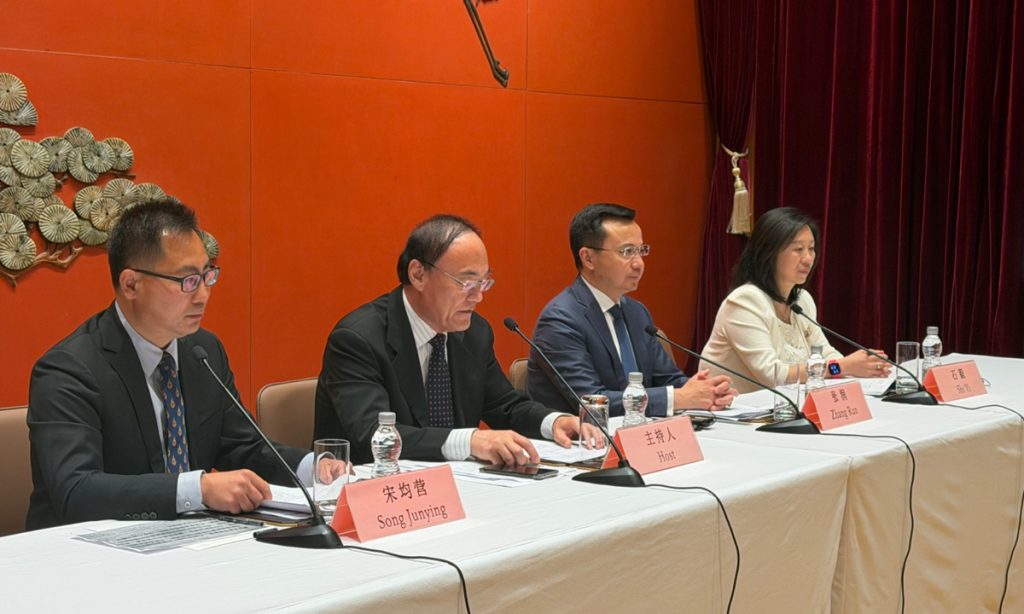
In May 2025, China and Latin American countries jointly launched five major programs covering solidarity, development, civilization, peace, and people-to-people connectivity. One year later, the China Public Diplomacy Association hosted the "Linjia No. 7 Salon" on Friday under the theme "The First Anniversary of the Five Programs for Building a China-LAC Community with a Shared Future: Implementation and Prospects," taking stock of achievements and exploring future prospects.

Global Times reporters observed at the event that journalists from Latin American countries were highly active, frequently raising their hands to ask questions, and even held discussions with Chinese experts after the meeting, demonstrating their strong interests in the trajectory of China-Latin America cooperation.

External pressure and changes in Latin American governments are among the two most closely watched issues by Latin American media. Foreign media have raised the question of whether the overlap of these two variables could lead to fluctuations in China-Latin America cooperation. However, the solid results achieved over the past year in implementing the five major programs have provided a powerful answer.

Latin American media professionals told the Global Times said that over the past year, with China's support and bilateral cooperation, Latin American countries have accelerated infrastructure development and local technological advancement. The changes brought by cooperation are tangible, and they expect more positive outcomes from future collaboration.

Currently, Latin American countries are in an electoral cycle, with Brazil, Colombia, Peru and others either having recently held or soon to hold elections. Policy uncertainties brought by leadership changes, and whether such changes will affect international cooperation projects, have become a major concern in Latin American public discourse.

At the event, a journalist from Colombia asked how China-Latin America cooperation agreements could be steadily implemented amid political party rotation in Latin American countries. In response, Zhang Run, director-general of the Latin American and Caribbean Affairs Department of China's Foreign Ministry, stated that China-Latin America friendship is rooted in the people, and that China's policy toward Latin America will remain consistent and stable regardless of changes in internal or external conditions.

Geopolitical containment is another major concern of Latin American journalists. At the salon, reporters from Brazil, Venezuela, Mexico, Cuba, and Costa Rica jointly asked how China assesses changes in the external geopolitical environment one year after the implementation of the five major programs under the China-Latin America community with a shared future framework.

"In a context of increasing global uncertainty, instability, and unpredictability, China and Latin America are jointly advancing the five major programs, sending a strong message of solidarity and self-strengthening among Global South countries, and injecting stability and positive energy into a turbulent world," Zhang said.

He noted that from January to April this year, China-Latin America trade grew strongly by 18.5 percent year-on-year, with China's imports from the region increasing by 29.4 percent. China's visa-free policy for certain Latin American countries has also boosted travel: six months later, visits from Peru to China rose by 80 percent, while those from Argentina, Brazil, Chile, and Uruguay increased by 55 percent, 48 percent, 41 percent, and 34 percent respectively.

Nelson de Sá of Brazil's UOL media group, who has worked in China for two and a half years, told the Global Times that trade restrictions and geopolitical containment measures run counter to market principles and continuously erode Latin American economic interests. However, he believes that external pressure and political turnover cannot change the long-term positive trajectory of China-Latin America cooperation. "No matter how governments change, this cooperation trend will not be significantly affected. The natural complementarity of both economies will continue to drive economic integration," he said.

In his view, the development of Chinese-funded industries in Brazil illustrates this clearly: After Ford closed its plant in Brazil, BYD took over and resumed production, restoring lost jobs; after Mercedes-Benz halted production, Great Wall Motors took over the factory and began operations; after France's Alstom scaled down and suspended rail operations in Brazil, CRRC established local factories to fill the gap, restoring and even expanding manufacturing jobs. Nelson said these companies not only took over factories but also absorbed employment and drove upstream and downstream industrial chains. The service sector is also following suit: Meituan's Keeta and Mixue Ice Cream & Tea are accelerating entry into the Brazilian consumer market, continuously expanding local employment opportunities in services.

It is precisely through strong industrial complementarity and tangible livelihood projects that China-Latin America cooperation demonstrates strong resilience. Zhang stated in his speech that China-Latin America trade has maintained steady growth, reaching 549 billion US dollars in 2025, a record high. The 66-billion-yuan credit line China pledged to Latin America is being implemented ahead of expectations.

In addition, a number of landmark infrastructure projects have taken root: The Belo Monte Ultra-High Voltage Direct Current transmission project undertaken by Chinese enterprises in Brazil spans five states and 81 cities, easing north-to-south power transmission bottlenecks and benefiting 22 million people; the Mexico City Metro Line 1 renovation project has been fully completed and opened to traffic, increasing daily passenger capacity to 1.2 million; the Bogotá Metro Line 1 project in Colombia has progressed by more than 70 percent, and upon completion will significantly improve transportation for nearly 2.9 million residents.

"Many friends from Latin America and the Caribbean have told me that 'China studies' and Chinese language learning are booming in the region," Zhang said. China has completed ahead of schedule the provision of 1,000 "Chinese Bridge" program slots, and has provided 1,752 Chinese government scholarships and 4,000 training opportunities for Latin American countries, with 254 recipients admitted under the International Chinese Language Teachers Scholarship.

The "China-Brazil Cultural Year" has been held in both countries in turn. China has established three new Confucius Institutes in Honduras, Chile, and Brazil, and Brazil has established the first Confucius Institute alliance in Latin America. The region's first Luban Workshop has been inaugurated in Nicaragua. Currently, the exhibition "Maize, Gold, Jaguar - Ancient Civilizations of the Maya and Andes" is being held at the Capital Museum in Beijing, serving as another platform for China-Latin America civilizational exchange.

"Cooperation between Uruguay and China covers not only education exchanges such as student mobility, but also high-tech and medical fields. A large number of Uruguayan medical workers are now coming to China for training," said Florencia Pujadas, a journalist from Uruguay's Channel Canal 4, in an interview with the Global Times. As both a Uruguayan citizen and journalist, she believes both peoples must make further efforts to promote mutual understanding and the healthy integration and development of different cultures and systems.

Shi Yi, a vice president of China Foreign Affairs University and researcher at the Center for a Community with a Shared Future for Mankind, shared the story of Brazilian professor Marcus Vinicius De Freitas. In 2018, Marcus joined China Foreign Affairs University. Over eight years, he has moved between classrooms in China and Brazil, think tank platforms in Morocco, and global English-language podcasts and Brazilian mainstream media, presenting an objective account of China's path to modernization. In his view, China's development is not an abstract theoretical model in textbooks, but a vivid practice of exploring modernization in a complex geopolitical and developmental environment.

During the Q&A session, Zhang noted a phenomenon he observed: Walking through the streets and tourist sites of Beijing, Spanish and Portuguese can be heard everywhere; on social media, a wave of Latin American youth is enthusiastically experiencing Chinese lifestyles, with both "China fever" and "Latin America fever" shaping a new landscape of people-to-people exchanges.

Song Junying, director in the Department for Latin American and Caribbean Studies at the China Institute of International Studies, analyzed the deeper drivers of such cooperation from a macro perspective. He argued that China-Latin America exchanges on modernization are driven by strong internal momentum for three main reasons: First, both share similar historical experiences and a strong aspiration for independent modernization and catch-up development; second, they share similar civilizational foundations, providing cultural support for mutual learning; third, amid global transformations unseen in a century, both face similar historical missions, as the collective rise of the Global South shifts the balance of global power in a more favorable direction for developing countries.

"Advancing China-Latin America modernization exchanges and mutual learning requires building a China-Latin America community with a shared future and implementing the five major programs on the basis of high-quality Belt and Road cooperation to align development strategies," Song said.

Chinese envoy calls for immediate cease-fire, Israeli withdrawal from Lebanon at UN Security Council meeting

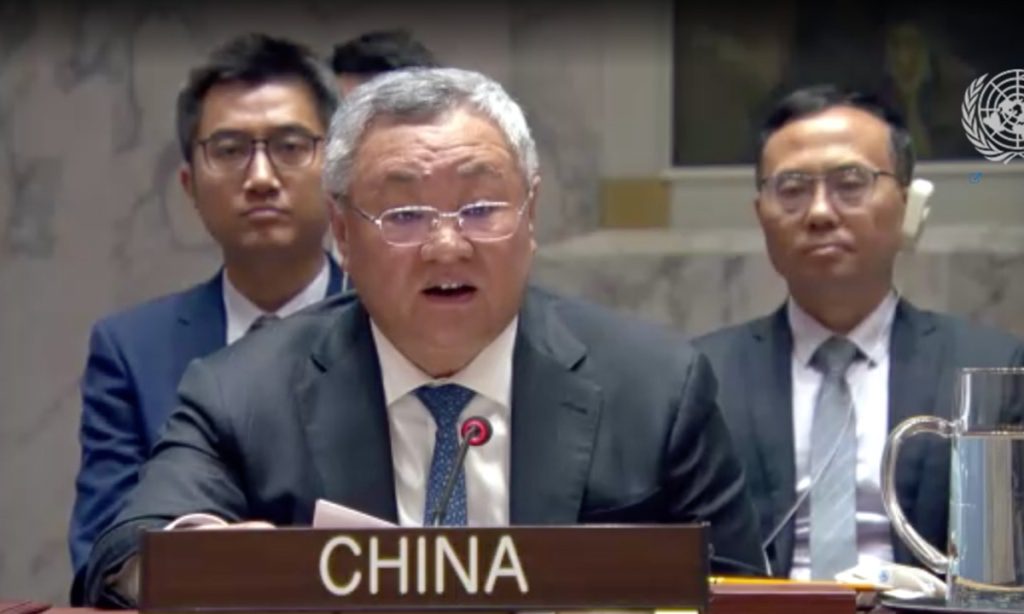
Lebanon’s sovereignty, security and territorial integrity must be respected, and Israel should immediately withdraw all its troops from Lebanon, Fu Cong, China’s permanent representative to the United Nations, said at an emergency UN Security Council meeting on the Lebanon-Israel situation on Monday afternoon local time, calling for an immediate cease-fire to end the fighting and ease tensions, according to a video released by CCTV News.

Israel’s continued advancement of its war machine has caused the deaths of more than 3,400 people in Lebanon. Force is not the way to solve the problem, and expanding occupation will not bring lasting security. All parties concerned, especially Israel, must immediately cease hostilities, fully abide by the temporary cease-fire arrangements, implement UN Security Council Resolution 1701 and other relevant resolutions, and work to de-escalate the situation as soon as possible, said Fu.

“We have noted that the parties concerned are holding negotiations toward a cease-fire, and we welcome all efforts aimed at peace. We hope that countries with important influence over the parties concerned will take active steps to help achieve a cease-fire as soon as possible,” said Fu, according to CCTV News. 

Fu said Israel has also claimed that it will further expand its ground operations, and that the intentions behind this move, as well as its serious consequences, have caused deep concern in the international community. The Lebanon-Israel cease-fire now exists in name only, and the international community must take urgent action before the situation slides into an even more dangerous abyss, the Chinese envoy said, per CCTV News. 

Fu called for an immediate cease-fire to end the fighting and ease tensions, greater support for Lebanon to help stabilize its domestic situation, and guarantees that the UN Interim Force in Lebanon can fulfill its mandate and help maintain regional stability, according to CCTV News.

Can a country that has never fully eradicated remnants of militarism lecture others on defense co-op? PLA major general questions Japan's credibility

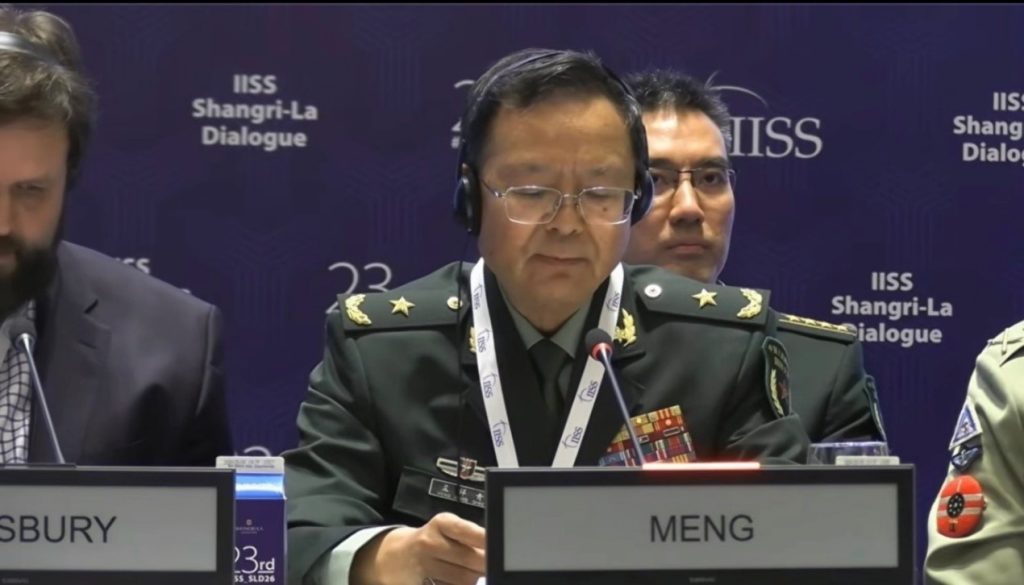
"History's lessons are still fresh and relevant, and the world today once again stands at a crossroads. We must remain vigilant against any resurgence of militarist thinking and safeguard the outcome of World War II and post-war international order." Speaking at a parallel session of the Shangri-La Dialogue on the afternoon of May 30, the head of China's delegation to the 23rd Shangri-La Dialogue (SLD), professor Meng Xiangqing from the National Defense University, publicly criticized the emerging manifestations of Japanese militarism in his speech.

Speaking at the parallel session on "Managing Threats to Strategic Stability," Meng said the world is currently facing unprecedented challenges from four major sources: the hegemonism undermining regional security, the rising risks of global nuclear conflict, the severe erosion of the international arms control, disarmament and non-proliferation regime, and the growing disorder in global governance.

On the issue of "hegemonism undermining regional security", Meng said that certain countries are pursuing power politics, seeking absolute strategic superiority, provoking bloc confrontation, intensifying international and regional arms races, and contributing to the frequent outbreak of regional conflicts. On the "severe erosion of the international arms control, disarmament and non-proliferation regime," Meng noted that a series of nuclear arms-control "guardrails" have already broken down. The world's two largest nuclear powers have entered a bilateral nuclear arms-control vacuum with neither treaties nor verification mechanisms in place. He also pointed to Australia's development of nuclear-powered submarines under the AUKUS framework and Japan's efforts to revise its "pacifist constitution" and the Three Non-Nuclear Principles, as well as its pursuit of the deployment of allied nuclear weapons on Japanese territory, warning that such developments have heightened the risk of nuclear proliferation.

"These risks are intertwined and mutually reinforcing, making strategic stability increasingly fragile," Meng said. He called on all countries, especially major powers, to practice the vision of building a community with a shared future for humanity and shoulder their responsibilities in safeguarding strategic stability.

Meng noted that this year marks the 80th anniversary of the opening of the International Military Tribunal for the Far East. The tribunal, he said, permanently condemned the heinous crimes of Japanese militarism and laid an important legal foundation for the post-war international order.

"However, today, some forces continue to openly glorify war crimes, promote distorted narratives of WWII history, attempt to challenge the verdicts of the Tokyo Trial, and seek to whitewash the history of aggression. Some have even taken concrete steps to break through the constraints of the post-war peace framework," Meng said. 

"Can a country that has never fully eradicated the remnants of militarism truly claim the moral authority to lecture others about defense cooperation on the international stage? Can it earn the trust of the international community, especially the Asian countries that once suffered under its aggression? I have serious doubts," he said.

Meng said history's lessons are still fresh and relevant, and that the world today once again stands at a crossroads. We must remain vigilant against any resurgence of militarist thinking, he said.

Video shows fighter jets armed with PL-10 air-to-air missiles dispatched by Southern Theater Command taking part in expulsion operation against Dutch warship's intrusion

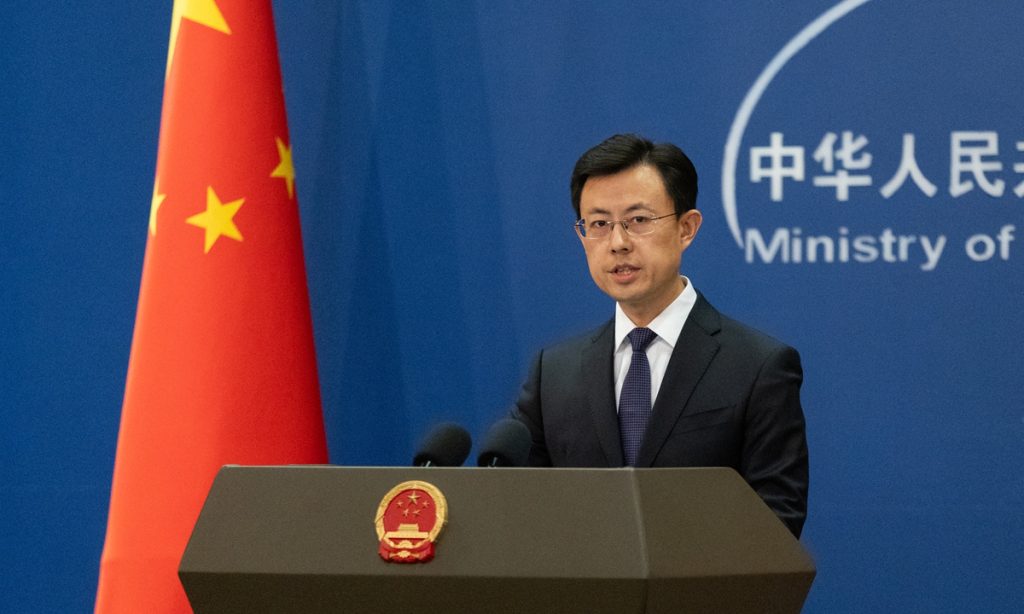
Senior Captain Zhai Shichen, spokesperson for the Chinese People's Liberation Army (PLA) Southern Theater Command, said Wednesday that a Dutch Navy frigate, De Ruyter, illegally trespassed into China's Xisha Qundao in the South China Sea and conducted multiple shipborne helicopter operations violating China's territorial airspace.

The Southern Theater Command deployed maritime and air forces and took necessary measures including verbal warnings and warning electronic jamming in accordance with laws and regulations to expel the vessel, Zhai said. 

Video obtained by the Global Times showed that the Southern Theater Command deployed multiple Type 056A and Type 054A frigates. China Navy ships Hull 631 and Hull 626 conducted close interception and expulsion against the Dutch Navy frigate De Ruyter. Hull 553 of the Chinese Navy issued verbal warnings in English to the Dutch NH-90 helicopter. 

In addition, fighter jets armed with PL-10 air-to-air missiles were also dispatched by the Southern Theater Command to take part in the expulsion operation.

A spokesperson for the Chinese Ministry of National Defense (MND), also said on Thursday that a shipborne helicopter from the Dutch Navy frigate De Ruyter illegally intruded into the airspace over China's Xisha Qundao, seriously violating China's sovereignty and undermining China's security interests, and the Chinese military organized maritime and aerial forces to take effective measures to dispel the helicopter out of the area and has lodged solemn representations with the Dutch side.

"The Xisha Qundao is China's inherent territory. The Chinese military remains on high alert and resolutely defends national territorial sovereignty and maritime rights and interests. We urge the Dutch side to stop its infringements, risky and provocative acts, and strictly restrain frontline sea and air forces to avoid any unexpected incidents at sea or in the air," said Jiang Bin, spokesperson for the Chinese Ministry of National Defense. 

17 missing, 1 dead after torrential rainfall hits SW. China’s Chongqing

Seventeen people have gone missing and one person has died as intense short-term rainfall hit Yongchuan District in Southwest China’s Chongqing Municipality from 11 pm Saturday to 8:20 am Sunday. Rescue and emergency response efforts are currently underway in full force, China Central Television reported on Sunday.

The report said rainfall in ChashanZhuhai subdistrict in Yongchuan reached 296.6 millimeters between 2 am and 4 am on Sunday, with the maximum hourly rainfall reaching 103.6 millimeters.

Meteorological authorities revealed parts of central and western Chongqing saw torrential to extremely heavy rainfall, with precipitation in Guankouwan and Hanjiagou villages in Yongchuan reaching 296.7 mm and 256.9 mm respectively. With this round of rain coming shortly after previous downpours, authorities warned of heightened risks of landslides, collapses and mudslides, Chongqing activated a Level-III geological disaster emergency response for Yongchuan at 7 am on Sunday, per Xinhua News Agency.

Chongqing has recently experienced continuous rainfall. At 5 am on Sunday, Chongqing issued an orange rainstorm alert, warning that from 5 am to 11 am, some townships in 25 districts and counties face meteorological risks of flash floods in small river basins, with very high risks in Banan, Nanchuan, Fuling, Fengdu and Wulong, according to local meteorological observatory.

Authorities also warned of rising water levels in medium and small rivers across parts of 31 districts and counties, with Beibei, Liangjiang New Area, Hechuan, Tongliang, Dazu, Rongchang and Yongchuan facing particularly high risks.

The story of US donor and Chinese tree planters is a vivid example of China-US people-to-people friendship: FM

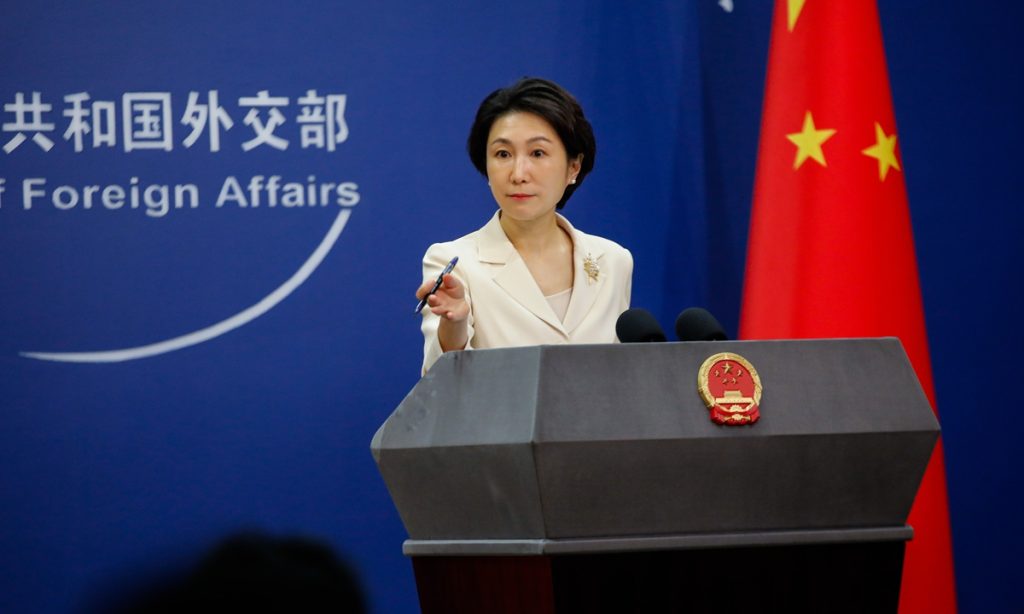
The cross-border friendship between a US donor and Chinese tree planters is a vivid example of people-to-people exchanges between China and the US, Chinese Foreign Ministry spokesperson Mao Ning said on Monday.

Mao noted that more than 20 years ago, a US teacher named Sakolsky, who was teaching in China, raised $5,000 to help Yin Yuzhen, a national model for desert reclamation in China, and her husband combat desertification and plant trees. Today, that generous donation has grown into more than 50,000 trees.

Yin recently turned to the internet to search for Sakolsky. After a long separation, the two reunited online, winning widespread praise from netizens for this cross-border friendship.

It is believed that the two peoples will continue to write more stories of friendship and constantly inject fresh vitality into China-US relations, Mao added.

China firmly opposes US’ deployment of mid-range missile systems in Asian countries, urges US and Japan to heed calls from regional countries, rectify erroneous moves: FM

When asked to comment on reports that the US is planning to deploy the Typhon mid-range missile system at Kanoya Air Base in Kagoshima Prefecture, Japan, from June to September for joint military drills, and relocate the system to US military bases in Japan after the exercises, Chinese Foreign Ministry spokesperson Guo Jiakun said on Friday that China has noted the relevant reports and firmly opposes the deployment of mid-range missile systems by the US in Asian countries and had repeatedly voiced concerns over the issue.

Guo said the Typhon missile system is a strategically offensive weapon. It undermines the legitimate security interests of other nations, endangers regional strategic security, and heightens the risks of military confrontation and arms races, bringing nothing but harm to regional peace and stability. People across many Asian countries, including Japan, have long voiced persistent opposition. 

China urges the US and Japan to heed calls from regional countries, rectify erroneous moves, and take concrete actions to safeguard regional peace and stability, Guo told a regular press conference.

The spokesperson added that this move serves as further evidence of Japan's accelerating remilitarization. Multiple signs indicate that right-wing forces in Japan are seeking an overall overhaul of military capabilities to prepare for "protracted warfare." Such acts essentially hollow out constraints set by Japan's constitution, international law and domestic legislation, and challenge the post-war international order, running counter to Japan's self-proclaimed identity as a peace-loving nation. 

The rising "neo-militarism" in Japan poses grave hazards and risks triggering regional turmoil once again. The international community must draw lessons from history, stay highly vigilant and jointly curb such tendencies, Guo said.

Beyond heartfelt film ‘Dear You,’ time-honored ‘qiaopi’ tradition keeps thriving, forging fresh connections rooted in universal cross-border emotions

Editor's Note:

"No mountain or ocean can distance people who have shared aspirations." This powerful message underscores the force of friendship and cooperation in bridging hearts across nations, cultures and civilizations.

People from diverse backgrounds and fields, united by common goals and dreams, traverse mountains and oceans to connect with each other. Through letters, face-to-face dialogues and vibrant cultural events, they are collectively weaving a magnificent tapestry of building a community with a shared future for humanity.

The Global Times presents "Intertwined Destinies, Shared Paths," a series spotlighting the touching stories written by these "friendship ambassadors." They are scholars pushing the boundaries of research, diplomats advocating for deeper cooperation on the global stage, artists igniting imaginations with their creations and ordinary people extending heartfelt love beyond national borders driven by their genuine sincerity.

Their stories illuminate the spark of cultural exchanges, the driving force of technological innovation, the bountiful harvest of economic cooperation and the enduring warmth of human connection - all contributing to a more peaceful, prosperous and open world. This is the 14th installment of the series.

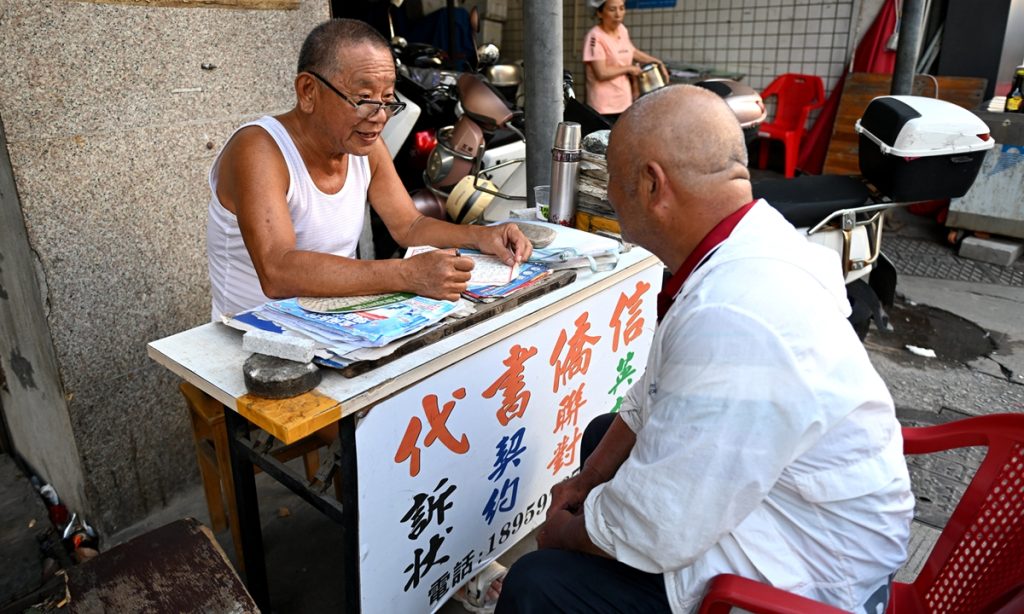
For nearly six decades, 77-year-old Jiang Mingdian has written hundreds of thousands of qiaopi - a unique form of personal mail - for local men in his hometown to send to their loved ones around the world.

Despite his words having traveled far and wide, Jiang had never once left Quanzhou in East China's Fujian Province - until last Sunday, when he was invited to Beijing for a special screening of the hit film Dear You.

Jiang was invited in his capacity as a veteran qiaopi scribe. The heartwarming film Dear You explores cross-border family ties between the Chaoshan region in South China's Guangdong Province - a region where generations of people in the past often left to seek work overseas - and Thailand, using authentic qiaopi as its central narrative thread.

Made with a modest budget of merely 14 million yuan ($2 million) and mainly spoken in local Chaoshan dialect, the low-budget production has turned into a phenomenal cultural hit, grossing over 600 million yuan at the domestic box office as of press time, according to Chinese ticketing platform Maoyan. Its sweeping popularity among audiences at home and abroad has finally brought qiaopi into mainstream public view.

These unique qiaopi - which usually combine a personal letter with a remittance sent home - have emerged as invaluable historical records, embodying the profound love and longing that generations of overseas Chinese felt for their families and homeland.

For Jiang, his life has spanned the evolution of this tradition. In the past, qiaopi served as vital lifelines for survival, carrying both emotional messages and essential financial support. Today, this heritage is preserved in the qiaopi archives, which were inscribed on UNESCO's Memory of the World Register.

Boosted by the hit movie, cultural and creative products and the youth craze for ancestral root-seeking, these century-old memories have been revived, gaining new vitality through inheritance and innovation.

Letters full of devotion

The 10-hour high-speed rail trip from Fujian to Beijing was a breeze for Jiang, as his daily routine has long trained him to sit for hours on end.

During the interview with the Global Times, he talked about his work routine. He opens his street stall at 9 am and stays until dusk, always ready to help whenever clients reach out. His humble workspace features only an old yellowed wooden table on a Quanzhou street. Armed with just a fountain pen and a few tattered Chinese-English dictionaries, he has stayed devoted to this craft for decades.

Right after the film screening ended, he hurried to head back home. Eager to embark on another 10-hour high-speed rail journey, he worried his regular clients would not be able to reach him for letter-writing services.

This sense of duty took root in the mid-20th century, when nearly every household in Quanzhou had relatives that had emigrated abroad. These overseas Chinese sent home their hard-earned savings along with endless concerns via remittance letters. Since most local residents were illiterate back then, professional writers like him helped locals read incoming letters and write replies.

Among the hundreds of thousands of letters Jiang has handled, some stories haunt him. He remembers a woman from the county-level city Jinjiang surnamed Cai, whose husband had moved to the Philippines. Every month, she came to Jiang to write a letter pleading for her husband's return. Unbeknownst to her, her husband had long since died in a shipwreck. To protect her, her son began writing back in his father's name, sending small remittances to keep her hope alive.

Many such poignant stories are kept in old qiaopi archives. At the Qiaopi Museum in Shantou, Guangdong, a historic letter stands out with a huge Chinese character meaning "hardship" taking up most of the page. While it lays bare the day-to-day struggles of overseas emigrants, every line of the letters also shows their unshakable resolve to support their families through all hardships.

Wang Yujiao, a Southeast Asia-based qiaopi researcher, has found more touching facts through historical studies and field interviews. Many overseas Chinese laborers did not get paid on time, yet they still needed to support their families. Local qiaopi agencies would offer advance funds to help them send money home. Even in hardship, overseas Chinese never abandoned their families, and local agencies always lent a helping hand.

Apart from family affection, archived qiaopi records also bear witness to the profound patriotism the overseas Chinese felt for their motherland. For instance, as reported by the People's Daily Overseas Edition, in 1939 amid Chinese People's War of Resistance Against Japanese Aggression, overseas Chinese Tan Yixi in Havana, Cuba raised 165 Hong Kong dollars to support the homeland, writing that all Chinese descendants ought to fulfill their civic duties for the motherland. Another letter tells of a father sending his son to the US to study aviation, believing aircraft technology was vital to defeating foreign invaders.

Wang also shared an impressive interview experience during her research. "A descendant of a historic qiaopi agency told me that running this type of business barely brought in a profit with only slim service fees charged. Even running at a loss, his father kept the agency going and covered the deficits with income from other businesses. For them, running a qiaopi agency was more about bonding fellow townsfolk and shouldering social responsibilities," she told the Global Times.

This same sense of responsibility has kept Jiang sticking to his post all these years.

Official data shown in the film Dear You indicates that before qiaopi agencies faded away in the 1980s, more than 30 million qiaopi letters had been received nationwide. Between 1864 and 1980, overseas Chinese remittances topped over $10.8 billion.

"During the war, overseas Chinese donated money via qiaopi to buy warplanes, medicine, grain and other supplies to back the domestic resistance cause," Jiang said. "In later peaceful years, billions of annual overseas remittances were used to build local bridges, roads and schools, fueling hometown development," he added.

Heritage lives on

With the advance of communication technologies, fewer people sought Jiang's qiaopi writing services, yet he has never been idle.

"Client numbers dropped in the 1980s and 1990s, but I grew busier," he recalled. In the early days of China's reform and opening-up, many Quanzhou locals headed overseas to reunite with family members. Jiang then turned to helping them translate immigration paperwork.

Now his stall draws new groups of visitors. Some ask him to pen letters informing overseas kin of China's fast development and thriving life back home. Others, overseas Chinese returning for family visits, entrust him to organize historical records that chronicle how their forebears supported the motherland, aiming to tell more people about this period of history.

In April 2025, Jiang set up an account on social media platform Xiaohongshu (RedNote) to share his decades of experiences writing qiaopi. Thanks to online influence, he reconnected with many old acquaintances in rural Quanzhou. Though years have altered their looks, Jiang still vividly remembers their family backgrounds and former overseas addresses.

The rising public attention on qiaopi also inspires Wang. Fueled by the hit film Dear You, her book Money and Bloodlines: The Rise and Transformation of Thailand's Remittance Empire, 1850s-1990s (Chinese version) has nearly sold out in Thailand and Singapore, with reprints scheduled and a Chinese mainland release due this summer. Netizens in Malaysia and the Philippines have also left messages on her social media platforms, expecting such research works to reach their countries as well.

Her live streams also attract huge audiences, as they are more curious about specific historical details than grand historical narratives. They often ask how people sent money from Southeast Asia to China without modern banks and internet, how remittance services kept running during wars and how ordinary people built such solid cross-border trust.

"People are deeply touched not only by the homesickness and warmth in these letters, but also by how ordinary people built cross-border connections in old times," she told the Global Times.
Having long resided in Southeast Asia, Wang views qiaopi far beyond mere historical relics. "People built connections via qiaopi, ports and trading firms over a century ago, while modern financial systems, logistics and industrial networks sustain such ties today. This historical continuity is truly touching."

Listed on the UNESCO Memory of the World Register in 2013, these cross-ocean memories have become shared cultural treasures of humanity, and their touching stories are still being passed down and enriched day by day.

Preserve in innovative ways

Jiang's modest stall has evolved alongside the qiaopi tradition itself.

Today, young people travel across China to find him. They no longer come just for traditional remittance letters; they come to entrust him with their innermost thoughts. Some ask him to draft love letters or messages to their future selves; others share the pressures of modern life. For many, writing a qiaopi has become a way to process grief or celebrate heritage. Jiang's small table has become a window into history, keeping a centuries-old craft alive in the digital age.

In his spare time, Jiang volunteers as a docent at the Wulin Qiaopi Museum, where he demonstrates the art of letter writing for visitors. This spirit of revival is echoing across the country through the "Write Home Again" campaign. In nearby Fuzhou and Xiamen, local illustrator Zou Yuansheng has joined forces with Tanto, a fourth-generation Chinese Indonesian from Bandung, to launch immersive qiaopi -themed exhibitions and workshops.

Raised in an overseas Chinese household, Zou witnessed the final years of the qiaopi era. In an interview with the Global Times, he said he hoped to present these historical stories in an approachable way. He later met Tanto who has long sought his ancestral roots. qiaopi serves as his key connection to his family history, and the two eventually partnered to revive this precious cultural legacy.
Zou and his team revitalize qiaopi with comics and lanterns: Cute cat comics depict overseas Chinese migrating south, sending money home and longing for their homeland; lanterns feature clan origins, hometown sites and family messages - a vital Minnan cultural symbol, each lantern a visible letter. At events, he acts as a traditional letter writer, teaching classic formats and recreating qiaopi scenes.

"For young people today, writing qiaopi is a romantic ritual, a tribute to ancestors and a way to inherit Chinese culture," Zou said.

What left a deep impression on Zou was a young girl from Central China's Henan Province who came to Fujian for the event. "I guided her to write a letter to her late grandfather. I turned her words into a classical-style family letter, and when I read it to her, she burst into tears… She said she never knew writing a letter could feel so meaningful, and that longing could be expressed with such solemnity."

In March, Zou created a special lantern for Tanto, inscribing a modern qiaopi to his grandmother on it. It reads: "Your grandson has returned to our ancestral home in Fujian, started a family and built a career. I have inherited the flavors of our Indonesian-Chinese heritage and opened a restaurant in our hometown. I invite guests to enjoy the delicacies of Southeast Asia together, using food as a bridge to foster cultural exchanges between China and Indonesia."

This timeless spirit of qiaopi can also be fully seen in the letters Jiang writes for young people today. Letters now carry wishes for the future and love for the nation, not just longing for distant kin. Times change, but some things stay the same: his letters to young people always encourage self-reliance and devotion to the country, just like the hopes and love for the motherland held by the self-reliant overseas Chinese decades ago.