China-Vietnam maritime cooperation a mutual trust model in safeguarding regional security, stability
The China Coast Guard (CCG) and the Vietnam Coast Guard (VCG) held the 7th high-level working meeting as well as a series of exchange activities in South China's Guangzhou on December 4-8, with both sides vowing to jointly crack down on maritime crime to further consolidate the traditional friendship between the two countries and deepen practical maritime cooperation and mutual trust.

Upon China's invitation, the VCG vessel 8002 visited Guangzhou from December 4 to 8 and participated in a series of exchanges and activities.

After witnessing the candid conversations and deepened interactions between the two countries' coast guards, and boarding the Vietnamese vessel, Global Times reporters concluded that mutual trust between the Chinese and Vietnamese coast guards has continually heightened through upgraded cooperation and smooth coordination, which have helped construct a new model in co-maintenance of regional security and stability.

Friendly cooperation a benchmark for the region

"Since the moment I arrived in Guangzhou, I have felt the friendship and warmth of our Chinese counterparts in the China Coast Guard," Major General Le Quang Dao, commander of the VCG Command, said during the welcome ceremony for the Vietnamese delegation held on the morning of December 4. He mentioned that China and Vietnam share a long-standing tradition of friendship and unity, with mountains and waters connecting the two countries and two peoples. This tradition has been inherited and further developed in the present era.

The Global Times reporters noted that during the various exchange activities held on December 4, the words "mutual trust" and "cooperation" were frequently mentioned when Commander Le talked about the cooperation between the two countries' coast guards. He also described the multilevel exchanges and cooperation between the two sides as a model of cooperation among regional countries' maritime law enforcement.

During the 7th high-level working meeting between the two delegations, Commander Le expressed his pleasure at feeling the sincerity and brotherly affection from his Chinese counterparts. The VCG and CCG have established a close and substantial cooperation mechanism, with continuous expansion and deepening of cooperative activities, he said.
"Over the years, the coast guard forces of China and Vietnam have been united, overcoming difficulties, and carrying out many practical and effective cooperative activities. This has made a positive contribution to strengthening the trust between the maritime law enforcement forces of the two countries and maintaining regional security," said Commander Le. "It is a highlight of maritime law enforcement among regional countries."

CCG Director-General Major General Yu Zhong pointed out at the welcome ceremony that current maritime development faces unprecedented risks and challenges. As defenders of maritime security, practitioners of maritime governance, and protectors of maritime resources, coast guards from various countries must strengthen cooperation and make joint efforts to reduce risks and overcome difficulties.

"In recent years, the friendly and trustworthy cooperation between the Chinese and Vietnamese coast guards has set an example for maritime law enforcement agencies of all countries, and has played a significant role in maintaining regional maritime security and stability," said Yu.

The Global Times reporters also noted that as part of the VCG welcome, the roads on both sides of a dock on Changzhou Island, Guangzhou, where the VCG vessel 8002 was docked, were adorned with the bright red flags of China and Vietnam. Bilingual welcome banners and signs in Chinese and Vietnamese were also seen throughout the dock.

The visiting VCG vessel 8002 also displayed a bilingual banner that reads "Greetings from the VCG 8002 to Guangzhou, China." These details created a harmonious atmosphere for the meeting and the visit activities.

During the visit of the VCG delegation, the two sides held a series of activities, including a dock welcome and a farewell ceremony, drill exchanges, cultural and sports exchanges, ship visits, professional technical exchanges, and a deck reception.

Shi Yiyong, head of the CCG's third bureau, said that the exchanges and mutual visits between the Chinese and Vietnamese coast guards are a concrete and authentic portrayal of and a testament to the friendly and traditional friendship between China and Vietnam. "We must inherit and carry forward the spirit of previous high-level meetings between China and Vietnam, especially the consensus on friendly cooperation between the two sides reached at this high-level working meeting."

Visiting each other's ships shows trust

Vietnamese media sources previously reported that the visiting VCG vessel 8002 was launched in 2014. The vessel, 90 meters long and 14 meters wide, has a capacity of over 12,000 horsepower and can operate at a maximum speed of 21 nautical miles per hour. Equipped with state-of-the-art facilities, the vessel is able to operate continuously for 40 days at sea at a range of 5,000 nautical miles, even in harsh weather condition including strong winds and huge waves. The vessel also has a helicopter pad, two high-speed rescue boats, weapons, and medical equipment. Vessel 8002, a multifunctional police boat, meets all international standards for vessels of its kind.

After the welcome ceremony held on December 4, the VCG invited CCG officers and Chinese media reporters to the VCG vessel 8002. During the visit, VCG officers introduced the onboard facilities to the Chinese visitors, and both sides conducted professional technical exchanges on the ship and exchanged gifts and souvenirs on the ship's deck.

The Global Times noted that during the visit, CCG Director-General Major General Yu also sat in the driver's seat of the vessel 8002 together with VCG Commander Le upon the latter's invitation, and learned about the vessel's condition.

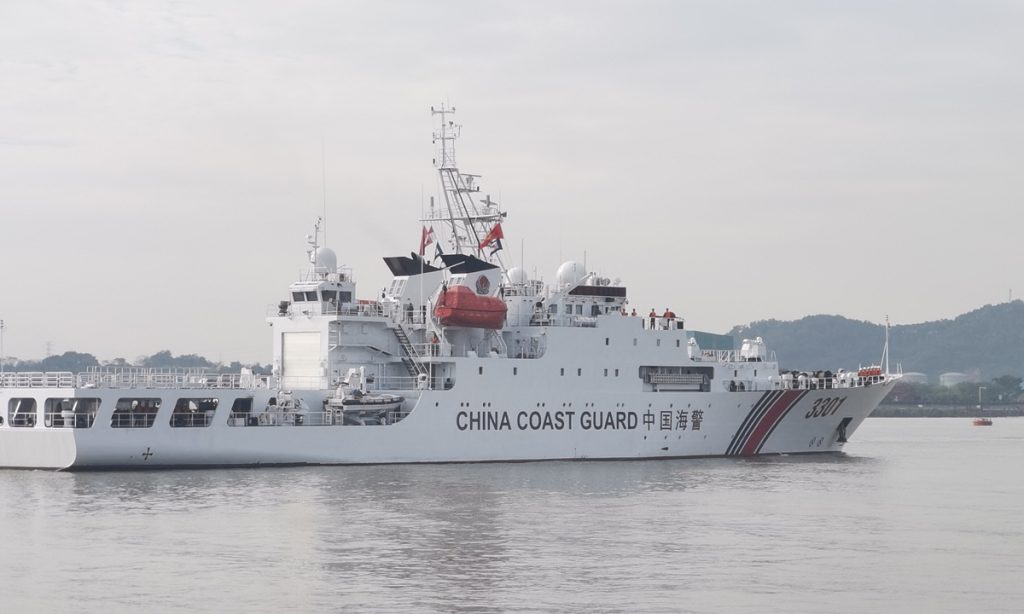
The VCG delegation was also invited to visit the CCG vessel 3301. Global Times reporters learned that vessel 3301 has been in service since 2014 and is responsible for patrolling and supervising key maritime areas throughout the year, with its sailing trails covering the South China Sea.

In 2017, the vessel also participated in the first joint patrol mission in the Beibu Gulf common fishing area with the VCG.

The mutual visits of the main vessels by the two countries' coast guard personnel demonstrate the mutual trust between the maritime law enforcement agencies of the two countries.
To enhance collaboration via exchanges

During the cultural and sports exchange event held on December 5, personnel from both the CCG and VCG participated in friendly matches in table tennis, volleyball, and soccer. In the soccer game, which requires a high level of teamwork, the two teams competed in a mixed formation of Chinese and Vietnamese police officers. The language barrier did not hinder them from deepening their mutual understanding of each other.

"Our solidarity and close cooperation with the VCG have left us with nice memories and countless unforgettable moments. The development of the event has allowed us to cross national borders and establish deep friendships," Chen Zikui, a Chinese police officer who participated in the cultural and sports exchange activities, told the Global Times.

During the exchanges, the coast guard personnel from both sides also cooperated in joint rescue, firefighting, and international signaling exercises.

Wei Changhang from the CCG's third bureau, who participated in the exchange activity, told reporters that he was impressed by the VCG officers' excellent dedication and professionalism which is worth learning from.

"During this joint rescue operation, the crew of the VCG vessel 8002 demonstrated good seamanship, skilled technique, and a strong work ethic, which truly impressed us. We look forward to having the opportunity to deepen exchanges and learning," said Shen Li, the Chinese commander in charge of the exercise.

The Global Times learned that both sides will continue to explore the potential for joint patrols in the Beibu Gulf, and to establish a young officer exchange cooperation mechanism, while collaborating in combating illegal maritime activities to further consolidate the traditional friendship between the two countries, handle maritime emergencies safely, and jointly maintain maritime security and stability.

Australian China hand expects PM's visit to promote academic exchanges with China, urges US 'not to go to war over Taiwan'

Australia/China Cultural Centre

Editor's Note:

Academic and cultural exchanges have long been an important window of communication, allowing for the exploration of common ground, dispelling misconceptions and building trust, identifying shared challenges, and developing innovative solutions between China and Australia. Australian Prime Minister Anthony Albanese's recent visit to China brought fresh expectations that this window could be reopened after diplomatic relations soured between the two trading partners at the start of the COVID-19 pandemic.

Global Times reporters Hu Yuwei and Fan Wei interviewed two outstanding scholars from China and Australia respectively to hear their comments on Albanese's visit and what they anticipate for the future of people-to-people exchanges.

A veteran China hand in Australia, Jocelyn Chey, Australia's first cultural counselor to China, felt encouraged by Albanese's visit to China and said that Australian academics are hopeful that they will be able to engage more with their Chinese counterparts and contribute more to the understanding of China, while a prominent Chinese academic Chen Hong recalled his visa being cancelled on unfounded security grounds in 2020 and underlined his appeal for a more transparent, open, and non-political way of dealing with normal people-to-people and academic exchanges between the two countries.
In a recent exclusive interview with the Global Times, Jocelyn Chey, a visiting professor at the University of Sydney, said that Australian scholars who study or interact with China have encountered difficulties in recent years owing to new government regulations and increased tensions between China and Australia, and this has affected their research and teaching.

The prominent scholar believes that the Australian Prime Minister Anthony Albanese's visit to China is a sign that "these tensions are easing."

"I am immensely encouraged by Albanese's visit to China. It is my firm belief that isolation is always a bad thing, and that dialogue is essential for relationships to be sustained or nourished. This is the most important aspect of the visit, far outweighing any specific outcome in importance," said Chey.

Australian academics are hopeful that they will be able to engage more with their Chinese counterparts and contribute more to the understanding of China, its culture, and history, she said.

Upon invitation, Chey recently came to China to attend a symposium at a major Australian Studies Centre in China, and expressed her strong feelings on how scholars in both Australia and China look forward to reconciled relations and a refreshed environment for academic exchanges.

"Scholars in both Australia and China, including those that I met at the conference, have found that their interactions have been limited by increased government regulation based on security concerns in recent years. I hope that following Albanese's visit, normal academic exchanges will be restored and that full and frank discussions on matters of common concern will be permitted," she said.

Albanese's visit coincides with the 50th anniversary of former Australian prime minister Gough Whitlam's visit in 1973, which achieved an extraordinary breakthrough in diplomatic relations between the two countries, and helped to shape Australia's relations with China and Asia over successive decades.

Though Albanese's visit does not mark a Whitlam-style dramatic shift in policy, Chey believes that the objective has been clearly stated in this visit as to "stabilize" relations. "Even this moderate goal is welcome, especially in a world where partisanship, chauvinism, and open hostility threaten international cooperation, and is essential if we are to meet global existential challenges including climate change."
Earlier on November 6, Albanese stopped by Beijing's iconic Temple of Heaven and posed for photos at the circular Echo Wall where Gough Whitlam stood in 1973, a year after the two countries established diplomatic ties.

"It is 50 years since Gough Whitlam became the first Australian prime minister to visit China. Since he visited the Temple of Heaven in Beijing, much has changed. But what is constant is that engagement between our two countries remains important," Albanese said in a post about his visit to the Temple of Heaven in Beijing on X (formerly Twitter).

Earlier on November 6, Albanese stopped by Beijing's iconic Temple of Heaven and posed for photos at the circular Echo Wall where Gough Whitlam stood in 1973, a year after the two countries established diplomatic ties.

"It is 50 years since Gough Whitlam became the first Australian prime minister to visit China. Since he visited the Temple of Heaven in Beijing, much has changed. But what is constant is that engagement between our two countries remains important," Albanese said in a post about his visit to the Temple of Heaven in Beijing on X (formerly Twitter).

Chey said she and many Australian scholars expect to see trade benefits flowing quickly after the PM's fruitful visit. She was impressed by Albanese's high-profile visit to the China International Import Expo (CIIE), where some 250 Australian companies are exhibiting, upon his first arrival in Shanghai. "There were already breakthroughs in the trade portfolio before the visit; restrictions on barley, hay, and wine have been lifted or are under review."

Chey noted that the meeting between the two countries' leaders was to lay a foundation for ongoing exchanges at ministerial and official levels to pursue a range of bilateral and multilateral issues over the months and years to come.

Chey formerly held diplomatic posts in the Chinese mainland and Hong Kong, and has long been committed to steering China-Australia relations toward a calmer, friendlier, and more sustainable direction. She is also a Member of the Order of Australia (AM) and a Fellow of the Australian Institute of International Affairs.

In 1955, for the first time in Australia, the University of Sydney offered a pioneering Chinese course. Due to her passion for Asian languages and cultures, Chey took the class as an elective, sparking a marvelous connection with China that would last for more than 60 years.

She has successively served as Cultural Counselor at the Australian Embassy in China, Executive Director of the Australia-China Council, Commercial Minister at the Australian Embassy in China, Director of the China Branch of the International Wool Secretariat, and Australian Consul General in Hong Kong and Macao, among other posts. Now that she is retired, Chey is dedicated to researching and promoting Chinese culture.

Chey hopes that "more can be done on both sides" after travel restrictions were eased after COVID-19. "I hope there will be more direct flights between various Australian and Chinese cities. I also hope that visas will be cheaper and easier to obtain. Some incompatibilities have emerged between internet systems and payment systems that complicate travel, and I hope some way can be found to reduce these barriers."

Now the Chinese and Australian governments are serious about advancing relations, they can consider some additional funding to support relevant research and teaching programs in tertiary institutions in both countries, she appealed.

In an article published on the blogsite Pearls and Irritations on November 3, she described her apprehension and excitement during her latest visit to China, accurately reflecting the typical concerns of Australian scholars due to the volatile relationship between the two countries, as well as the evolving impressions of China.

"Before I set off on this visit to China, I was nervous about possible security issues that might impact my travel. I am glad to report that I had no mishaps. My only difficulties with the trip were due to China's use of advanced technology. Many official processes, such as border health checks, have moved online. Cash is hardly used. Taxis and ride-share vehicles depend on one having the appropriate app and a local bank account. I managed to find ways around these problems. Life in Chinese cities, I concluded, is very much a taste of life for future urban generations everywhere."

Like many Australian scholars, Chey also places great emphasis on the influence of the US in Australia's foreign relations. "Our two most important relationships, both economic and strategic, are with the US and China. Above all, we would like these two nations to engage in dialogue, based on mutual respect and understanding, and find a way to manage difficulties and problems," she argued in her opinion piece published on Pearls and Irritations on June 18.

In the commentary titled "Dear Secretary Blinken: Some advice from an Australian old China hand," Chey urged US Secretary Antony Blinken to "not go to war over Taiwan" as it would "cause unthinkable damage to [the] Chinese mainland, to the island of Taiwan, to the US, and to the whole world."

"Knowing how much we would suffer, Australia would surely not support an American military intervention," she underlined.

"Let us do everything we can to welcome China into the international community. Let us also do everything we can to prevent war in the Pacific," she said.

"The Australian government's position on Taiwan has been consistent throughout and, despite some recent difficulties and problems, Canberra still maintains this position. It is this that gives us hope that we can reach resolution of outstanding matters in bilateral relations before too long," the scholar stressed.

"We do not want there to be war over Taiwan. If such were threatened, we could never be involved," she said.

Queqiao-2 successfully launched, key relay communication platform supporting China's subsequent moon exploration missions

China on Wednesday successfully launched into preset orbit the Queqiao-2 relay communication satellite as well as Tiandu-1, Tiandu-2 communication and navigation technology experiment satellites, the key constellation supporting the country’s subsequent Chang’e lunar exploration missions. 

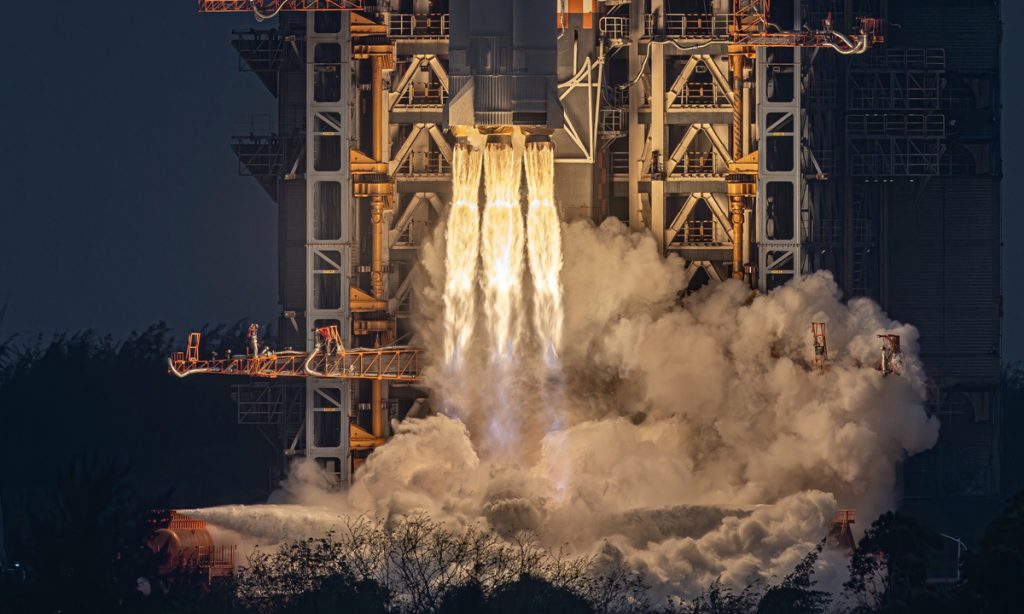
Carrying the three satellites, a Long March-8 rocket took off from Wenchang Space Launch Site in South China’s Hainan Province at around 8: 31 am on Wednesday. And after a flight of 24 minutes, the Queqiao-2 satellite separated from the carrier rocket and then its solar wings and communication antennas unfolded normally, marking the complete success of the launch mission, according to the China National Space Administration (CNSA).

Queqiao-2, or Magpie Bridge-2, is a relay satellite for communications between the far side of the moon and Earth in 2024. The satellite will serve as a relay platform for the fourth phase of China's lunar exploration program, providing communications services for Chang'e-4, Chang'e-6, Chang'e-7, and Chang'e-8 missions.

Compared to the Queqiao-1 relay satellite launched with the Chang'e-4 lunar mission in 2018, the Queqiao-2 relay satellite features more technological innovations, a broader range of technical capabilities, enhanced functionalities, more complex interfaces, higher development complexity, and a longer mission time span. Additionally, Queqiao-2 carries multiple scientific payloads and will conduct scientific exploration missions, per the CNSA.

And 120 seconds after the separation of Queqiao-2 relay satellite, the Tiandu satellite combination separated from the relay satellite and entered a direct Earth-moon transfer orbit with a near-point altitude of 200 kilometers and a far-point altitude of 420,000 kilometers, the Tiandu program contractor Deep Space Exploration Lab (DSEL) revealed in a statement it provided to the Global Times on Wednesday. 

The satellite's solar wings unfolded normally, meaning the launch mission was a complete success, the DSEL confirmed. 

Subsequently, with ground control support, Tiandu satellites will undergo mid-course corrections and near-moon braking to enter a capture orbit, the lab confirmed. 

Then, under orbit control, it will enter a 24-hour period elliptical lunar orbit, following which the two satellites will separate, and the relative distance will be adjusted to about 200 kilometers to conduct new technology verifications such as lunar orbit navigation, integrated Ka-band communication ranging, and high-reliability transmission and routing between moon and Earth, the DSEL disclosed.

The twin satellites, weighing 61 kilograms and 15 kilograms, were respectively developed by the Shanghai Academy of Spaceflight Technology and Harbin Institute of Technology, per the DSEL.

During the short half-hour flight, the Chang'e-8 rocket demonstrated three tailored capabilities for the Queqiao-2 relay satellite mission: enhanced trajectory design, more flexible active roll control technology, and improved thermal protection measures for safety, the rocket model developer China Academy of Launch Vehicle Technology (CALT) told the Global Times in a statement on Wednesday.

According to the CALT, the Wednesday mission was the third flight of the Chang'e-8 rocket. In 2020, it successfully debuted, filling the gap in China's ability to carry 3-5 tons to Sun-synchronous orbit. In 2022, it adapted to commercial launch missions with "One Rocket, 22 Satellites" without two boosters. 

“Today, the Chang'e-8 rocket embarked on its first journey to the Earth-moon transfer orbit, once again proving its stability, reliability, and adaptability through successful performance,” read the CALT statement. 

Mounting a nose cone with a 4.2-meter-width and 8-meter-height, the rocket that can send payload no less than 1.3 tons to the Earth-moon transfer orbit, is considered as a perfect match for the Queqiao-2 satellite launch mission. 

Compared to the tasks Chang'e-8 rocket excels at executing in Sun-synchronous orbit, the Earth-moon transfer orbit has a lower insertion altitude and faster rocket flight speed, almost reaching the second cosmic velocity. As the rocket rapidly crosses the atmosphere, the temperature generated by friction between the rocket body and the atmosphere is higher, especially affecting the nose cone and front end, CALT explained.

To address this challenge, the rocket development team added an extra layer of thermal protection coating to the rocket. Although it may not be apparent from the exterior, key parts of the rocket have increased thickness, enhancing its ability to withstand the harsh conditions of the Earth-moon transfer orbit, it said. 

To meet the future demand for launching large-scale constellations in low Earth orbit, the modified Long March-8 carrier rocket will undertake its maiden flight mission at the Wenchang Space Launch Site in Hainan in the latter half of this year, the Global Times has learned from CALT. 

The Chang'e-6 mission, set to launch in the first half of the year, aims to break new ground in lunar retrograde orbit design and control, intelligent sampling on the moon's far side, and ascent from the lunar surface. It will conduct an automated sample return from the moon's far side, along with scientific exploration of the landing area and international collaboration, according to the CNSA. 

Wu Weiren, chief designer for China's lunar exploration program, had previously revealed that Stage 4 Chang'e lunar probe missions - the Chang'e-6, -7 and -8 - will carry out new planetary exploration missions and further upgrade the country's space launch capabilities in the next 15 years.

Localities break ground for major projects, boost effective investment

Chinese localities have accelerated the roll-out of infrastructure projects with a focus on new infrastructure serving the digital economy in the first two months of this year. 

Analysts said on Monday that the quality of investment further improved, but they called for more support policies to ensure the intensity of investment and keep overall investment steady.

The first quarter is a traditional season in China when the ground is broken for big projects. 

Analysts said there is more room for proactive fiscal policies in 2024, with the issuance of special-purpose bonds and half of the 1 trillion yuan ($138.92 billion) additional government bonds, issued last year, having been transferred for use in 2024. 

They noted that the new round of investment helps improve the country's investment structure but more support policies are needed to ensure the steady growth of investment for the whole year.

Beijing plans to invest 50 billion yuan in local transportation projects this year, up 16 percent year-on-year, the Beijing Daily reported on Monday, citing a municipal official. Investment of 10 billion yuan is set to be completed in the first quarter.

Northeast China's Liaoning Province broke ground on 1,153 infrastructure projects on Monday, with total investment of 316.6 billion yuan, according to a post on the provincial government's website. The projects focus on advanced manufacturing, scientific and technological innovation and clean energy, "as an improvement of Liaoning's investment structure," read the post.

Last week, the city of Shenzhen in South China's Guangdong Province said that it plans to complete investment totaling 140 billion yuan in new infrastructure projects, including the installation and upgrading of 8,000 5G wireless base stations, to boost the development of the digital economy. The pledged investment is markedly higher than the 122.3 billion yuan in new infrastructure investment by the city in 2023.

China's fixed-asset investment rose 4.2 percent year-on-year in the first two months of this year, 1.2 percentage points higher than the full-year growth rate of 2023, data from the National Bureau of Statistics (NBS) showed on Monday. The investment totaled 5.08 trillion yuan.

Tian Yun, a veteran economist based in Beijing, told the Global Times on Monday that localities have improved their investment structure, which has been helpful in improving China's productivity and efficiency, but he called for speeding up the building of a unified national market as the country cannot rely solely on external demand to beef up investment.

Li Chang'an, a professor at the Academy of China Open Economy Studies of the University of International Business and Economics, told the Global Times on Monday that private-sector investment showed better results than in December, indicating that an economic recovery is in progress.

The investment structure also improved as more projects are new infrastructure projects or in sectors related to new quality productive forces, Li said.

However, Li noted that investment on new projects during the first two months were still low, as low profitability dented investment sentiment, which calls for more attention from the government.

According to NBS data, private investment in fixed assets rose 0.4 percent year-on-year in the first two months, reversing a decline in 2023. Private investment in manufacturing, hotels, catering and transportation all registered double-digit growth.

As policies aimed at boosting effective investment continue to take effect, investment is expected to maintain a steady expansion at the next stage, Liu Aihua, a spokesperson with the NBS, said at a press conference on Monday.

Manufacturing investment rose 9.4 percent year-on-year, accelerating by 2.9 percentage points from 2023. Investment in infrastructure construction rose 6.3 percent, up 0.4 percentage points.

US blaming China for its shipbuilding problems lacks factual basis: MOFCOM

China on Thursday slammed US' petition to probe into China's shipbuilding industry for alleged unfair practices as “trade protectionism” and “lacking factual basis.”

The remarks come after the United Steelworkers and other unions filed a petition with the US Trade Representative (USTR) on Tuesday outlining alleged “unreasonable and discriminatory acts, policies, and practices” that have helped China dominate global shipbuilding, the Financial Times reported. 

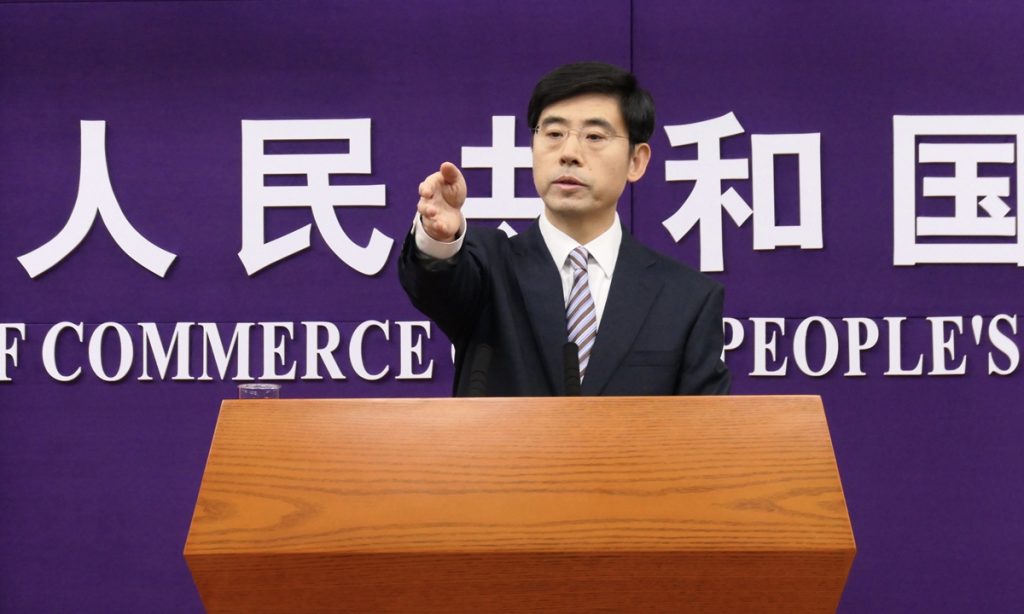
He Yadong, spokesperson for the Chinese Commerce Ministry (MOFCOM) said that the accusations made by some US organizations against China are completely unfounded.

Multiple reports have pointed out that the decline of the US shipbuilding industry is mainly due to overprotection while the development of the Chinese shipbuilding industry has benefited from increasing technological innovation and high-end, intelligent and green development, He said.

“US blaming China for its own industrial development issues lacks factual basis,” He said.

The petition was filed under Section 301 of the Trade Act of 1974. The USTR office said it will review the allegations from the unions and decide within 45 days whether they merit a probe, according to media reports.

He said that the Section 301 measures are typical examples of unilateralism, which violates the basic principles of the WTO and disregards multilateral trade rules. Previous Section 301 measures taken by the US against China have been ruled to violate WTO rules.

It is hoped that the US will make prudent decisions and avoid making same mistakes. The Chinese side will closely follow how it proceeds and take necessary measures to safeguard its legitimate rights, He added.

UAE construction market valued at $94 billion in 2023: Report

The UAE construction market size was $94 billion in 2023 and the market will achieve an average annual growth rate(AAGR) of more than 3% during 2025-2028, according to a report released by GlobalData, a data analytics and consulting company, headquartered in London.

The growth is attributed to the increase in investments in transport and renewable energy infrastructure, with improvements in the electric vehicle market, according to the report.

Residential construction captured the highest share of the UAE's construction market last year, according to the report, which indicated that the real estate sector continued its growth momentum with expectations that the sector will maintain good growth rates during the current year 2024 supported by the launch of qualitative infrastructure projects and investments by the government and the private sector.

Sony says its operations in Chinese market like mobile phones running normally

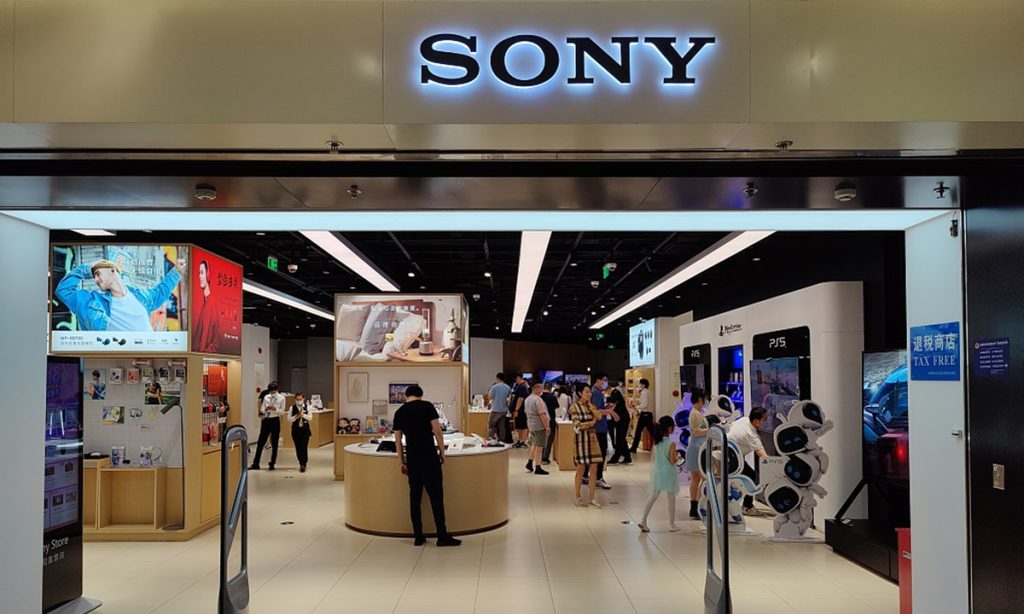
Sony said its several businesses including its mobile phone business are operating normally in China, and the company has confidence in staying in the Chinese market.

The comments are in a response to some users on China's Weibo claiming that new mobile phones Xperia 1 VI and Xperia 10 VI will not be launched on the Chinese mainland.

"Our several business sectors including the mobile phone business are operating steadily in China. China is one of Sony's most important overseas markets, and we are full of expectations for our future development in China, the company said in a note sent to the Global Times on Sunday.

Xperia Z1 was first sold in Chinese mainland as early as 2013. Previously, Sony announced its financial results from July to September 2023, which showed that the revenue of the mobile division, which includes Xperia smartphones, fell significantly year-on-year, according to a report by yicai.com on Saturday.

The performance of Sony mobile phones in the Chinese market has always attracted much attention. In recent years, with the rise of local Chinese mobile phone brands, Sony has faced fierce competition in the Chinese market.

Despite this, the Global Times found that Sony is still selling mobile phone products on e-commerce platforms such as JD.com.

In earlier comments shared with the Global Times, Sony said the company has always attached great importance to the personalized and diversified needs of the Chinese market, and actively joins hands with outstanding domestic partners in order to bring high-tech, high-value products and solutions that are more in line with local needs.

China's Government Work Report submitted on Tuesday to the national legislature for deliberation during the annual two sessions has generated strong confidence among Japanese enterprises in China as it shows the Chinese government's determination to keep promoting opening-up and optimizing the business environment for foreign-funded enterprises.

Multiple Japanese enterprises stated in interviews with the Global Times that they are looking forward to further exploring the market as "China cannot do without the world, and the world cannot do without China."

A survey by the Japan External Trade Organization found that 90 percent of Japanese companies hope to expand their business in China or maintain their current status. Another survey conducted by the Japan Chamber of Commerce and Industry in China among its 1,700 member companies indicated that 88 percent of them still consider China as an important market.

China’s foreign trade goes off to a robust start in first two months, expanding 8.7%

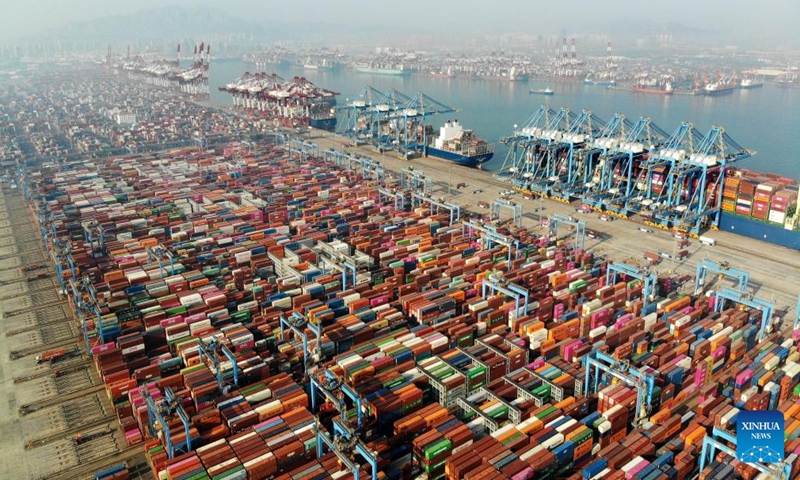
China’s foreign trade in goods in the first two months of 2024 hit a record high of 6.61 trillion yuan ($918.3 billion), rising 8.7 percent year-on-year, signaling a good start of foreign trade in the new year, data from the General Administration of Customs showed on Thursday.

The country’s export volume in the two months recorded year-on-year increase of 10.3 percent to reach 3.75 trillion yuan, and imports reached 2.86 trillion yuan, representing annual growth of 6.7 percent.

From January to February, ASEAN remained China’s largest trade partner, with their bilateral trade totaling 993.24 billion yuan, up 8.1 percent on a yearly basis, accounting for 15 percent of China’s total imports and exports.

The EU becomes China’s second largest trade partner, and the total trade between the two sides stood at 832.39 billion yuan, dropping by 1.3 percent. The US was the third largest trade partner, with their trade volume increasing 3.7 percent to 707.7 billion yuan.

In the first two months, China’s foreign trade with its BRI partners reached 3.13 trillion yuan, registering a year-on-year growth of 9 percent. 

The country’s private enterprises had a good performance in the first two month’s import and export. Trade volume of private firms reached 3.61 trillion yuan, an increase of 17.7 percent, accounting for 54.6 percent of the total value of China’s foreign trade, an increase of 4.2 percentage points over the same period last year.

In terms of the export structure, electromechanical products accounted for nearly 60 percent of Chinese exports, of which automatic data processing equipment, integrated circuits and automobile export recorded significant growth rates. 

In the first two months of the year, China's exports of automatic data processing equipment reached 195.45 billion yuan, up 7.3 percent with exports of integrated circuits soaring 28.6 percent and auto vehicle up 15.8 percent on a yearly basis.

Western doomsayers don’t understand governing mechanism, course of Chinese economic development: political advisor

China officially kicked off the two sessions this week, and the highly-anticipated Government Work Report, which contains a cluster of key economic goals, will be delivered. What we most look forward to is the formulation of some economic development indicators this year. Ultimately, it's about how the central government sets economic growth targets, especially regarding how to focus on the transformation of China's economy, while tackling with downward pressure and external uncertainties.

In fact, everyone is looking forward to what kind of signals the two sessions will bring to China's social development and how it will properly guide social expectations. The tone-setting political gathering is also a timely, clear response to certain pessimism voices on Chinese economy, especially from the international society. I think this is also the most important aspect of this conference.

There have been a lot of hypes on Chinese economy in recent days, ranging from rhetoric such as the collapse of the Chinese economy, economy hitting a ceiling, to economy recession claim. But all of them are groundless and those Chinese economy doomsayers basically don't understand the governing mechanism of Chinese economy and the course of its development. They interpret Chinese economy through the lens of basic theories and values derived from modern Western economics, as well as Western market economy theories.

But the reality of Chinese economy requires the international community to understand it from China's own perspective. For example, in the field of economics what the US scholars and politicians have experienced is only the scenarios involving marketization and modernization of a 300-million population. And obviously when it comes to the Chinese modernization involving a country with 1.4 billion people, it's very challenging for them to understand the development vigor and potential the economy could release, with their limited tools and methodologies in hands. China's uniqueness is undeniable, and it is essential to recognize the special characteristics of the Chinese economy.

Also, many people who study Chinese economy tend to amplify negative data they see, and this is how rumors are being spread internationally.

We've been hearing bearish views on Chinese economy not just today, but since the 1990s. It has been approximately 30 years, yet China is still standing firm here. Even though we currently face downward pressure, including insufficient demand and weakened expectations, if you look at the fundamentals of China's economic development, it's still very robust - no matter from the aspects of people's improving livelihood, stable consumer price, rising residents' incomes or better corporate profits.

The smearing against Chinese economy is clearly inconsistent with the positivity it has been released. Last year, our residents' incomes - both urban and rural - outpaced GDP growth, and rural residents' incomes even surpassed those of urban residents. This actually contributes to social stability and the sense of security and happiness of Chinese people.

There's more potential to be tapped into with China's gradual expansion of middle-income group in the years to come. We currently have only around 400 million middle-income population, and when China achieves the income levels of a moderately developed country in the future, there will likely be 700 to 800 million middle-income population. And that will bring a multiplier effect of China's demand and investment, which may even surpass the readings that a moderately developed country could achieve.
Rebutting 'Chinese economy Japanization'
Some foreign media outlets have also peddled the so-called "Chinese economy Japanization" since last year, with sensational headlines claiming that China's economic slowdown bears resembles to that of Japan three decades ago, and concluded that the world's second-largest economy could risk facing "lost decades" in the near future.

We must acknowledge that the slowdown of the Chinese economy is an inevitable trend for all economies as they progress, as development always involves the core issue of economic structure transition. And also, GDP won't always fly high as development quality improves.

But it is important to note that the Chinese economy is fundamentally different from that of the Japanese economy back then. Firstly, the scale is different. The Japanese economy didn't have a vast domestic market like China and because of a narrow domestic market space, a large amount of Japanese capital had to fleet into the world. On the contrary, China has a huge domestic demand. Even though many Chinese companies now seek opportunities internationally, the reality is that with the expansion of domestic demand and the development of the domestic economy, the space we provide for Chinese companies to develop domestically is also enormous.

Second, Japan has a population of 200 million, while we have 1.4 billion people, which carries ramification for abundant labor supply despite aging issues. Our incremental labor force is decreasing, but China's existing stock of labor force is still significant. The quality of China's existing labor force, along with the cultivation of our own Chinese entrepreneurs through decades of marketization and internationalization, also presents an overwhelming edge in human capital. And potential labor shortage issue could be gradually resolved through structural optimization and policy adjustments.

The Western distortion narrative against Chinese economy, which has persisted for years, is also fueled by their ideological biases. They always seated nervously with China's rise.

However, regardless of how external situation evolve, China needs to focus our efforts on doing our own things well. Chinese policymakers are sober and their approach to economic development - as shed light by the Central Economic Work Conference and the Government Work Report - is very clear. As long as we improve our economy, enhance people's livelihoods, and ensure employment, it is probably the most effective way to deal with all challenges. And the Chinese doomsayers could do nothing but sit there uneasily.

The opinion is based on an interview with Han Baojiang, a member of the National Committee of Chinese People's Political Consultative Conference and a professor at Party School of the Central Committee of the Communist Party of China (National Academy of Governance).