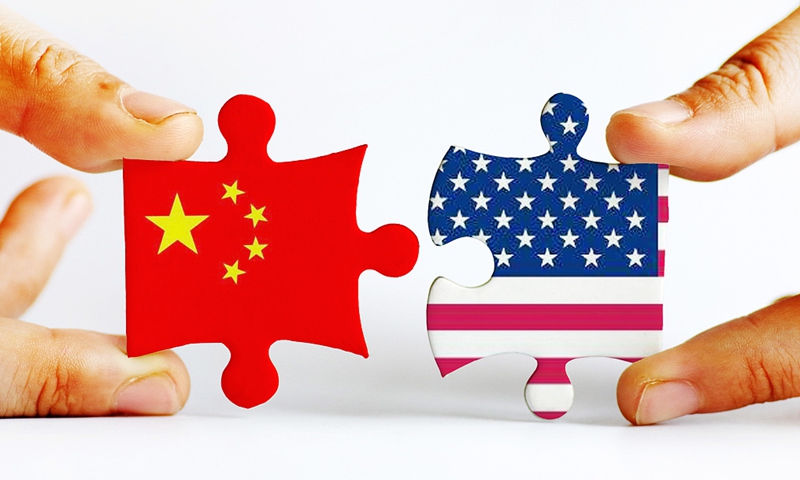
Chinese police have repatriated a Red Notice fugitive wanted by the US, according to the Xinhua News Agency on Thursday. The repatriation marks another collaboration between the law enforcement agencies of China and the US.
The fugitive, a US national, who was wanted for alleged sexual aggression against children, was handed over to the US side on Wednesday at the Pudong International Airport in Shanghai. He was taken back to the US by officers from the diplomatic security service under the US Department of State, according to Chinese police, as cited by Xinhua.
This follows the repatriation of two fugitives suspected of serious criminal offenses from the US to China in June.
In May 2014, the fugitive was wanted by US law enforcement authorities for suspected child sex abuse crimes. In October 2018, Interpol issued a red notice for him. At the request of the US, Chinese public security authorities conducted a thorough investigation, ultimately locating and lawfully detaining the fugitive. After an investigation, it was determined that the fugitive did not commit any crimes of child sexual abuse in China, Xinhua reported.
An official from the Ministry of Public Security noted that, as per the consensus reached by the leaders of China and the US at the San Francisco meeting, the law enforcement departments of both countries have recently engaged in practical cooperation, covering areas such as narcotics control, illegal immigration repatriation, fugitive pursuit and cross-border crime investigations, according to Xinhua.
The two countries have stepped up efforts in cooperation in related fields since the two heads of state met in San Francisco in November 2023, when mutually beneficial cooperation in areas such as counternarcotics, judicial and law enforcement affairs, AI, and science and technology was stressed.
Earlier on July 2, the US Department of Homeland Security (DHS) said in a release that the department, through US Immigration and Customs Enforcement, conducted a removal flight to China this week. It was the first large charter flight since 2018 and was conducted in close coordination with China's National Immigration Administration.
The DHS continues to work with China's Ministry of Public Security and National Immigration Administration on additional removal flights, according to the release.
In the picturesque city of Hangzhou, capital of East China's Zhejiang Province, the well-known tourist attraction the West Lake - known as "a paradise on earth" - now treats visitors to a free selection of traditional Chinese medicine (TCM) herbal tea. This news has immediately ignited the social media, becoming a hot topic of discussion.
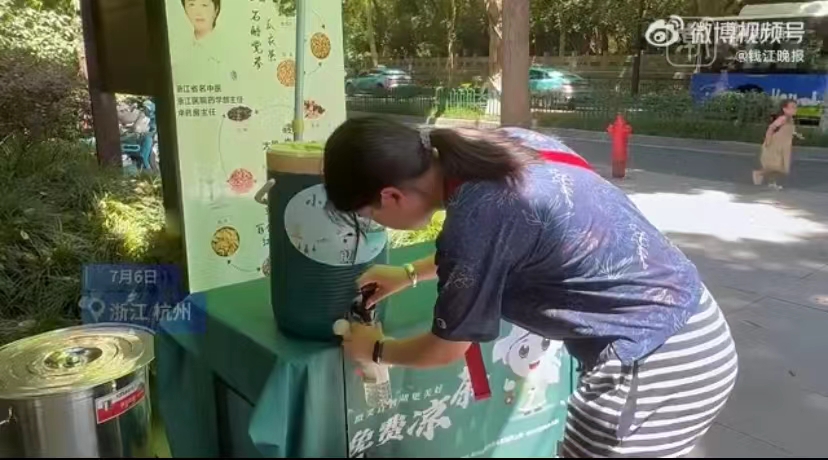
Starting from July 6, volunteers have been serving free herbal tea for tourists at the West Lake, which offers special "coolness" to sightseers and frontline workers, at 10 permanent locations within the lake, and three temporary stalls in the parking lots.
The service will continue until October 7, covering a total of 95 days.
Each tea drink formula is carefully prepared by TCM practitioners, consisting of wolfberry, chrysanthemum, tangerine peel, red dates, and other ingredients. The drinks often have a mellow taste and a fragrant aroma, which are also helpful in harnessing human body and improving health.
One of Zhejiang's famous TCM practitioner, Wan Xiaoqing, was quoted by local media as saying that many of the free herbal teas are derived from classic Chinese medicine formulas and they are safe and suitable for human consumption.
Weng Yunyi, a staff worked employed at the West Lake scenic area, explained that this year's herbal tea stalls have been upgraded with the scenic area jointly launching different health tea drinks based on the changes in ancient Chinese solar terms.
The special TCM herbal tea treat is undoubtedly a pleasant surprise for tourists. The news of "West Lake treats visitors to free TCM herbal tea" quickly sparked vehement discussions on social media, with many netizens sharing photos and videos of themselves enjoying the tea at the West Lake.
Now, visitors are frequently spotted, holding tea cups, leaning on the railing to gaze into the distance, strolling along the lakeside, or sitting on the ground, savoring the tea fragrance, and enjoying the serene West Lake. The scenes will certainly enhance the popularity of the West Lake.
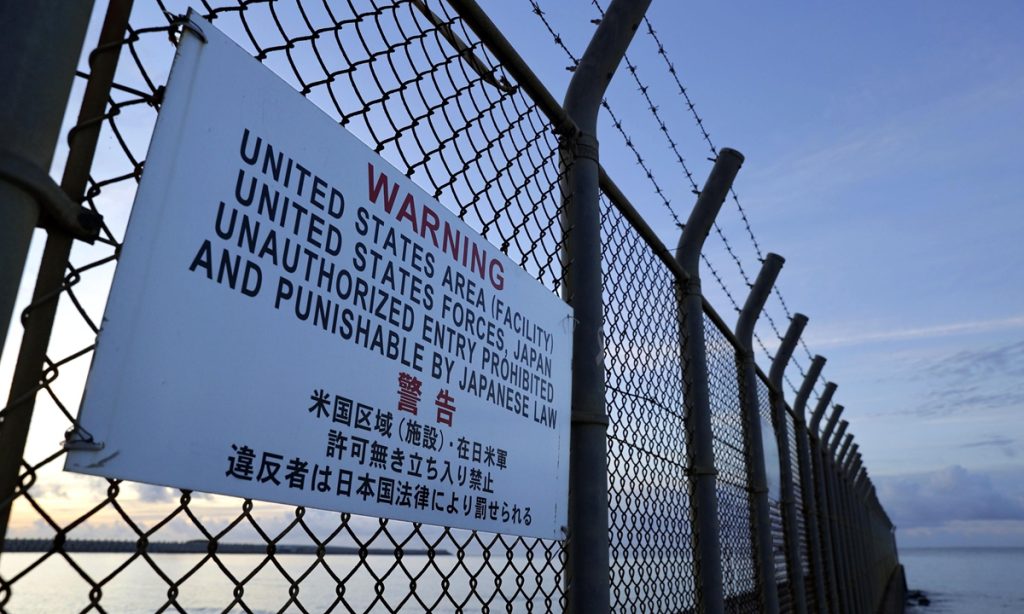
May 15 marks the 52nd anniversary of Okinawa's "return" to Japan. Recently, Okinawan residents discovered the presence of Dutch naval soldiers in the training grounds of the US military base in Okinawa but the Japanese Ministry of Foreign Affairs may have been unaware of this beforehand. On Tuesday, Okinawan residents who discovered this matter spoke exclusively to the Global Times, detailing the sequence of events.
Despite accounting for only 0.6 percent of Japan's total land area, Okinawa hosts over 70 percent of the US military bases in Japan. Over the years, Okinawan residents have continuously protested against the presence of these bases, but the Japanese government has paid little attention and has instead accelerated military deployment.
Akino Miyagi, 45, was born on Hamahiga Island in Uruma city, Okinawa Prefecture. She began participating in anti-base protests during high school. As an entomologist, she discovered during her research in 2011 that the presence of US military bases, including artillery shells, had a detrimental impact on the local ecology. Since then, she has been actively involved in activities opposing US military bases as an environmental researcher.
Miyagi told the Global Times that in late March, while conducting her regular protests at the US military's Northern Training Area in Okinawa, she noticed several soldiers wearing different styles of camouflage uniforms on military trucks. Typically, after leaving the training area, US military trucks return to the base. However, on that occasion, she personally witnessed several trucks entering and leaving the training area, deviating from their usual route.
The Northern Training Area is located in Kunigami District, northern Okinawa Prefecture. It is a US military base and the largest military exercise field in Okinawa Prefecture. In 1998, it was renamed the Jungle Warfare Training Center (JWTC).
After noticing the unusual situation, Miyagi logged into the website of the Defense Visual Information Distribution Service (DVIDS), a subunit of the US Department of Defense, to investigate.
One article on the website revealed that from March 10 to 24, the US military and the Dutch Marines conducted training at the JWTC in Okinawa called the "Jungle Leaders Course." It also noted that this training aims to prepare the US and its allies for combat in challenging jungle environments.
Miyagi told the Global Times that she immediately contacted the Okinawa Defense Bureau, who claimed that they were unaware of the presence of Dutch soldiers training at the US military training grounds in Okinawa.
Miyagi said that various indications suggest that the Japanese Ministry of Foreign Affairs may also have been unaware of this matter beforehand.
According to the Okinawa Times, when asked for a response to related inquiries, the Ministry of Foreign Affairs said that it had confirmed with the US and Dutch military that indeed three Dutch soldiers entered the US military's Northern Training Area in Okinawa in March. However, the ministry claimed that their purpose was for inspection rather than "training."
When asked if they were aware of this beforehand, the Ministry of Foreign Affairs' response was ambiguous, stating that "individual cases cannot be generalized." It is reported that the Dutch soldiers disguised themselves as ordinary passengers and entered Japan via commercial flights at civilian airports.
Okinawan residents have long suffered from the troubles brought by US military bases. In recent years, with the significant rightward shift in the Japanese government, there has been an acceleration of military deployments in Okinawa, leaving local residents living in fear.
According to the Okinawa Ryukyu Shimpo, a local newspaper, the DVIDS released information saying that this US military training is aimed at helping allies familiarize themselves with the operational environment. This suggests that in the future, it is not unlikely that soldiers from other countries may enter the US military bases in Okinawa for combat training, raising concerns about the normalization of the entry of third-country forces into these bases.
Okinawa Governor Danny Tamaki said that the US military did not inform the prefecture in advance about the nature of the training they would conduct. Regardless of the specifics, joint training between the US military and foreign forces will not alleviate the burden on the bases.
As of press time, the Global Times found that the article on the website of the DVIDS had removed the mention of the Dutch soldiers.
The US military has only two facilities globally for jungle warfare training, one in Hawaii and the other being the Northern Training Area in Okinawa. The environment within the Northern Training Area is highly similar to that of several other countries, giving it a clear advantage in regular military training, according to Miyagi.
For instance, there are no infectious diseases like malaria in the jungle, no fierce beasts like tigers, strong radio signals, and it's relatively easy to obtain water from the mountains, rivers, and rainfall. Even in the event of injuries, the distance to hospitals is not far.
Miyagi also noted that the "Jungle Skills Course" typically involves soldiers entering the jungle on Sundays to begin a five-day training program, ending on Fridays. The entire process must be conducted collectively, aiming to reinforce soldiers' awareness of unconditional obedience to commands.
The Okinawa Ryukyu Shimpo reported that the Japanese government claims to allow third-country soldiers to enter the US military bases in Okinawa under certain circumstances but has not publicly disclosed specific criteria. In 2016, two British Royal Marines participated in training with the US Marine Corps at Camp Schwab and Camp Hansen in Okinawa. In 2017, the Philippine Navy trained with the US Navy at Camp Schwab in Okinawa. Instances of third-country military forces training at US military bases in Okinawa have occurred, but only a few of these cases have been made public.
The newspaper also mentioned that to counter China, the US Marine Corps has been conducting training for the so-called "Expeditionary Advanced Base Operations" (EABO) at the Northern Training Area. It is not unlikely that NATO member countries may also join this training in the future. Allowing foreign military forces to enter Okinawa without local knowledge may bring new concerns for the local residents.
Miyagi said that it is unacceptable for foreign military personnel to enter the US military bases in Okinawa for military training disguised as ordinary passengers on commercial flights through civilian airports. Even though Japan and the US have signed the US-Japan Status of Forces Agreement, many issues remain unresolved.
Moreover, there are no relevant agreements between Japan and the Netherlands, meaning that it may be difficult to hold Dutch soldiers accountable for any incidents in Okinawa. If this phenomenon becomes normalized, it will undoubtedly exacerbate tensions in Okinawa, said Miyagi.
Miyagi told the Global Times that the reason such situations occur in Okinawa is mainly because, from the US perspective, using US military bases in Germany and other countries comes with many restrictions, while those in Japan, especially in Okinawa, can be used "as they want."
Despite the extremely negative nature of this event, the reality is that the Japanese government simply doesn't care about what Okinawa is going through, said Miyagi.
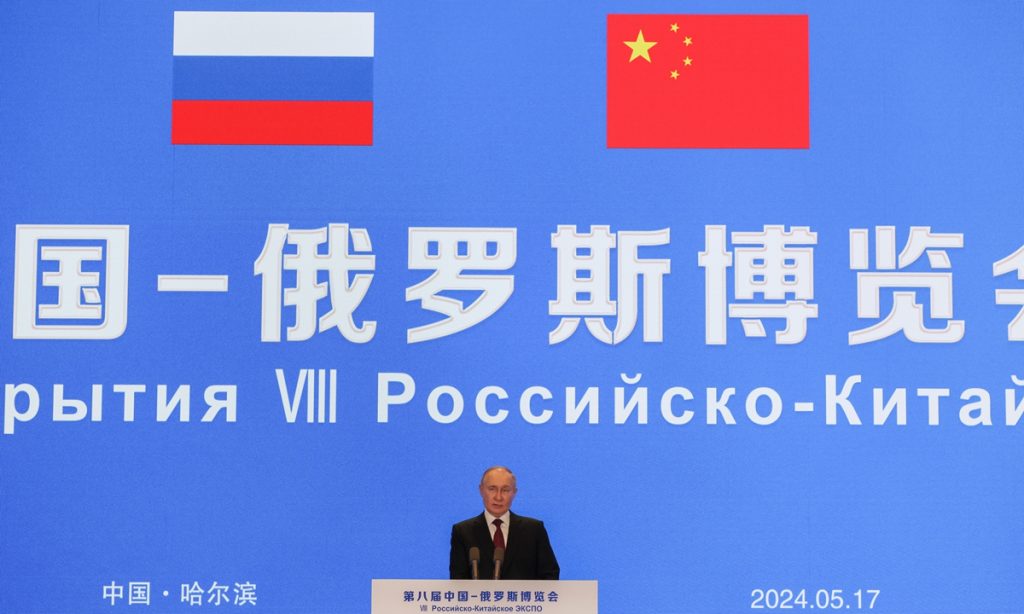
Chinese President Xi Jinping on Friday sent a congratulatory letter to the eighth China-Russia Expo, which opened the same day in Harbin, capital of Northeast China's Heilongjiang Province, which borders Russia.
This year marks the 75th anniversary of China-Russia diplomatic ties, Xi noted, saying that standing at a new historical starting point, bilateral relations will embrace new historical opportunities and show broader prospects for development.
Stressing that after years of cultivation and development, the China-Russia Expo has become an important platform for promoting bilateral economic and trade cooperation, Xi added it is hoped that all sectors of the two countries will make full use of the opportunity presented by the current China-Russia Expo to deepen exchanges and share opportunities, jointly contribute to the mutually beneficial cooperation between China and Russia, and inject new impetus into the development of the China-Russia comprehensive strategic partnership of coordination for a new era, Xinhua reported on Friday.
Expo attendees expressed their high expectation for the future of bilateral trade and economic cooperation, which will not only facilitate the growth of both countries, inject momentum into regional development, but also stabilize industrial chain, paving way to strengthening regional strategic security and stability, analysts said.
Chinese Vice President Han Zheng and visiting Russian President Vladimir Putin jointly attended the opening ceremony of the expo. Han read Xi's congratulatory letter and delivered a speech.
Putin said he had a fruitful meeting with President Xi in Beijing and pinpointed areas to further expand cooperation such as economy, trade, investment, energy, industry, high and new technology, cross-border transportation, tourism, agriculture and local affairs, to bring more benefits to the two peoples.
In meeting with Putin after the opening ceremony, Han said that China-Russia cooperation has enjoyed a sound momentum in recent years.
The Belt and Road Initiative has been further aligned with the Eurasian Economic Union, and a number of major projects have been smoothly advanced, Han said, adding that the China-Russia Expo was a beautiful "business card" of bilateral economic and trade cooperation.
Han expressed expectations for bilateral cooperation to achieve more results, benefit the two peoples and contribute to world development and progress.
Putin noted the two sides should enhance coordination and push forward the cooperation between the Far East and China's northeast region. Economic potential
"There is great potential for the two countries to expand trade in energy, raw materials as well as deepen cooperation in industry, infrastructure as well as provincial cooperation," Zhang Hong, a senior research fellow at the Institute of Russian, Eastern European and Central Asian Studies of the Chinese Academy of Social Sciences, told the Global Times on Friday.
Evgeny Bazhov, General Manager of United Confectionery (Uniconf) China subsidiary company told the Global Times that the company is attending the China-Russia Expo this year in order to seize the opportunity to expand its presence in the Chinese market through e-commerce.
"We have witnessed the inclusiveness and high efficiency of the Chinese market, as well as its high-level opening-up over recent years," Bazhov said, noting that he is optimistic about the vast potential of the China market.
Mutual trust in the future can become the basis for the formation of common research and development (R&D) and value chains between Russia and China, Alexander Lomanov, Deputy Director for Scientific Work, Primakov National Research Institute of World Economy and International Relations, Russian Academy of Sciences, told the Global Times.
"Confidence that your partner will never use sanctions and other illegitimate restrictions against you can help economic rapprochement between Russia and China and pave the way for a new model of globalization that is fair and beneficial to all," Lomanov said.
New paradigm of relations
The steady growth and great potential of China-Russia trade is a symbol of the stable and sound development of bilateral relationship; Interactions between the two heads of state have always served as crucial guidance, according to observers.
After their meeting at the Great Hall of the People on Thursday, Xi and Putin had a restrictive meeting at Zhongnanhai in Beijing. The two leaders took a walk in the garden, sat by the water, and engaged in in-depth discussions on strategic issues of common concern in a relaxed atmosphere with aromatic tea.
Under the strategic guidance of the two heads of state, the China-Russia bilateral trade volume hit a new record of $240.1 billion in 2023, crossing the $200 billion target ahead of schedule, and has maintained fast growth in 2024.
"China-Russia relations are not a military-political alliance. The economic trade cooperation between the two countries is limited to general trade, and does not target any third party," Zhang said.
The smooth development of China-Russia economic ties will also contribute to the stability and development of the Eurasia continent by bridging the Belt and Road Initiative with the Eurasian Economic Union, Zhang said.
Such economic cooperation will also contribute to establishing a multi-polar world at a time when the US-led West is creating closed and exclusive small circles and advocating trade protectionism and unilateralism," he said.
Chinese Ambassador to Russia Zhang Hanhui told the Global Times in an exclusive interview that China and Russia are both major powers and permanent members of the UN Security Council and adhere to the principle of non-alliance, non-confrontation and non-targeting of any third party.
Li Haidong, a professor at the China Foreign Affairs University, told the Global Times that the West always interprets China-Russia relations through a Cold War and camp confrontation lens, and falls short of understanding the true meaning of "non-alliance, non-confrontation and not targeting any third party."
Bilateral economic ties have stabilized the industrial chain and provided strategic security, Li said.
Such security, plus the long-term high-level mutual trust, not only serves the fundamental interests of the two countries and two peoples, but also helps promote global fairness and justice, as China and Russia can jointly withstand hegemony and unilateralism, and uphold multipolarity, Li said.
China-Russia cooperation is completely above-board. China and Russia have set a new paradigm of major-country relations that challenges the US-led hegemonic acts, which is why the US keeps slandering China-Russia cooperation, observers said.
Against the backdrop of the ongoing Russia-Ukraine conflict, Washington continues to assault normal China-Russia trade, and has intensified its crackdown on selected Chinese companies.
The US imposed a new round of sanctions against 20 companies based in China on May 1, claiming they are involved in supporting Russia's defense-industrial base.
Following the release of the China-Russia joint statement on Thursday, US State Department deputy spokesperson Vedant Patel said that China can't "have its cake and eat it too."
"You cannot want to have deepened relations with Europe… while simultaneously continuing to fuel the biggest threat to European security in a long time," Patel said, the Associated Press reported.
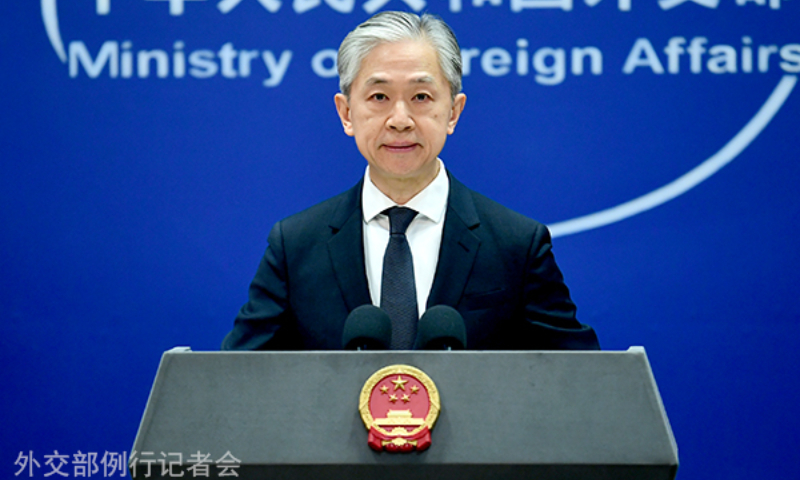
The US' logic is "either black or white," which is an attitude of seeking enemies rather than peace, and is a continuation of the Cold War mentality. This is a reflection of the Cold War mentality that still dominates US thinking, which bears unshirkable responsibility for the eruption and escalation of the Ukraine crisis, Chinese Foreign Ministry spokesperson Wang Wenbin said at Friday's routine press briefing.
China is neither the creator of nor a party involved in the Ukraine crisis. We always stand on the side of peace and dialogue, are committed to promoting peace talks, and actively support the construction of a balanced, effective, and sustainable European security architecture, Wang said, adding that China's objective and just position and constructive role have been widely recognized by the international community.
"To solve the problem, the one who started it should end it," Wang said, urging the US not to blame China, not to try to sow discord between China and Europe, not to continue to add fuel to the fire, but to do something practical for the political settlement of the Ukraine crisis.
The Ethiopia-Djibouti railway is the first standard-gauge railway in East Africa and a flagship project between China and the two countries under the Belt and Road Initiative (BRI). Having created more than 55,000 jobs for locals, the railway has greatly strengthened connectivity between Ethiopia and Djibouti and injected strong impetus into their economic and social development, Chinese Foreign Ministry spokesperson Wang Wenbin said on Tuesday.
A Chinese saying goes, "It is more important to teach people how to fish than just giving them fish." The Ethiopia-Djibouti railway is a good example, Wang said at a regular press conference.
China has not only constructed a modern railway in cooperation with Ethiopia and Djibouti, but also trained more than 2,800 local professionals, helping build an excellent local team, Wang said.
The Chinese management consortium of the Ethiopia-Djibouti railway recently transferred management responsibility to Ethiopia and Djibouti after six years of successful operation.
Since entering commercial operation on January 1, 2018, the 752-kilometer-long Ethiopia-Djibouti railway has operated over 2,500 passenger trains with a passenger volume of 680,000.
It has also operated more than 7,700 freight trains, with a cargo volume of 9.5 million tons in the same period, according to data the Chinese management contractor sent to the Global Times.
China will continue to cooperate with Ethiopia and Djibouti to build the railway toward win-win cooperation and prosperity, and will jointly promote the high-quality development of the BRI and contribute to the mutual development of China and Africa, Wang said.
After handing over management responsibility, the Chinese side will continue to provide technical support. The two sides also plan to continue cooperation in expanding supporting facilities so as to better unleash the potential of the railway to bring benefits to local people, Dai Hegen, chairman of China Railway Construction Corp, which is a contractor of the railway, was quoted as saying in a press release.
The project is a demonstration that underscores China's commitment to supporting Africa in realizing regional economic and social integration, Song Wei, a professor at the School of International Relations and Diplomacy at the Beijing Foreign Studies University, told the Global Times on Tuesday.
Such BRI projects have not only boosted geopolitical and political ties across Africa but also strengthened the continent's self-sufficiency, Song said, noting that China, as a committed supporter, has helped enlarge the development scope for Africa by providing more funds.
Song refuted US claims alleging Chinese aid to African countries had led to a "debt trap," saying that Washington is still stuck in the Cold War thinking and zero-sum games by smearing China. As China's influence in Africa grows, the US heavily emphasizes the concept of a "debt trap" to undermine China's relations with its African allies as well as China's own global reputation, according to Song.
"China's aid to Africa is geared toward fostering the continent's development, especially for nations that have challenges in securing external funding," Song said.
No country has fallen into debt difficulty because of cooperation with China, and no partner believes that China has led them into a "debt trap," a spokesperson from the China International Development Cooperation Agency said in April.
China-based online travel platforms reported a 40-percent jump in searches for keywords related to Cuba following the announcement of visa-free tour for Chinese travelers on May 5.
The new policy allows Chinese passport holders to enter Cuba visa-free this month, the country's minister for tourism Juan Carlos Garcia announced, in a move aimed at boosting engagement and cooperation between the two countries.
Havana also announced that China would be a guest country during Cuba's 2025 tourism festival, adding that direct air flights would resume on May 17.
Flights on a Beijing-Madrid-Havana route operated by Air China are set to resume on May 17, currently the only route between China and Cuba.
The visa exemption will ramp up Chinese people's interest in traveling to Latin America, a region boasting unique cultural and natural landmarks.
The recent opening and resumption of direct flights between China and Mexico, Brazil, Cuba, and other Latin American destinations will significantly reduce the time and cost for Chinese travelers, according to Trip.com.
Another travel platform Qunar.com revealed that Cuba is a popular destination for 14-day tour packages in China, with the two most attractive cities being Havana and Varadero.
Local economies in China fared well in the first quarter by developing new quality productive forces, while domestic demand revived and industries grew robustly. The momentum will be sustained, observers said on Tuesday, after 31 provincial-level regions reported GDP growth figures.
A total of 13 province-level regions achieved GDP levels of more than 1 trillion yuan ($141.18 billion). The economies of South China's Guangdong Province and East China's Jiangsu Province, China's manufacturing hubs, each exceeded 3 trillion yuan - 3.15 trillion yuan for Guangdong and 3.10 trillion yuan for Jiangsu.
In terms of growth rates, 16 regions grew faster higher than the country's 5.3 percent increase, and eight localities reported GDP growth of more than 6 percent. Northeast China's Jilin Province led the nation with a 6.5 percent expansion, followed by Jiangsu and Chongqing at 6.2 percent each.
Economic powerhouse provinces played a vital role in bolstering China' s economic development and stabilizing the nation's fundamentals. Local economic progress was achieved by developing new quality productive forces, as their traditional industries are relatively mature, Hu Qimu, a deputy secretary-general of the digital-real economies integration Forum 50, told the Global Times on Tuesday.
The stable growth of the powerhouses demonstrated the country's economic resilience and vitality, Wang Peng, an associate research fellow at the Beijing Academy of Social Sciences, told the Global Times on Tuesday.
Investment in emerging industries in Guangdong remained robust in the first quarter - up 22.4 percent in the advanced manufacturing sector and up 33.3 percent in the high-tech manufacturing sector.
Output of new-energy vehicles in Beijing grew by 2.4 times year-on-year in the first quarter while production of integrated circuits increased by 22.6 percent, according to media reports.
The added value of Jiangsu's manufacturing industry rose by 7.3 percent year-on-year, accounting for 35.9 percent of the provincial GDP. The rapid development of the private economy in Chongqing contributed 67.5 percent of its economic growth, driving up the local economy by 4.2 percentage points.
Thanks to its large real economy, China's monetary and fiscal policies have been able to diverge from global policies in a bid to stabilize economic growth, and policy implementation is dedicated to domestic market entities, Hu said.
China has been optimizing and adjusting its industrial structure by replacing low-end production capacity with high-end production capacity, Hu added.
Experts remain upbeat on China's economic recovery given these favorable conditions.
Supportive policies, a consumption rebound, the fast development of emerging industries and steady investment growth will continue to provide impetus to China's GDP growth, especially given the optimized industrial structure, Wang said.
The first-quarter figures were influenced by the resumption of production activities after the Spring Festival holidays. Hu said that second-quarter GDP growth should improve, and growth in the second half may further accelerate if the momentum is sustained.
A Chinese expert on Thursday slammed US Commerce Secretary Gina Raimondo's latest remarks about taking "extreme action" against and banning Chinese connected vehicles, noting her remarks reflected the US' politicization of trade issues and harm the global auto supply chain.
US Commerce Secretary Gina Raimondo said on Wednesday that the US could take "extreme action" and ban Chinese internet- connected vehicles or impose restrictions on them following a national security investigation by the Biden administration in February, according to Reuters.
"We have to digest all the data and then figure out what action that we want to take. We could take extreme action, which is to say no Chinese connected vehicles in the United States or look for mitigation," Raimondo said, in the first indication that a ban could be on the table following a national security probe.
"It's ridiculous to say Chinese-made vehicles pose national security risks since only a limited number of Chinese-made vehicles were imported to the US. Such remarks and actions are manifestations of the US politicization of auto trading," Wu Shuocheng, a veteran automobile industry analyst, told the Global Times on Thursday.
The US practice distorts fair competition and will seriously disrupt the global auto industry chain and supply chain, Wu noted.
Meanwhile, China's Foreign Ministry spokesperson Lin Jian said on Thursday that overstretching the concept of national security, and weakening or severing one's economic ties with other countries leads nowhere, and will only destabilize global industrial and supply chains, disrupt international trade order, and end up harming one's own interests. Lin urged the US to fulfill its commitment of not seeking to hold back China's economic growthnot containing China's economic development.
Raimondo's latest remarks came as the US continues to step up its reckless suppression of China's car industry. Chinese officials and analysts have repeatedly slammed the US measures as acts of politicizing economic and trade issues.
On February 29, the White House said that the Biden administration was opening an investigation into whether Chinese vehicle imports pose national security risks and it could impose restrictions due to concerns about "internet-connected" vehicle technology.
The spokesperson from China's Foreign Ministry, Mao Ning in March noted that Chinese-made cars are popular globally, not by using "unfair practices" but by emerging from fierce market competition with homegrown technological innovations and superb quality.
This is not the first time that US Commerce Secretary Gina Raimondo peddled the "national security threat" theory against Chinese vehicles. "Cars these days are like an iPhone on wheels… You connect your phone and you might receive the text message… Imagine a world with 3 million Chinese vehicles on the roads of America, and Beijing can turn them off at the same time," she once said.
In a response, Mao said the US side was creating a false narrative,which clearly reflects Washington's practice of making economic and trade issues into ones of politics and security.
"By that logic, shouldn't China be more worried about Washington's ability to get hundreds of millions of Apple phones of Chinese users to channel collected information back to the US, or even cause a blanket screen shutdown?"
"China's door has been open to global auto companies, including US auto companies that fully share in the dividends of China's big market. By contrast, the US has engaged in trade protectionism and set up obstacles including discriminatory subsidy policies to obstruct access to the US market by Chinese-made cars. Such acts of politicizing economic and trade issues will only hinder the development of the US auto industry itself," Mao said.
China urges the US to respect the laws of the market economy and the principles of fair competition, stop overstretching the concept of national security, stop its discriminatory suppression of Chinese companies, and uphold an open, fair and non-discriminatory business environment, Mao said.
One student was killed and several were injured following a traffic accident in Nantong, East China's Jiangsu Province on Friday. Authorities said that initial investigations have shed light on faulty signal and negligent driving as the main cause.
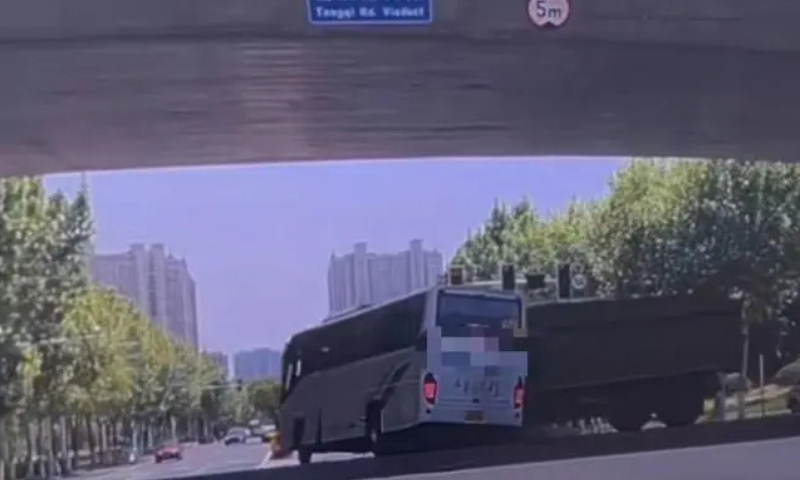
The accident occurred when a bus carrying 45, including 39 students, collided with a dump truck. The students belonged to an elementary school located in Nantong's Chongchuan District and were heading for an art festival exhibition on Friday.
Eight people, including six students, were injured during the accident.
A rapid response effort was initiated following the accident, with local authorities swiftly deploying rescue workers. The injured were transported to a nearby hospital for medical treatment. Unfortunately, one student died from critical injuries sustained in the crash.
Authorities from Nantong traffic police told media on Saturday that the accident occurred at the intersection of Panxiang Road and Hongjiang Road in Chongchuan District. It was revealed that prior to the collision, both the bus and the dump truck were travelling in their respective lanes.
However, a faulty traffic signal at the intersection led to the incident. The bus, traveling from north to south at a speed of 30 kilometers per hour, failed to stop at the intersection due to the non-functioning signal and driver's lack of cautious observation. Simultaneously, the dump truck, traveling from west to east at a speed exceeding 50 kilometers per hour, collided with the right front section of the bus. The driver of the dump truck was placed under control pending further investigation as he drove the vehicle in the restricted area, which violated regulations.
A shop clerk, surnamed Li, told Chinese media outlet thepaper.cn that she passed the intersection every day and the signal had been broken for a while, flashing abnormally. Passer-by and vehicles had been forced to stop and pass slowly after checking if there were vehicles in adjacent lanes.
In response to the incident, local Nantong officials swiftly established an accident investigation team, and conducted an inquiry to ascertain responsibility for the accident. Subsequent actions will entail the rigorous enforcement of relevant laws and regulations to hold accountable those individuals responsible.
Following the incident, authorities in Nantong swiftly moved to repair malfunctioning signals across the city.
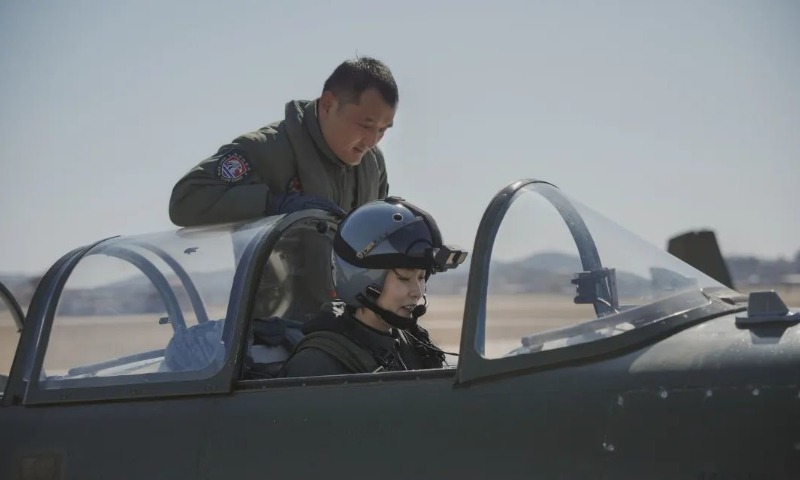
The first group of PLA Navy's female carrier-based aircraft pilots successfully completed their first solo flight training at a military airport recently, showing their ability to independently pilot an aircraft.
On the morning of April 25, when the Global Times arrived at the airport, the first phase of solo flight training for the female pilots had already concluded.
Amid a roar of engines, the aircraft landed in batches under the guidance of instructors. In the second phase of training, the pilots began their solo flights, which is the most challenging stage of non-technical command solo flying. It needs to be conducted according to standard visual flight route training.
When aircraft fly at low altitudes, they are significantly influenced by meteorological conditions. Any change requires pilots to quickly correct their course, placing high demands on the technical skills of the trainees and posing a significant psychological challenge. As the command was issued, the first female trainee swiftly took off in a fighter jet. On the screens inside the control tower, the information and various parameters of the aircraft kept changing, clearly displaying the aircraft's flight status. At the same time, the control tower echoed with the clear commands from the controller and responses from the pilots.
Before long, the first group of female trainees successfully completed their solo flight training according to the schedule, prompting cheers and applause at the scene.
Carrier-based aircraft pilots are the core of an aircraft carrier's combat capability. With the accelerated pace of China's naval development, the demand for talented naval aviators has become more urgent, the Global Times learned.
In recent years, the navy has vigorously promoted the training of carrier-based aircraft pilots, gradually expanding the training model. In 2023, the navy selected the first group of female carrier-based aircraft trainees from local universities for the first time. They are the first female pilots of the naval aviation force, all of whom were born after the year 2000 and were trained by the Naval Aviation University.
The university adheres to the principles of "carrier-based training, real combat teaching, standardized management, and intensive support," the Global Times learned.
The training program focuses on strengthening the trainees' theoretical foundations regarding aviation and enhancing their risk response capabilities, with the goal of minimizing human errors and maximizing their flying potential, thereby laying solid foundations for their rapid growth and technical improvement.