A Chinese expert on Thursday slammed US Commerce Secretary Gina Raimondo's latest remarks about taking "extreme action" against and banning Chinese connected vehicles, noting her remarks reflected the US' politicization of trade issues and harm the global auto supply chain.
US Commerce Secretary Gina Raimondo said on Wednesday that the US could take "extreme action" and ban Chinese internet- connected vehicles or impose restrictions on them following a national security investigation by the Biden administration in February, according to Reuters.
"We have to digest all the data and then figure out what action that we want to take. We could take extreme action, which is to say no Chinese connected vehicles in the United States or look for mitigation," Raimondo said, in the first indication that a ban could be on the table following a national security probe.
"It's ridiculous to say Chinese-made vehicles pose national security risks since only a limited number of Chinese-made vehicles were imported to the US. Such remarks and actions are manifestations of the US politicization of auto trading," Wu Shuocheng, a veteran automobile industry analyst, told the Global Times on Thursday.
The US practice distorts fair competition and will seriously disrupt the global auto industry chain and supply chain, Wu noted.
Meanwhile, China's Foreign Ministry spokesperson Lin Jian said on Thursday that overstretching the concept of national security, and weakening or severing one's economic ties with other countries leads nowhere, and will only destabilize global industrial and supply chains, disrupt international trade order, and end up harming one's own interests. Lin urged the US to fulfill its commitment of not seeking to hold back China's economic growthnot containing China's economic development.
Raimondo's latest remarks came as the US continues to step up its reckless suppression of China's car industry. Chinese officials and analysts have repeatedly slammed the US measures as acts of politicizing economic and trade issues.
On February 29, the White House said that the Biden administration was opening an investigation into whether Chinese vehicle imports pose national security risks and it could impose restrictions due to concerns about "internet-connected" vehicle technology.
The spokesperson from China's Foreign Ministry, Mao Ning in March noted that Chinese-made cars are popular globally, not by using "unfair practices" but by emerging from fierce market competition with homegrown technological innovations and superb quality.
This is not the first time that US Commerce Secretary Gina Raimondo peddled the "national security threat" theory against Chinese vehicles. "Cars these days are like an iPhone on wheels… You connect your phone and you might receive the text message… Imagine a world with 3 million Chinese vehicles on the roads of America, and Beijing can turn them off at the same time," she once said.
In a response, Mao said the US side was creating a false narrative,which clearly reflects Washington's practice of making economic and trade issues into ones of politics and security.
"By that logic, shouldn't China be more worried about Washington's ability to get hundreds of millions of Apple phones of Chinese users to channel collected information back to the US, or even cause a blanket screen shutdown?"
"China's door has been open to global auto companies, including US auto companies that fully share in the dividends of China's big market. By contrast, the US has engaged in trade protectionism and set up obstacles including discriminatory subsidy policies to obstruct access to the US market by Chinese-made cars. Such acts of politicizing economic and trade issues will only hinder the development of the US auto industry itself," Mao said.
China urges the US to respect the laws of the market economy and the principles of fair competition, stop overstretching the concept of national security, stop its discriminatory suppression of Chinese companies, and uphold an open, fair and non-discriminatory business environment, Mao said.
The China Coast Guard (CCG) and the Vietnam Coast Guard (VCG) held the 7th high-level working meeting as well as a series of exchange activities in South China's Guangzhou on December 4-8, with both sides vowing to jointly crack down on maritime crime to further consolidate the traditional friendship between the two countries and deepen practical maritime cooperation and mutual trust.
Upon China's invitation, the VCG vessel 8002 visited Guangzhou from December 4 to 8 and participated in a series of exchanges and activities.
After witnessing the candid conversations and deepened interactions between the two countries' coast guards, and boarding the Vietnamese vessel, Global Times reporters concluded that mutual trust between the Chinese and Vietnamese coast guards has continually heightened through upgraded cooperation and smooth coordination, which have helped construct a new model in co-maintenance of regional security and stability.
Friendly cooperation a benchmark for the region
"Since the moment I arrived in Guangzhou, I have felt the friendship and warmth of our Chinese counterparts in the China Coast Guard," Major General Le Quang Dao, commander of the VCG Command, said during the welcome ceremony for the Vietnamese delegation held on the morning of December 4. He mentioned that China and Vietnam share a long-standing tradition of friendship and unity, with mountains and waters connecting the two countries and two peoples. This tradition has been inherited and further developed in the present era.
The Global Times reporters noted that during the various exchange activities held on December 4, the words "mutual trust" and "cooperation" were frequently mentioned when Commander Le talked about the cooperation between the two countries' coast guards. He also described the multilevel exchanges and cooperation between the two sides as a model of cooperation among regional countries' maritime law enforcement.
During the 7th high-level working meeting between the two delegations, Commander Le expressed his pleasure at feeling the sincerity and brotherly affection from his Chinese counterparts. The VCG and CCG have established a close and substantial cooperation mechanism, with continuous expansion and deepening of cooperative activities, he said. "Over the years, the coast guard forces of China and Vietnam have been united, overcoming difficulties, and carrying out many practical and effective cooperative activities. This has made a positive contribution to strengthening the trust between the maritime law enforcement forces of the two countries and maintaining regional security," said Commander Le. "It is a highlight of maritime law enforcement among regional countries."
CCG Director-General Major General Yu Zhong pointed out at the welcome ceremony that current maritime development faces unprecedented risks and challenges. As defenders of maritime security, practitioners of maritime governance, and protectors of maritime resources, coast guards from various countries must strengthen cooperation and make joint efforts to reduce risks and overcome difficulties.
"In recent years, the friendly and trustworthy cooperation between the Chinese and Vietnamese coast guards has set an example for maritime law enforcement agencies of all countries, and has played a significant role in maintaining regional maritime security and stability," said Yu.
The Global Times reporters also noted that as part of the VCG welcome, the roads on both sides of a dock on Changzhou Island, Guangzhou, where the VCG vessel 8002 was docked, were adorned with the bright red flags of China and Vietnam. Bilingual welcome banners and signs in Chinese and Vietnamese were also seen throughout the dock.
The visiting VCG vessel 8002 also displayed a bilingual banner that reads "Greetings from the VCG 8002 to Guangzhou, China." These details created a harmonious atmosphere for the meeting and the visit activities.
During the visit of the VCG delegation, the two sides held a series of activities, including a dock welcome and a farewell ceremony, drill exchanges, cultural and sports exchanges, ship visits, professional technical exchanges, and a deck reception.
Shi Yiyong, head of the CCG's third bureau, said that the exchanges and mutual visits between the Chinese and Vietnamese coast guards are a concrete and authentic portrayal of and a testament to the friendly and traditional friendship between China and Vietnam. "We must inherit and carry forward the spirit of previous high-level meetings between China and Vietnam, especially the consensus on friendly cooperation between the two sides reached at this high-level working meeting."
Visiting each other's ships shows trust
Vietnamese media sources previously reported that the visiting VCG vessel 8002 was launched in 2014. The vessel, 90 meters long and 14 meters wide, has a capacity of over 12,000 horsepower and can operate at a maximum speed of 21 nautical miles per hour. Equipped with state-of-the-art facilities, the vessel is able to operate continuously for 40 days at sea at a range of 5,000 nautical miles, even in harsh weather condition including strong winds and huge waves. The vessel also has a helicopter pad, two high-speed rescue boats, weapons, and medical equipment. Vessel 8002, a multifunctional police boat, meets all international standards for vessels of its kind.
After the welcome ceremony held on December 4, the VCG invited CCG officers and Chinese media reporters to the VCG vessel 8002. During the visit, VCG officers introduced the onboard facilities to the Chinese visitors, and both sides conducted professional technical exchanges on the ship and exchanged gifts and souvenirs on the ship's deck.
The Global Times noted that during the visit, CCG Director-General Major General Yu also sat in the driver's seat of the vessel 8002 together with VCG Commander Le upon the latter's invitation, and learned about the vessel's condition.
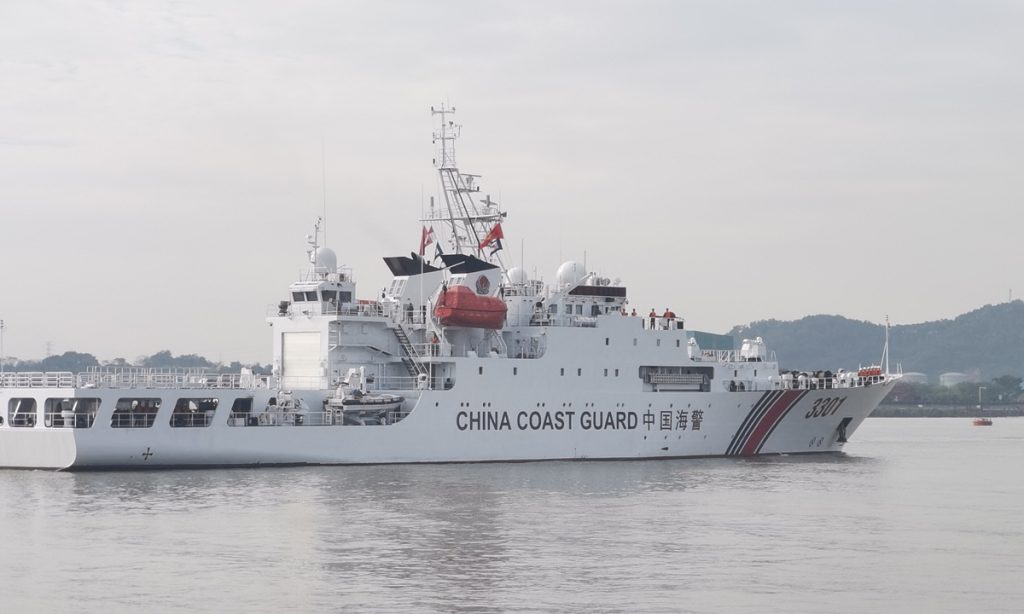
The VCG delegation was also invited to visit the CCG vessel 3301. Global Times reporters learned that vessel 3301 has been in service since 2014 and is responsible for patrolling and supervising key maritime areas throughout the year, with its sailing trails covering the South China Sea.
In 2017, the vessel also participated in the first joint patrol mission in the Beibu Gulf common fishing area with the VCG.
The mutual visits of the main vessels by the two countries' coast guard personnel demonstrate the mutual trust between the maritime law enforcement agencies of the two countries. To enhance collaboration via exchanges
During the cultural and sports exchange event held on December 5, personnel from both the CCG and VCG participated in friendly matches in table tennis, volleyball, and soccer. In the soccer game, which requires a high level of teamwork, the two teams competed in a mixed formation of Chinese and Vietnamese police officers. The language barrier did not hinder them from deepening their mutual understanding of each other.
"Our solidarity and close cooperation with the VCG have left us with nice memories and countless unforgettable moments. The development of the event has allowed us to cross national borders and establish deep friendships," Chen Zikui, a Chinese police officer who participated in the cultural and sports exchange activities, told the Global Times.
During the exchanges, the coast guard personnel from both sides also cooperated in joint rescue, firefighting, and international signaling exercises.
Wei Changhang from the CCG's third bureau, who participated in the exchange activity, told reporters that he was impressed by the VCG officers' excellent dedication and professionalism which is worth learning from.
"During this joint rescue operation, the crew of the VCG vessel 8002 demonstrated good seamanship, skilled technique, and a strong work ethic, which truly impressed us. We look forward to having the opportunity to deepen exchanges and learning," said Shen Li, the Chinese commander in charge of the exercise.
The Global Times learned that both sides will continue to explore the potential for joint patrols in the Beibu Gulf, and to establish a young officer exchange cooperation mechanism, while collaborating in combating illegal maritime activities to further consolidate the traditional friendship between the two countries, handle maritime emergencies safely, and jointly maintain maritime security and stability.
China on Wednesday successfully launched into preset orbit the Queqiao-2 relay communication satellite as well as Tiandu-1, Tiandu-2 communication and navigation technology experiment satellites, the key constellation supporting the country’s subsequent Chang’e lunar exploration missions.
Carrying the three satellites, a Long March-8 rocket took off from Wenchang Space Launch Site in South China’s Hainan Province at around 8: 31 am on Wednesday. And after a flight of 24 minutes, the Queqiao-2 satellite separated from the carrier rocket and then its solar wings and communication antennas unfolded normally, marking the complete success of the launch mission, according to the China National Space Administration (CNSA).
Queqiao-2, or Magpie Bridge-2, is a relay satellite for communications between the far side of the moon and Earth in 2024. The satellite will serve as a relay platform for the fourth phase of China's lunar exploration program, providing communications services for Chang'e-4, Chang'e-6, Chang'e-7, and Chang'e-8 missions.
Compared to the Queqiao-1 relay satellite launched with the Chang'e-4 lunar mission in 2018, the Queqiao-2 relay satellite features more technological innovations, a broader range of technical capabilities, enhanced functionalities, more complex interfaces, higher development complexity, and a longer mission time span. Additionally, Queqiao-2 carries multiple scientific payloads and will conduct scientific exploration missions, per the CNSA.
And 120 seconds after the separation of Queqiao-2 relay satellite, the Tiandu satellite combination separated from the relay satellite and entered a direct Earth-moon transfer orbit with a near-point altitude of 200 kilometers and a far-point altitude of 420,000 kilometers, the Tiandu program contractor Deep Space Exploration Lab (DSEL) revealed in a statement it provided to the Global Times on Wednesday.
The satellite's solar wings unfolded normally, meaning the launch mission was a complete success, the DSEL confirmed.
Subsequently, with ground control support, Tiandu satellites will undergo mid-course corrections and near-moon braking to enter a capture orbit, the lab confirmed.
Then, under orbit control, it will enter a 24-hour period elliptical lunar orbit, following which the two satellites will separate, and the relative distance will be adjusted to about 200 kilometers to conduct new technology verifications such as lunar orbit navigation, integrated Ka-band communication ranging, and high-reliability transmission and routing between moon and Earth, the DSEL disclosed.
The twin satellites, weighing 61 kilograms and 15 kilograms, were respectively developed by the Shanghai Academy of Spaceflight Technology and Harbin Institute of Technology, per the DSEL.
During the short half-hour flight, the Chang'e-8 rocket demonstrated three tailored capabilities for the Queqiao-2 relay satellite mission: enhanced trajectory design, more flexible active roll control technology, and improved thermal protection measures for safety, the rocket model developer China Academy of Launch Vehicle Technology (CALT) told the Global Times in a statement on Wednesday.
According to the CALT, the Wednesday mission was the third flight of the Chang'e-8 rocket. In 2020, it successfully debuted, filling the gap in China's ability to carry 3-5 tons to Sun-synchronous orbit. In 2022, it adapted to commercial launch missions with "One Rocket, 22 Satellites" without two boosters.
“Today, the Chang'e-8 rocket embarked on its first journey to the Earth-moon transfer orbit, once again proving its stability, reliability, and adaptability through successful performance,” read the CALT statement.
Mounting a nose cone with a 4.2-meter-width and 8-meter-height, the rocket that can send payload no less than 1.3 tons to the Earth-moon transfer orbit, is considered as a perfect match for the Queqiao-2 satellite launch mission.
Compared to the tasks Chang'e-8 rocket excels at executing in Sun-synchronous orbit, the Earth-moon transfer orbit has a lower insertion altitude and faster rocket flight speed, almost reaching the second cosmic velocity. As the rocket rapidly crosses the atmosphere, the temperature generated by friction between the rocket body and the atmosphere is higher, especially affecting the nose cone and front end, CALT explained.
To address this challenge, the rocket development team added an extra layer of thermal protection coating to the rocket. Although it may not be apparent from the exterior, key parts of the rocket have increased thickness, enhancing its ability to withstand the harsh conditions of the Earth-moon transfer orbit, it said.
To meet the future demand for launching large-scale constellations in low Earth orbit, the modified Long March-8 carrier rocket will undertake its maiden flight mission at the Wenchang Space Launch Site in Hainan in the latter half of this year, the Global Times has learned from CALT.
The Chang'e-6 mission, set to launch in the first half of the year, aims to break new ground in lunar retrograde orbit design and control, intelligent sampling on the moon's far side, and ascent from the lunar surface. It will conduct an automated sample return from the moon's far side, along with scientific exploration of the landing area and international collaboration, according to the CNSA.
Wu Weiren, chief designer for China's lunar exploration program, had previously revealed that Stage 4 Chang'e lunar probe missions - the Chang'e-6, -7 and -8 - will carry out new planetary exploration missions and further upgrade the country's space launch capabilities in the next 15 years.
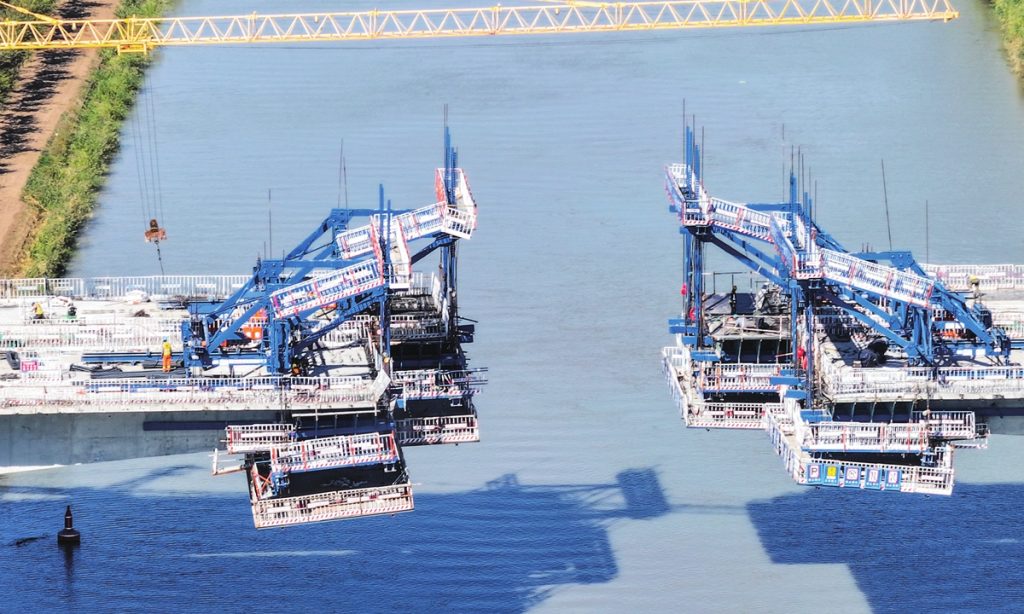
Chinese localities have accelerated the roll-out of infrastructure projects with a focus on new infrastructure serving the digital economy in the first two months of this year.
Analysts said on Monday that the quality of investment further improved, but they called for more support policies to ensure the intensity of investment and keep overall investment steady.
The first quarter is a traditional season in China when the ground is broken for big projects.
Analysts said there is more room for proactive fiscal policies in 2024, with the issuance of special-purpose bonds and half of the 1 trillion yuan ($138.92 billion) additional government bonds, issued last year, having been transferred for use in 2024.
They noted that the new round of investment helps improve the country's investment structure but more support policies are needed to ensure the steady growth of investment for the whole year.
Beijing plans to invest 50 billion yuan in local transportation projects this year, up 16 percent year-on-year, the Beijing Daily reported on Monday, citing a municipal official. Investment of 10 billion yuan is set to be completed in the first quarter.
Northeast China's Liaoning Province broke ground on 1,153 infrastructure projects on Monday, with total investment of 316.6 billion yuan, according to a post on the provincial government's website. The projects focus on advanced manufacturing, scientific and technological innovation and clean energy, "as an improvement of Liaoning's investment structure," read the post.
Last week, the city of Shenzhen in South China's Guangdong Province said that it plans to complete investment totaling 140 billion yuan in new infrastructure projects, including the installation and upgrading of 8,000 5G wireless base stations, to boost the development of the digital economy. The pledged investment is markedly higher than the 122.3 billion yuan in new infrastructure investment by the city in 2023.
China's fixed-asset investment rose 4.2 percent year-on-year in the first two months of this year, 1.2 percentage points higher than the full-year growth rate of 2023, data from the National Bureau of Statistics (NBS) showed on Monday. The investment totaled 5.08 trillion yuan.
Tian Yun, a veteran economist based in Beijing, told the Global Times on Monday that localities have improved their investment structure, which has been helpful in improving China's productivity and efficiency, but he called for speeding up the building of a unified national market as the country cannot rely solely on external demand to beef up investment.
Li Chang'an, a professor at the Academy of China Open Economy Studies of the University of International Business and Economics, told the Global Times on Monday that private-sector investment showed better results than in December, indicating that an economic recovery is in progress.
The investment structure also improved as more projects are new infrastructure projects or in sectors related to new quality productive forces, Li said.
However, Li noted that investment on new projects during the first two months were still low, as low profitability dented investment sentiment, which calls for more attention from the government.
According to NBS data, private investment in fixed assets rose 0.4 percent year-on-year in the first two months, reversing a decline in 2023. Private investment in manufacturing, hotels, catering and transportation all registered double-digit growth.
As policies aimed at boosting effective investment continue to take effect, investment is expected to maintain a steady expansion at the next stage, Liu Aihua, a spokesperson with the NBS, said at a press conference on Monday.
Manufacturing investment rose 9.4 percent year-on-year, accelerating by 2.9 percentage points from 2023. Investment in infrastructure construction rose 6.3 percent, up 0.4 percentage points.
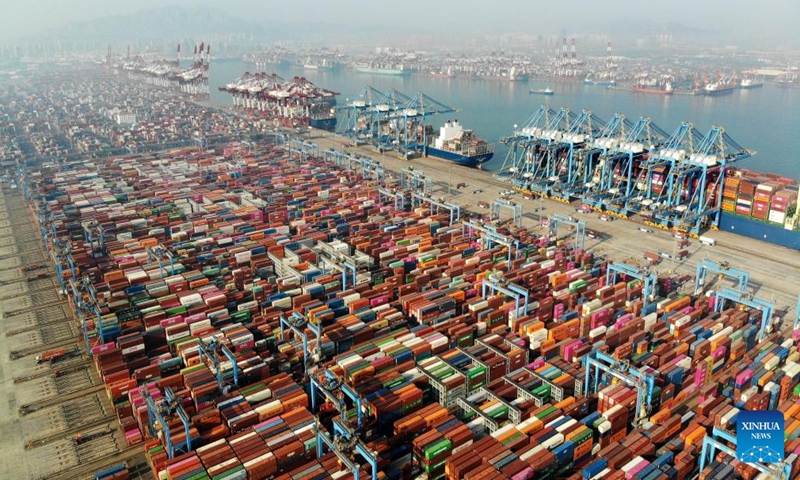
China’s foreign trade in goods in the first two months of 2024 hit a record high of 6.61 trillion yuan ($918.3 billion), rising 8.7 percent year-on-year, signaling a good start of foreign trade in the new year, data from the General Administration of Customs showed on Thursday.
The country’s export volume in the two months recorded year-on-year increase of 10.3 percent to reach 3.75 trillion yuan, and imports reached 2.86 trillion yuan, representing annual growth of 6.7 percent.
From January to February, ASEAN remained China’s largest trade partner, with their bilateral trade totaling 993.24 billion yuan, up 8.1 percent on a yearly basis, accounting for 15 percent of China’s total imports and exports.
The EU becomes China’s second largest trade partner, and the total trade between the two sides stood at 832.39 billion yuan, dropping by 1.3 percent. The US was the third largest trade partner, with their trade volume increasing 3.7 percent to 707.7 billion yuan.
In the first two months, China’s foreign trade with its BRI partners reached 3.13 trillion yuan, registering a year-on-year growth of 9 percent.
The country’s private enterprises had a good performance in the first two month’s import and export. Trade volume of private firms reached 3.61 trillion yuan, an increase of 17.7 percent, accounting for 54.6 percent of the total value of China’s foreign trade, an increase of 4.2 percentage points over the same period last year.
In terms of the export structure, electromechanical products accounted for nearly 60 percent of Chinese exports, of which automatic data processing equipment, integrated circuits and automobile export recorded significant growth rates.
In the first two months of the year, China's exports of automatic data processing equipment reached 195.45 billion yuan, up 7.3 percent with exports of integrated circuits soaring 28.6 percent and auto vehicle up 15.8 percent on a yearly basis.
China has purchased more than 400 million tons of grain in 2023, meanwhile a total of 120 million tons of autumn grain has been purchased by the nation's major grain producers so far, reaching the highest level in recent years. Autumn grain purchase was faster than that of last year, state broadcaster CCTV reported on Tuesday.
India's Enforcement Directorate, the country's financial crime-fighting agency, reportedly conducted probes across 19 locations against what it described as "potential violations of the Prevention of Money Laundering Act" by Chinese-owned companies, reported India Today, in another unscrupulous move targeting Chinese companies.
India's heightened scrutiny of Chinese companies, fueled by purely political motives, is tarnishing the country's image and transforming it into what resembles more of a "graveyard for foreign companies," Chinese experts warned.
The Enforcement Directorate alleged that the corresponding Chinese-owned fintech companies, collaborating with local non-banking financial companies and payment gateways, engaged in unethical lending practices, India Today reported on Tuesday.
The agency seized 13 million rupees ($1.6 million) in cash and several incriminating documents, the report said.
Indian authorities, exercising their right to investigate companies within the country, have increasingly concentrated on Chinese businesses, especially in the past three years, where major companies like Chinese smartphone makers Xiaomi and Vivo have frequently become targets, leading observers to believe in the existence of strong political motives behind these actions, Chinese experts said.
The latest move is only making the country less favorable for international investors, especially those from China, that have played an important role in creating jobs, paying taxes and contributing to the industry chain's development, Qian Feng, director of the research department at the National Strategy Institute at Tsinghua University, told the Global Times on Wednesday.
India's discriminatory sanctions targeting Chinese companies and their employees include routine financial and tax audits, fines and abrupt spikes in import tariffs, while disregarding these companies' contributions to the local economy, an India-based industry veteran told the Global Times in a recent interview.
The probe came just about a week after the same government department arrested three senior employees working for Vivo's India unit under the provisions of the Prevention of Money Laundering Act in late December.
On December 30, only a few days after the arrest, an Indian trial court ordered the immediate release of the three arrested.
"The phenomenon of politicizing judicial tools in India is already evident," Qian said, noting that it will have a significant impact on India's touted investment environment, and also affect bilateral economic and trade relations.
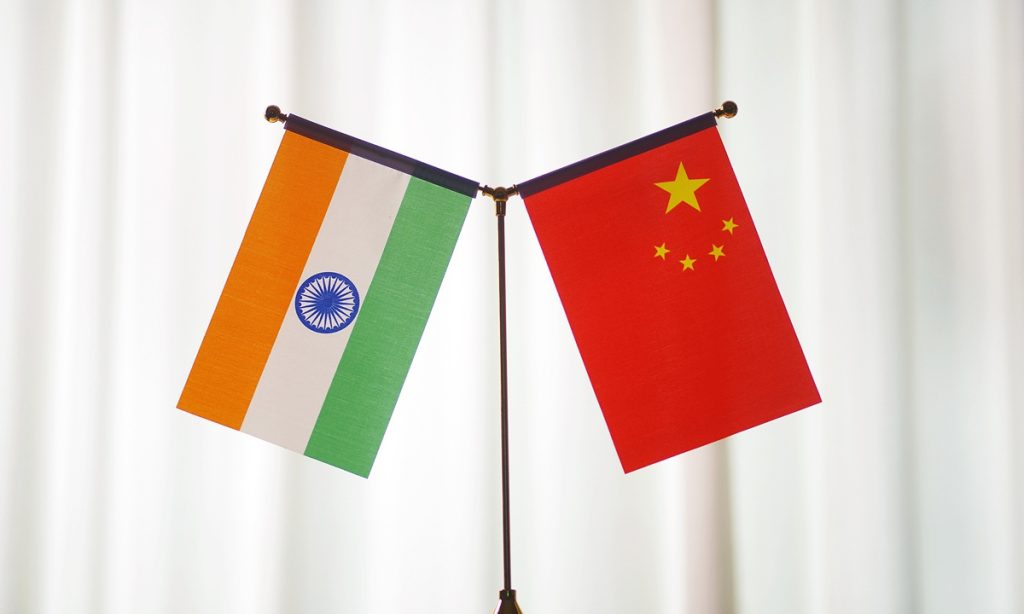
Since the border conflict between China and India in June 2020, there has been a noticeable escalation in Indian authorities' hostility toward Chinese companies, including the prohibition of more than 200 Chinese apps, initiating investigations related to taxation and anti-money laundering concerning Chinese businesses, and intensifying the examination of Chinese investments.
If India continues down this path, it will only add another negative aspect to its reputation as a "foreign enterprise graveyard," Qian noted.
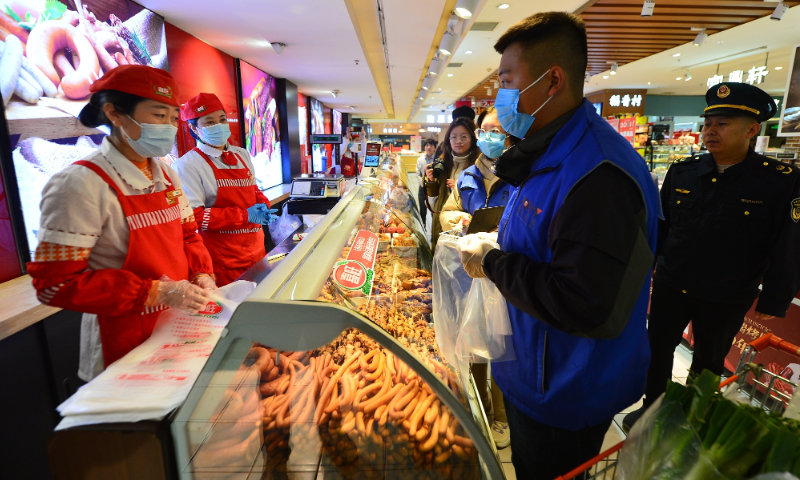
Chinese police have offered a reward between 100,000 to 500,000 yuan ($13,958 to $69,793) for information related to each of the 10 key ringleaders from the telecom scam criminal syndicates based in the Kokang region of northern Myanmar, Capitalnews, the WeChat account run by Beijing Daily, reported on Sunday. The police have also vowed to decisively crack down on fraud targeting Chinese citizens.
In response to the grim situation of telecom fraud in northern Myanmar affecting China, Chinese public security departments have successively announced the pursuit of key figures in several telecom fraud criminal syndicate which created a strong deterrent.
Capitalnews learned from China’s Ministry of Public Security that local public security departments in localities including Northeast China’s Liaoning Province, East China’s Fujian Province and Southwest China’s Chongqing Municipality have put 10 key figures including Bai Suocheng, Wei Huairen and Liu Zhengxiang from the telecom scam criminal syndicate in the Kokang region of northern Myanmar on the wanted lists.
For a long time, various criminal syndicates from the Kokang region in northern Myanmar have organized and established criminal dens targeting Chinese citizens. They openly protect these criminal activities with arms, causing extremely serious harm.
In November of this year, Chinese public security authority publicly announced cash reward for four key figures of a family criminal syndicate led by Ming Xuechang. With strong cooperation from all parties in Myanmar, the chief criminal Ming Xuechang committed suicide in fear of crime, and three other individuals including Ming Guoping, Ming Julan and Ming Zhenzhen were apprehended and are being investigated for their criminal activities. They will be severely punished according to the laws.
At the same time, public security authorities in Liaoning, Fujian, Chongqing, and other places found during their investigations that three family criminal syndicates led by Bai Suocheng, Wei Huairen and Liu Zhengxiang, and another criminal syndicate led by Xu Laofa have long been engaged in telecom fraudulent activities targeting Chinese citizens, with huge amounts involved.
Despite highly pressured crackdown by the public security authorities, they have not restrained themselves from the crimes and continued to be involved in serious violent crimes such as intentional homicide, intentional injury and illegal detention. Their criminal facts are clear and there is abundant evidence for their crimes.
To effectively crack down on the telecom fraud related to northern Myanmar and protect the safety of Chinese people’s lives and properties and their legitimate rights and interests, the Dalian City Public Security Bureau in Liaoning has decided to publicly reward anyone who brings information of the whereabouts of Bai Suocheng, Bai Yingcang (also known as Li Yunchen), and Bai Yinglan (also known as Li Mengna). The Quanzhou City Public Security Bureau in Fujian has decided to publicly reward anyone who brings information related to Wei Huairen, Wei Rong (also known as Chen Rong), and Wei Qingsong (also known as Yang Song). The Longyan City Public Security Bureau in Fujian Province has put Liu Zhengxiang, Liu Jiguang (also known as Li Huaguang), and Liu Zhengmao on the wanted list. The Chongqing Municipality Public Security Bureau has put Xu Laofa (also known as Xu Faqi) on the wanted list.
According to Capitalnews, Bai Suocheng was former director of Kokang in Shan State, Myanmar. Besides, Wei Huairen, Liu Zhengxiang and Xu Laofa are all officials in the Kokang region.
The Chinese public security authorities urge the 10 criminal suspects to recognize the situation, stop their criminal activities, and surrender voluntarily to seek lenient punishment. At the same time, Chinese police also hope that all sectors of society and the public will actively report and assist in the capture and arrest of the criminal suspects. For those who provide effective clues and assist in the arrest, the public security authorities will give rewards between 100,000 and 500,000 yuan.
China's food safety governance has made positive progress with a decrease of 11 percent in the number of foodborne disease outbreaks and a 33.9 percent reduction in the number of related deaths since the beginning of the period covered by the 14th Five-Year Plan (2021-2025), officials from the National Health Commission (NHC) revealed at an event in Beijing on Tuesday during Food Safety Awareness Week.
Cao Xuetao, an official from the NHC, noted at the event that China has implemented a national food safety risk monitoring program, and conducted in-depth analysis of risk monitoring database information. This guides local authorities to release risk warning information and advises the public on rational food procurement and storage.
Li Ning, director of the National Center for Food Safety Risk Assessment, said at the event that in recent years the NHC has established three major monitoring systems: the national foodborne disease monitoring and reporting system, the foodborne disease outbreak monitoring system and the foodborne disease molecular traceability network. These systems play a role in risk monitoring, assessment, and early warning, effectively preventing systemic risks.
In the next step, the commission will guide local authorities to strengthen risk monitoring and assessment and it plans to build a nationwide reporting network for foodborne disease cases in secondary and above public medical institutions by the end of next year, according to Li.
With the help of big data, cloud computing, and other information technologies, the network will improve the multi-point triggered monitoring and early warning model, making regional risk warnings more sensitive and efficient.
Foodborne diseases are a significant global public health issue. The World Health Organization (WHO) estimates that up to 600 million people worldwide fall ill and 420,000 die each year due to consuming contaminated food. To address the challenges posed by foodborne diseases, the WHO recommends that countries strengthen monitoring and early warning systems for foodborne diseases, according to Li.
Li said that according to the foodborne disease monitoring network, from 2010 to 2022, a total of 46,430 foodborne disease outbreaks were reported nationwide (an average of 3,572 per year, among which 1,024 cases were due to mushroom poisoning), with 330,870 cases of illness (an average of 25,452 per year) and 1,679 deaths (an average of 129 per year, among which 70 were caused by mushroom poisoning).
The main places for foodborne disease outbreaks in China were households (50 percent) and catering service establishments (46.3 percent). However, catering service establishments contributed the highest number of illness cases, accounting for about 70 percent of the total, according to Li.
Li noted that people should avoid consuming or picking wild mushrooms, as the main cause of foodborne disease outbreaks in households is the consumption of wild poisonous mushrooms and contamination by pathogenic bacteria.
In terms of catering service establishments, attention should focus on preventing bacterial foodborne diseases, while school cafeterias should pay special attention to the contamination of rice with Bacillus cereus. Nearly 70 percent of Bacillus cereus outbreaks in China are caused by rice and other grain products.