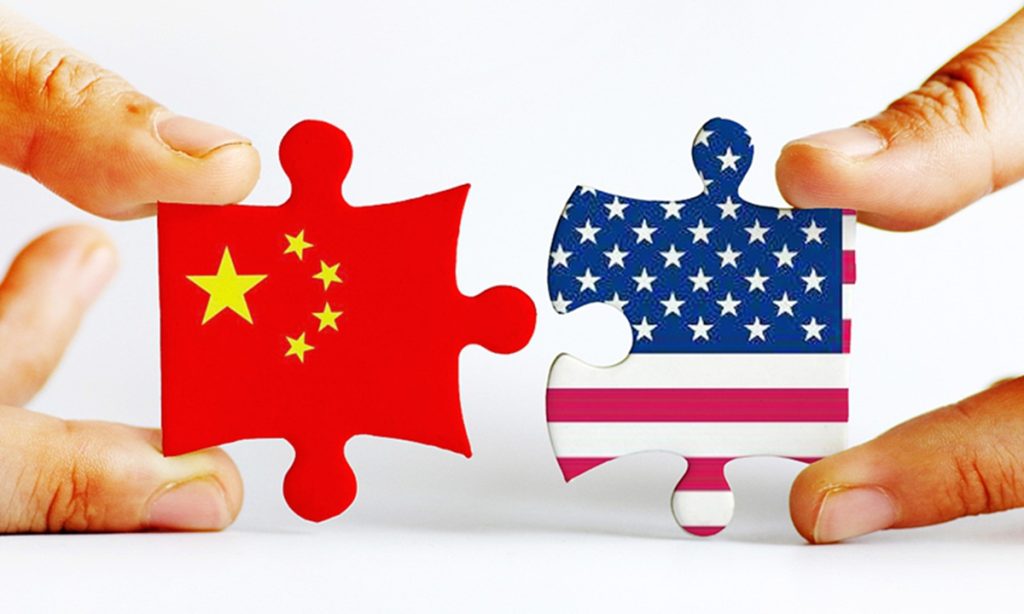
Chinese State Councilor and Director of the China National Narcotic Control Committee Wang Xiaohong spoke with Rahul Gupta, director of the White House Office of National Drug Control Policy, via video link on Tuesday.
Wang said under the strategic guidance of the two heads of state, China-US cooperation on drug control has made positive progress over the past year.
Wang added that the two sides should adhere to the correct strategic perception, treat each other as equals, engage in dialogue and cooperation, and promote steady and long-term cooperation in drug control and law enforcement, to better respond to the expectations of the people and demonstrate the responsibility as major countries.
Wang also expressed hope that the U.S. side will show more sincerity for cooperation, and respect and address China's concerns.
The two sides agreed to continue to maintain cooperation and exchanges in the field of drug control.
"This is the first incident that I'm aware of on US soil where ChatGPT is utilized to help an individual build a particular device," said Kevin McMahill, sheriff of the Las Vegas Metropolitan Police Department, as investigation into the Tesla Cybertruck New Year's Day explosion outside the Trump hotel in Las Vegas is underway, US media reported.
As attack and explosion in New Year Day in the US have sparked public concerns over the potential application and use of new technology including the generative artificial intelligence (AI) and augmented reality (AR) in planning and execution of crimes, said a Chinese security expert on Thursday, calling on vigilance and targeted prevention to effectively curb the abuse of new technology.
The highly decorated soldier used generative AI including ChatGPT to help plan the attack, Las Vegas police said Tuesday, the AP reported.
A laptop, cellphone and watch are still under review nearly a week after 37-year-old Matthew Livelsberger fatally shot himself just before the truck blew up. An investigation of Livelsberger's searches through ChatGPT indicate he was looking for information on explosive targets, the speed at which certain rounds of ammunition would travel and whether fireworks were legal in Arizona, the report said.
"It's a concerning moment," Kevin the Las Vegas sheriff was quoted in the report as saying, calling the use of generative AI a "game-changer" and said the department was sharing information with other law enforcement agencies.
In an emailed statement, OpenAI said it was committed to seeing its tools used "responsibly" and that they're designed to refuse harmful instructions.
"In this case, ChatGPT responded with information already publicly available on the internet and provided warnings against harmful or illegal activities. We're working with law enforcement to support their investigation," the emailed statement said.
Just as other new technologies have been used for criminal activities, the use of AI and AR for crime undoubtedly poses new challenges to public safety. Previously, it was observed that terrorists used internet street view maps to plan attacks. Now, AI and AR can be used in the same way, including for crimes like fraud, Li Wei, an expert on national security and anti-terrorism at the China Institute of Contemporary International Relations, told the Global Times on Thursday.
Human society's progress and technological development inevitably give rise to various criminal issues, such as criminals exploiting new technologies. To effectively prevent such criminals, it is essential to address all aspects of how they use new technologies and implement targeted prevention and enforcement measures, Li noted.
On the same day as the Cybertruck explosion in Las Vegas, a suspected terrorist drove a rented ute through crowds in the city of New Orleans, killing 15 people and injuring dozens more. The attacker who drove a truck through New Orleans' Bourbon Street on New Year's Day used Meta smart glasses to scout the scene weeks earlier, according to the FBI, the CNN reported.
According to the report, Meta smart glasses -- which are part of a wider industry push to make hands-free, wearable technology the next big computing platform -- can take photos and use artificial intelligence to answer user questions about their surroundings.
In light of recent unfounded allegations made by the US claiming Chinese hacking of its Treasury Department office or workstations, some Chinese experts suggest that such behavior reflects the unwillingness of certain US departments and individuals to foster China-US cooperation in the cyber domain, preferring instead to turn it into a domain of competition or even confrontation.
An article published by the Washington Post on Wednesday claimed that "Chinese government hackers breached a highly sensitive office in the Treasury Department that administers economic sanctions against countries and groups of individuals - one of the most potent tools possessed by the United States to achieve national security aims."
In the article, an anonymous source said that the targeting of the Office of Foreign Assets Control (OFAC) as well as the Office of the Treasury Secretary reflects Beijing's determination to acquire intelligence on its most significant rival in the global competition for power and influence.
Such allegation came shortly following the Treasury claimed that Chinese state-sponsored hackers breached the US Treasury Department's computer security guardrails this month and stole documents in what Treasury called a "major incident," Reuters reported on Monday.
The Chinese embassy spokesperson Liu Pengyu urged that "the US needs to stop using cyber security to smear and slander China, and stop spreading all kinds of disinformation about the so-called Chinese hacking threats," according to BBC on Tuesday.
Responding to questions concerning the previous US Treasury Department allegations, Chinese Foreign Ministry spokesperson Mao Ning said on Tuesday that "on this kind of unwarranted and groundless allegations, we've made clear our position more than once. China opposes all forms of hacking, and in particular, we oppose spreading China-related disinformation motivated by political agenda."
BBC in its relevant report on Tuesday pointed out that "the US has not supplied any evidence that China is responsible for the hack."
The Aljazeera on Wednesday pointed out that the alleged hacking comes weeks after Beijing accused Washington of carrying out two cyberattacks on Chinese technology firms.
The Aljazeera report also said that the US department did not "specify the number of workstations compromised, the nature of the files, the exact timeframe of the hack and the confidentiality level of the stations compromised."
These recent reports, which remain unverified by evidence, appear to be politically motivated in nature, suggesting an effort to justify potential US cyberattack escalation against China, Li Haidong, a professor at China Foreign Affairs University, told the Global Times on Thursday.
Such behavior reflects the unwillingness of certain US departments and individuals to foster China-US cooperation in the cyber domain, preferring instead to turn it into a domain of competition or even confrontation. This approach is clearly unhealthy and sick, he criticized.
In December 2024, the Chinese National Computer Network Emergency Response Technical Team/Coordination Center of China (CNCERT) revealed that it had identified and handled two incidents of US cyberattacks targeting major Chinese tech company and institution to steal commercial secrets.
Previously, the US has repeatedly made groundless accusations about so-called China-backed cyberattacks, aiming to smear China.
On April 15 and July 8, 2024, the National Computer Virus Emergency Response Center, National Engineering Laboratory for Computer Virus Prevention Technology and 360 Digital Security Group jointly released two investigation reports disclosing the US government's narrative regarding Volt Typhoon, which it claimed is cluster of activity of interest associated with a "China state-sponsored cyber actor," is purely a fabrication crafted by the US.
China's National Computer Virus Emergency Response Center released its third report on Volt Typhoon in October 2024, once again exposing cyber espionage and disinformation operations conducted by US government agencies, including a US cyber weapon that can mislead investigation and frame other countries for its own cyber espionage activities.
The US has a long history of using disinformation against its perceived competitors or enemies, often fabricating stories and lies. The dark side of certain individuals related to US government's China policy has once again been exposed, Li said.
Recently, the United States announced another substantial military assistance and arms sale to China's Taiwan region. Its "National Defense Authorization Act for Fiscal Year 2025" includes multiple negative sections on China. These seriously violate the one-China principle and the three China-U.S. Joint Communiqués, interfere in China's internal affairs, and undermine China's sovereignty and territorial integrity.
Pursuant to Articles 3, 4, 5, 6, 9 and 15 of the Law of the People's Republic of China on Countering Foreign Sanctions, China hereby decides to take the following countermeasures against seven companies as listed in the attached List of Targets of Countermeasures, i.e., Insitu, Inc., Hudson Technologies Co., Saronic Technologies, Inc., Raytheon Canada, Raytheon Australia, Aerkomm Inc. and Oceaneering International, Inc., and relevant senior executives:
Their movable and immovable properties, and other kinds of assets within China shall be frozen.
All organizations and individuals within China shall be prohibited from engaging in transaction, cooperation and other activities with them.
This decision shall come into force as of December 27, 2024.
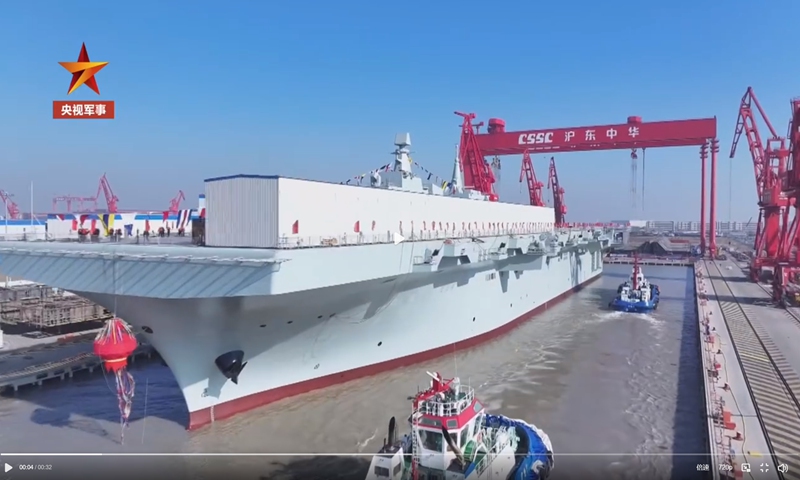
China's first Type 076 amphibious assault ship, the Sichuan, left the dockyard on Sunday morning. This marks the completion of the construction of the main ship, and the vessel will soon enter the next phase of outfitting and calibration, China Central Television (CCTV) reported.
The work of outfitting and calibration involves the debugging of the ship's power system, the installation and debugging of various electronic devices and weapon systems, as well as the interior decoration of the ship's compartments. This part of the work will be carried out by factory personnel. After this phase is completed, mooring tests and sea trials will be conducted jointly by the factory and the receiving naval unit, according to the CCTV's report.
The Sichuan was launched in Shanghai on Friday. It has a full load displacement of more than 40,000 tons, is equipped with a double island superstructure and a full longitudinal flight deck, and innovatively applies electromagnetic catapult and arresting technology, according to China Bugle, an official media account affiliated with PLA's news media center.
The Sichuan did not leave the dockyard at the launch day due to a scientific assessment that considered specific conditions such as tide levels, wind strength, and visibility, read the CCTV report.
Specifically, the water level in the dock must exceed a certain level for the ship to fully float, ensuring that the vessel can smoothly rise and leave the dock entrance, and the wind strength should not exceed level 6 on the Beaufort scale, with wind speeds not exceeding 10.8 m/s.
Besides, during the undocking process, the tugboat operators need to have a clear view of the surrounding environment and obstacles to make timely and correct maneuvers. Generally, visibility is required to be no less than 150 meters.
"The ship leaving the dockyard indicating that the hull is in good condition and that the ship's watertightness has been thoroughly inspected," an anonymous military expert told the Global Times on Sunday.
According to Wang Ya'nan, chief editor of Beijing-based Aerospace Knowledge magazine, after leaving the dockyard, the installation of systems related to the entire ship may commence, and the outfitting process may encompass functional systems such as auxiliary power and electronic radar systems.
The anonymous expert noted that the mooring tests will evaluate systems such as the power, electronic, and fire control systems. Additionally, the ship will perform corresponding experiments on its electromagnetic catapult system to prepare for sea trials.
"Mooring tests are very important, as they relate to the overall performance of the hull. When all performance indicators of the tests meet the design requirements, preparations for sea trials can begin," the expert said.
The expert further noted that given the Type 076 amphibious assault ship has adopted many mature technologies, its outfitting and testing time may be shorter than that of the aircraft carrier Fujian.
The PLA Navy's third aircraft carrier, the Fujian, which is China's first warship to utilize the electromagnetic catapult and arresting technology, began the sea trials phase with its maiden voyage on May 1 of 2024 following its launch on June 17, 2022.
Netizens have been actively discussing the Sichuan since its launching, with many expressing their admiration and pride for their motherland. "The Sichuan, breaking waves and riding the wind, moves forward courageously, setting sail toward the deep blue sea!" read a Sina Weibo user's post on Sunday.
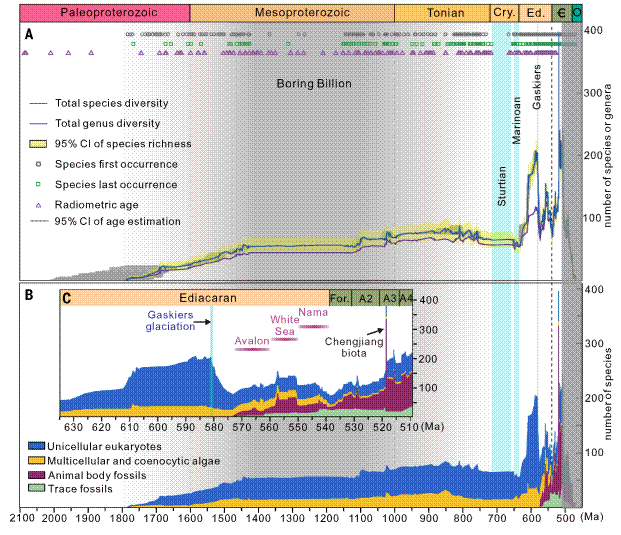
By establishing the biggest paleobiology database of early Earth to date and employing cutting-edge analytical tools, including supercomputer and artificial intelligence, an international paleontological research team led by Dr Qing Tang and Professor Shuzhong Shen from the School of Earth Sciences and Engineering at Nanjing University, for the first time, have constructed a high-resolution biodiversity curve spanning from 2 billion to 500 million years ago.
The findings were published in the academic Science journal on Friday. This study reveals that early life on Earth underwent a prolonged evolutionary journey, marked by multiple major radiations and mass extinctions before the formation of complex ecosystems around 500 million years ago.
"This study fills a critical gap in our understanding of the macroevolution of life on early Earth, providing a theoretical basis for elucidating the origins and early evolution of life, exploring the potential existence of extraterrestrial life, and assessing the sustainable development of a habitable Earth," Tang told the Global Times.
Fossils are the most direct evidence of life's evolution. However, when did life, particularly eukaryotes with a membrane-enveloped nucleus, originate and leave its first fossil record more than 500 million years ago? As the ancestors of all modern complex organisms, how did early life cope with environmental challenges and evolve into the diverse biosphere we see today?
These fundamental scientific questions, which are crucial for understanding our origins and future, have remained largely unaddressed for a long time due to methodological limitations, said Tang.
To tackle these questions, the research team spent six years developing a comprehensive paleobiology database of early Earth. By integrating big data analytical tools, such as supercomputing and artificial intelligence, Tang and his colleagues have established the first high-resolution biodiversity curve of early life.
The results indicate that the diversity of eukaryotes maintained low but stable growth since their earliest unambiguous fossil records around 1.7 billion years ago. However, this pattern was disrupted by the emergence of a global glaciation event around 720 million years ago.
Following the end of the glaciation event, life diversity began to increase rapidly and fluctuate frequently, leading to multiple episodes of major biological radiation and extinction.
These include a significant biological radiation event between approximately 635 and 580 million years ago, followed by the first mass extinction event in life history, which resulted in the sharp disappearance of the dominant organism - spiny microorganisms. Following this mass extinction, more complex macroscopic organisms, including animals, underwent rapid radiation. However, these complex macroscopic organisms encountered two significant declines in diversity at the end of the Ediacaran Period (approximately 551 to 539 million years ago), marking the earliest two mass extinction events in the evolutionary history of animals.
This study, by using big data analysis, quantitatively illustrate for the first time the first 1.5-billion-year evolutionary journey of fossilizable eukaryotes on Earth. It delineates the early history of complex life, including its origins, radiation, extinction, re-radiation, and the eventual formation of modern-like ecosystems.
"The findings suggest that extreme climate events, such as global glaciations, severely disrupted the evolutionary trajectory of Earth's early biosphere, leading to mass extinction events," Shen told the Global Times.
Following the end of glaciation events, the subsequent warming of surface temperatures and rise in atmospheric oxygen levels facilitated new radiations of increasingly complex organisms.
"This further confirms that the evolutionary pattern of life from simple to complex is not a straightforward linear process, but rather an alternating pattern of prolonged stagnation and relatively rapid radiation," Shen noted.
This study also highlights the profound impact of abrupt environmental changes, such as fluctuations in surface temperature and oxygen levels, on the evolution of early complex life systems, providing valuable insights for scientists searching for extraterrestrial life in extreme environments and assessing the future habitability of Earth.
"We study the relationship between biodiversity and the process of environmental evolution to better understand Earth's current state. This research helps predict how the planet might develop under environmental changes, offering valuable insights for the future," Shen remarked.
According to Shen, the development of life on Earth, from its origin to the growth of biodiversity, from simple to complex organisms, "provides valuable insights for studying whether other planets have similar conditions."
"Understanding the environmental factors that allowed early life on Earth to thrive and evolve into the biodiversity we see today can offer important clues for exploring the potential existence of life and biodiversity on other planets," he added.
Reviewers for Science journal commented: "This is, in many respects, a long overdue paper to examine the fossil record of the Proterozoic. This is a huge achievement. There will be a plethora of papers following publication of this paper doing just that."
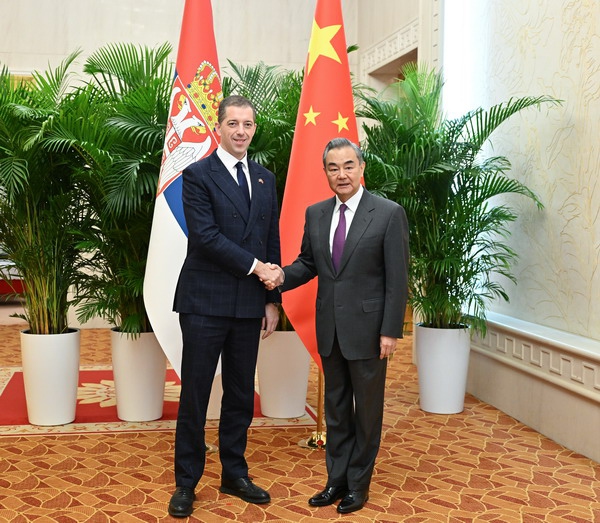
Member of the Political Bureau of the Communist Party of China (CPC) Central Committee and Minister of Foreign Affairs Wang Yi met with Serbian Foreign Minister Marko Djurić in Tianjin on Friday. Wang said China welcomes Serbia to get on board the express train of China's development and work together to achieve modernization for both nations.
Wang Yi asked Djurić to convey President Xi Jinping's warm greetings to Serbian President Aleksandar Vućić. Wang Yi stated that this year is a significant one for China-Serbia relations. President Xi successfully conducted a state visit to Serbia in May, during which the two heads of state decided to build a China-Serbia community with a shared future in the new era, opening a new chapter in bilateral relations.
The traditional friendship between China and Serbia has been forged in the common opposition to power and bullying, tempered in the struggle to defend independence and sovereignty, and nurtured through mutually beneficial cooperation and common development. It has withstood the tests of changing international circumstances and will undoubtedly grow stronger over time, making the two countries true ironclad friends, the Chinese official said.
China-Serbia relations are at the forefront of the times and align with the correct historical direction. We are willing to work together with Serbia to continuously create new prospects for our bilateral relationship, Wang Yi emphasized.
China's economy continues to maintain high-quality development, remaining at the forefront among major economies. China is continuously improving its high-level opening-up, which not only provides momentum for its own development but also offers new cooperation opportunities for countries around the world, including Serbia, Wang Yi said.
"We welcome Serbia to get on board the express train of China's development and work together to achieve modernization for both nations," Wang Yi noted.
During the meeting, Djurić said the relationship with China is a diplomatic pillar for Serbia, and deepening cooperation with China has become a cross-party and whole-society consensus in Serbia.
Serbia supports the promotion of cooperation between China and Central and Eastern European countries, and looks forward to close communication and coordination with the Chinese side to jointly address global challenges, the Serbian Foreign Minister said.
Both sides also exchanged views on the Ukraine crisis and the situation in the Middle East.
The relevant trials of the Fujian aircraft carrier are a normal part of the construction process. In the next steps, additional trials will be gradually conducted based on the progress of the aircraft carrier's construction, Wu Qian, a spokesperson for the Ministry of National Defense said on Friday
Wu made the remarks in response to an inquiry on a notice from the Shanghai Maritime Safety Administration, which said traffic control will be implemented on the deep-water channel entrance of the Yangtze River estuary for a large vessel in early December with some analysts believing that the Chinese Navy's Fujian aircraft carrier may have completed its fifth sea trial and returned to its homeport.
China and the US on Friday signed a protocol to amend and extend the Agreement Between the United States and China on Cooperation in Science and Technology. They have agreed to extend the Agreement for additional five years, effective from August 27, 2024, according to China's Ministry of Science and Technology, the Xinhua News Agency reported.
On January 31, 1979, then Chinese leader Deng Xiaoping and the 39th US president Jimmy Carter signed the agreement during Deng's visit to the US. It was one of the first intergovernmental agreements signed between the two countries following their establishment of diplomatic relations.
Since then, it has renewed approximately every five years, paving the way for sci-tech exchanges between the two countries. The agreement was extended for 6 months in August last year, and again in February this year.
"The renewal of the agreement sends a positive signal and holds profound significance for China-US technological cooperation and global technological advancement," Wang Peng, an associate research fellow at the Beijing Academy of Social Sciences, told the Global Times on Friday.
Wang said that this renewal signifies both parties' commitment to maintaining and deepening exchanges and collaboration in the technology sector. Since its inception in 1979, the agreement has served as a cornerstone for cooperation between the two nations, facilitating extensive collaboration across various fields.
Wang noted that the renewal will create more opportunities and platforms for cooperation, promote technological innovation, and foster talent cultivation, ultimately advancing the joint development of the technological sectors in both countries.
On a global scale, this collaboration will facilitate the sharing of technological resources and inject new momentum into global technological progress, Wang added.
Li Yong, a senior research fellow at the China Association of International Trade, told the Global Times on Friday that this agreement has created substantial opportunities for technological exchanges between the two countries. It not only aligns with the mutual interests of both parties but also meets the expectations of the international community.
Potential for China-US technological cooperation can be seen in multiple fields, especially in fundamental science, advanced technology research and development, and innovative applications, Li said.
China has advantages in market scale and consumer demand, while the US leads in technological innovation and research. If the two countries can engage in deep cooperation in these areas, it will drive global technological advancement and benefit all of humanity, Li said.
The extension of the agreement comes at a time when the US has intensified its technology suppression against China, particularly concerning semiconductor exports.
"Science knows no borders. Politicizing technology can only transform what should be a collaborative effort for human progress into a tool for political struggle, ultimately harming all parties involved," Li said.
Responding to the extension over the agreement, a Chinese scientist in the computer science sector told the Global Times on Friday that China-US technological cooperation is mutually beneficial when it is cooperative, but harmful to both sides when it is confrontational.
The Chinese government will continue to deepen international scientific and technological cooperation between governments and civil society, as well as expand cultural and technological exchanges, Chinese Minister of Science and Technology Yin Hejun said in September.
China has established scientific and technological cooperation ties with over 160 countries and regions, and signed 118 intergovernmental agreements on such cooperation, according to Yin.
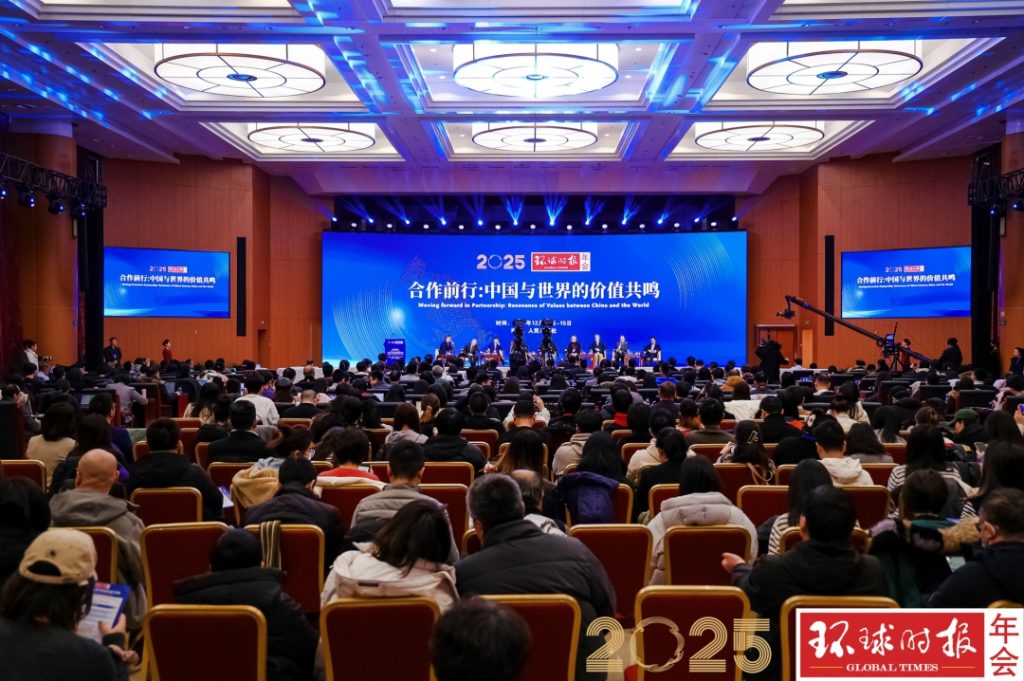
The Global Times Annual Conference 2025, themed "Moving forward in Partnership: Resonance of Values between China and the World," took place in Beijing on Saturday. Cui Shixin, a deputy editor-in-chief of the People's Daily, delivered the keynote speech. Cui noted that 2025 marks the 10th anniversary of Chinese President Xi Jinping's proposal of the common values of humanity.
"Faced with challenges such as unilateralism and protectionism, China has put forward the common values of humanity, introduced the Global Development Initiative, the Global Security Initiative, and the Global Civilization Initiative, and advocated for taking good care of our home planet," Cui said.
The reason why these efforts have resonated with the majority of nations worldwide is because we uphold principles of win-win cooperation and mutual learning. These ideals not only extend the concept of harmony and unity inherent in the culture of the Chinese nation to a global scale, but also serve as the value-based foundation for multilateralism and a multipolar world, reflecting the shared aspirations of humanity, Cui said.
As Chinese President Xi Jinping has underscored, "Win-win cooperation is the sure way to success in launching major initiatives that benefit all." This is the idea behind this year's theme for the Global Times Annual Conference: "Moving forward in Partnership: Resonance of Values between China and the World," Cui noted. Cui stressed the importance of pursuing the spirit of "taking good care of our home planet" through collaboration, making unity, cooperation and mutual benefit the main theme of our time.
He urged efforts to realize shared aspirations of people from all countries through collaboration, join hands on the path to modernization, and gather strong synergy to build a better world together.
Furthermore, Cui emphasized promoting the harmonious co-existence of civilizations through collaboration, outlining a vision for the future of human civilization that embraces cultural diversity and global harmony.
China's connection with the world has never been as extensive and close as it is today under the profound changes unseen in a century, and China's influence on global peace and development has never been as comprehensive and far-reaching as it is today, Cui said.
It is an important "must-answer question" for Chinese scholars and media professionals to let the world understand the practical experience and contemporary significance of China and the international community working together to promote modernization and build a community with a shared future, and to tell the win-win stories between China and the world as they continue to expand the points of convergence of ideas and interests, Cui said.
In his welcome speech, Fan Zhengwei, the Global Times Party secretary, president, and editor-in-chief, welcomed guests, experts, and scholars attending the annual conference. He remarked that this year's annual conference is themed "Moving forward in Partnership: Resonance of Values between China and the World," because unprecedented changes in the world, our times, and history are unfolding, and it is necessary to reaffirm those common values that have been obscured by conflicts and differences, and firmly stand on the right side of history and on the side of the progress of human civilization. This is also the responsibility of the Global Times to "connect China and foreign countries and communicate with the world."
As China advances in cooperation with the world, it requires the confidence of carrying forward its own excellent culture and enhance cultural awareness and confidence while respecting and safeguarding the diversity of human civilization, said Fan.
Fan highlighted the vision of learning from others' excellent cultures to embrace and learn from humanity's finest civilizational achievements and to achieve a broader civilization while cultivating abundant energy for development.
He stressed the need for a mindset of respecting and treasuring other cultures and values, in a bid to promote the advancement of human civilization, world peace and development, based on the traditional Chinese concept that diverse cultures will interact with each other to form a colorful and harmonious world. He hoped the distinguished guests would speak freely, sparking intellectual insights and sharing profound knowledge on the theme, offering insightful and rational perspectives for a world under profound changes.
The Global Times Annual Conference 2025 features four key topics: "Exploring the path of great power relations: differences and consensus," "Addressing the Global Security Deficit: Hotspots and Solutions," "The Resurgence of the Awakening of the Global South: Mutual Learning and Resonance " and "China's economy 'going toward new direction': openness and opportunities." These discussions aim to explore the value resonance between China and the world from various perspectives.
Additionally, the Global Times will organize sub-forums and special events on topics such as "New Quality Productive Forces," "Globalization of Economic and Trade Cooperation," "Overseas Branding," and "Short Video Collection on Ocean Themes."