China's state assets regulator establishes new bureau to manage overseas state-owned assets
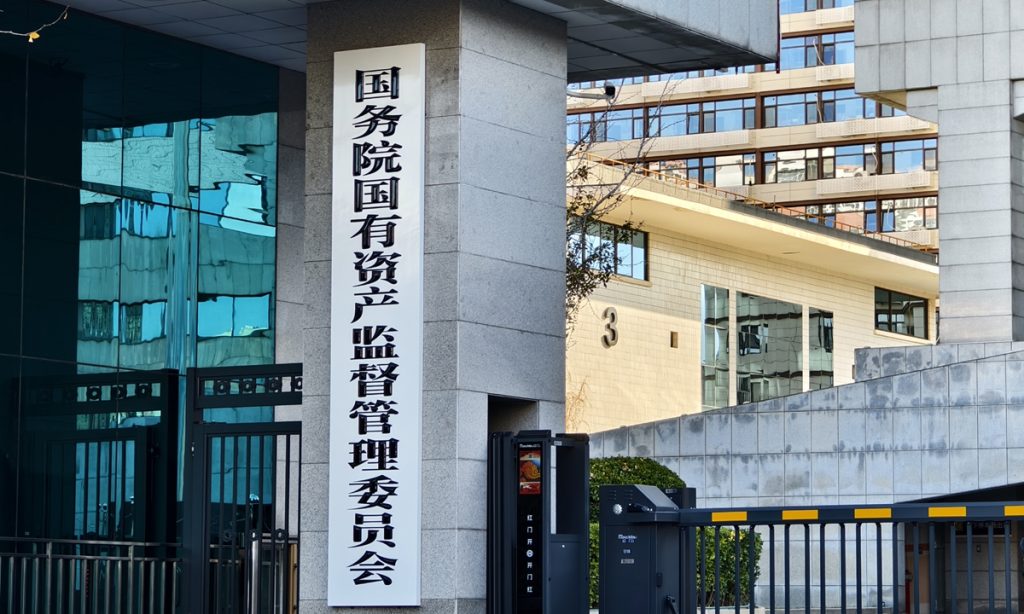
China's State-owned Assets Supervision and Administration Commission of the State Council (SASAC), the country's state assets regulator, has newly established the bureau of overseas state-owned assets, the Xinhua News Agency reported on Wednesday.

According to the official website of the SASAC, the main responsibilities of the new bureau include guiding the supervised enterprises in their international operations and optimizing the layout, structure, and adjustment of overseas assets; undertaking supervision of overseas assets of the supervised enterprises; strengthening risk prevention and mitigation in areas such as overseas investment and operations; and handling matters related to overseas emergencies and crisis response.

The bureau has established internal divisions including the international operations division, the risk prevention and mitigation division, the supervision and governance division, and the emergency management division, according to the official website.

"One responsibility of the new bureau primarily is to respond to changes in the current international situation, including recent tensions in the Middle East. By establishing this bureau, China can strengthen the prevention and resolution of risks related to overseas investment and operations. 

"In particular, when sudden incidents or crises occur abroad, the agency will be able to promptly handle relevant matters and prevent major losses of state-owned assets in overseas investments," Yang Delong, chief economist at Shenzhen-based First Seafront Fund, told the Global Times on Wednesday.

China's central state-owned enterprises maintain more than 8,000 institutions and projects in more than 180 countries and regions worldwide, with overseas assets exceeding 9 trillion yuan ($1.31 trillion), according to Li Zhen, deputy head of the SASAC.

As the high-quality development of international cooperation initiatives such as the Belt and Road Initiative continues to advance, central state-owned enterprises (SOEs), acting as the main force, have built up overseas assets amounting to several trillion yuan. However, the previous decentralized management model has become inadequate to cope with the complex international environment, Li Jin, chief researcher at the China Enterprise Research Institute in Beijing, told the Global Times on Wednesday.

Li Jin added that in recent years, the global geopolitical landscape has undergone profound adjustments, placing unprecedented pressure on central SOEs' overseas projects in terms of investment security and asset preservation. "There is an urgent need for a dedicated institution to coordinate and manage these efforts," Li Jin noted.

As to enterprises, Yang said that the bureau will guide the specific operations and strategic direction of overseas investments, making the investment layout more scientific and rational, thereby improving the success rate of investments and avoiding potential risks. This represents an important measure to achieve the preservation and appreciation of state-owned assets, Yang noted.

"This new bureau not only responds to the practical needs arising from the internationalization of central enterprises, but also strengthens the bottom line for safeguarding state-owned assets, while serving the nation's overall opening-up strategy," Yang said.

In the outline of the 15th Five-Year Plan (2026-30) for national economic and social development, it noted efforts to improve the state-owned assets supervision system and better leverage the role of state-owned capital investment and operating companies. 

The outline said that efforts should be made to implement outbound investment management, strengthen the overseas comprehensive service system, promote the integration of trade and investment, and guide the rational and orderly cross-border layout of industrial and supply chains. 

In addition, it stressed the need to improve the mechanisms and legal frameworks for monitoring, preventing, controlling, and addressing risks in outbound investment, and encourage enterprises to enhance their risk prevention and control capabilities as well as compliance management.

China Coast Guard rescues fishing boat from Taiwan region in emergency near Diaoyu Dao

On April 16, a fishing boat from China’s Taiwan region caught fire at approximately 76 nautical miles northeast of Huangwei Yu. 7 crew members were aboard the boat at the time of the incident. China Coast Guard (CCG) vessel on routine patrol duty immediately rushed to the affected waters to extinguish the fire and conduct search and rescue operations, according to a statement published by the CCG on Friday. 

As of now, 6 crew members have been rescued. Relevant rescue efforts are still ongoing.  In accordance with the law, CCG will continue to protect the safety of life and property of Chinese fishermen , including those from the Taiwan region, and will effectively safeguard the normal navigation and operational order in the relevant waters, the statement said.

China firmly opposes Japan-France ‘joint statement’ on Taiwan, rejects interference in China’s internal affairs: mainland spokesperson

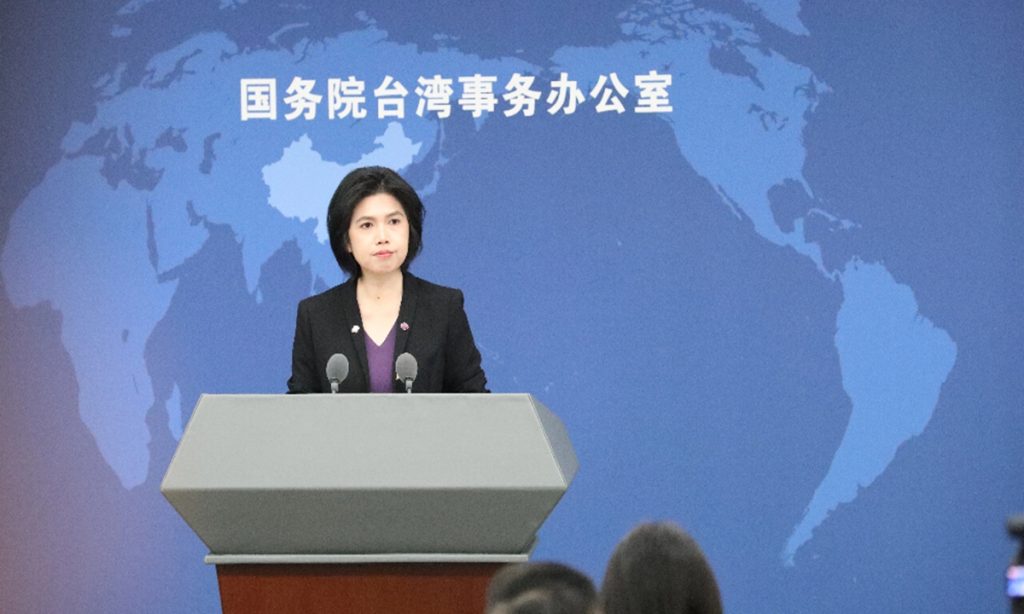
Resolving the Taiwan question is a matter for the Chinese people themselves, with no room for external interference, Zhu Fenglian, a spokesperson for the State Council Taiwan Affairs Office, told a press briefing on Wednesday, in response to a question from a Global Times reporter regarding the "joint statement" issued after the meeting between Japanese Prime Minister Sanae Takaichi and French President Emmanuel Macron, which claimed the importance of peace and stability in the Taiwan Straits and was thanked by the Taiwan island's so-called "foreign affairs department." 

The so-called "joint statement" makes irresponsible remarks on the Taiwan question and interferes in China's internal affairs, which we firmly oppose, said Zhu.

Zhu's response came after Takaichi and Macron issued a joint statement on April 1, which claimed to "urge the peaceful resolution" of Taiwan question through constructive dialogue, according to the Nikkei.

Li Zhenguang, director at the Institute of Taiwan Studies at Beijing Union University, told the Global Times on Wednesday that Takaichi has taken a willful and obstinate stance on Taiwan question and even attempted to rally other countries to support her stance.

Spokesperson Zhu stressed that the countries concerned must abide by the one-China principle and stop sending wrong signals to "Taiwan independence" separatist forces.

The Democratic Progressive Party (DPP) authorities' attempt to split the country by relying on external forces is doomed to failure, Zhu added.

Li also said that one of the root causes of the tensions in the Taiwan Straits lies in the instigation of external forces such as Japan, and the provocative actions of the DPP authorities are growing increasingly brazen due to such external support.

Reasonable demands, concerns of global civilian sector, including the US, fully considered in rare-earth trade: MOFCOM

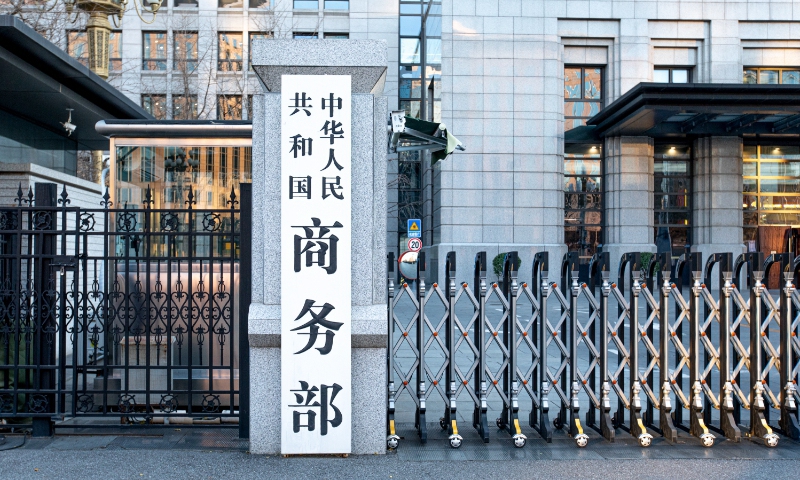
China and the US will maintain communication on their respective concerns through the economic and trade consultation mechanism, a spokesperson of China's Ministry of Commerce (MOFCOM), said on Thursday.

The remarks were made at a regular press conference on Thursday when He Yadong, the MOFCOM spokesperson, was asked by foreign reporters to comment on reports that US Trade Representative Jamieson Greer would engage with Beijing in working-level dialogues. He was also asked whether there are any plans or discussions to further extend the rare-earth export control measures beyond October 9.

The spokesperson said that, according to the consensus reached during the China-US economic and trade consultations in Kuala Lumpur, the relevant export control measures announced by the Chinese side on October 9, 2025, have been suspended until November 10, 2026.

Also at Thursday's regular press conference, another foreign reporter asked for comment on reports that Greer claimed that the US currently has access to Chinese rare earths but is still promoting multilateral agreements to increase expected supply, and on whether the US should be concerned that China might reimpose restrictions on rare-earth exports to the US.

In responding to the inquiries, He said that China is always committed to maintaining the security and stability of the global industrial supply.

On a further note, the spokesperson said that China fully takes into account the reasonable demands and concerns of the global civilian sector, including that of the US, and actively facilitates compliant trade. Export applications meeting the conditions for legitimate civilian use will be approved in accordance with the law, said He.

China has continuously maintained communication with the US on rare-earth issues, demonstrating its consistent stance of resolving trade matters through dialogue, Zhou Mi, a senior research fellow at the Chinese Academy of International Trade and Economic Cooperation, told the Global Times on Thursday.

It also reflects China's efforts as a responsible major country to ensure the security and stability of global industrial and supply chains, said Zhou.

China has consistently adhered to the principles of openness, coordination, and shared benefits in promoting the development of the rare-earth industry. This approach not only meets the needs of domestic economic and social development but also actively expands global partnerships, making an important contribution to global rare-earth supply and the advancement of the world economy, the expert stressed. 

On Wednesday, in responding to a similar question from a foreign reporter on China-US trade of rare earths, Chinese Foreign Ministry spokesperson Mao Ning said that China-US economic and trade relations are essentially mutually beneficial and win-win in nature, noting that both sides should jointly implement the important consensus reached by the two heads of state, so as to provide greater stability for bilateral economic and trade cooperation. 

Commenting on China and the US maintaining communication on their respective concerns through the economic and trade consultation mechanism, Gao Lingyun, a research fellow at the Chinese Academy of Social Sciences, told the Global Times on Thursday that it is always positive for the world's two largest economies to sit down and discuss relevant trade issues through dialogues and consultations as healthy economic and trade relations benefit not only the two countries but also the world.

China's leading EV makers, suppliers launch new platform to tackle material 'chokepoint' issues

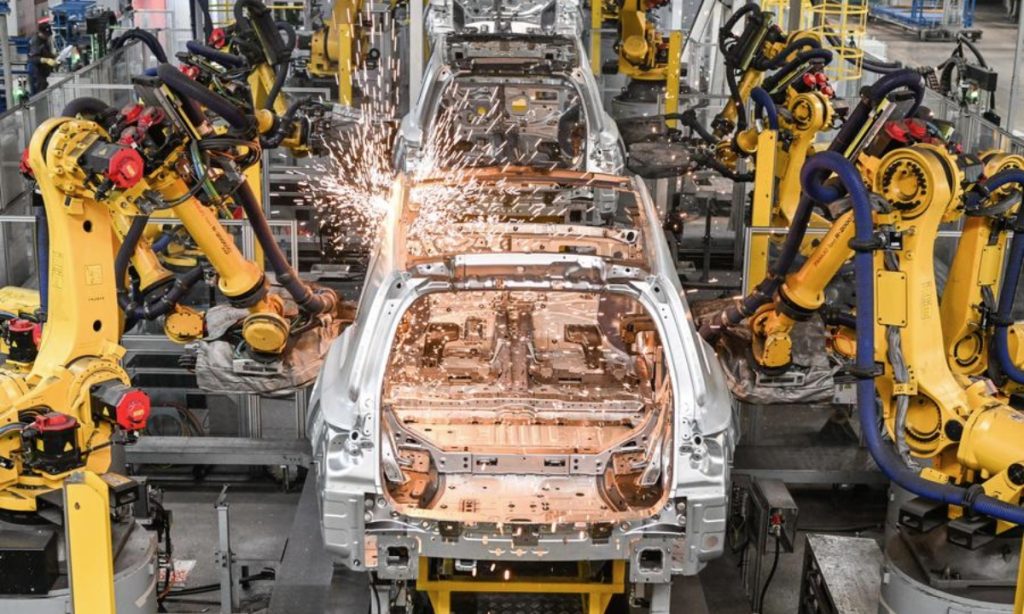
About 30 leading Chinese automakers, parts suppliers and auto material companies have jointly established a new Strategic Materials Innovation and Application Platform in Beijing to address critical "chokepoint" material problems in the automotive industry, China EV100, an initiator of the platform, said in a statement on Monday.

Industry analysts said that the total number of components in a vehicle often exceeds 10,000, making the safety of the domestic industrial supply chain particularly important.

The platform's goal is to build a comprehensive collaborative innovation system, covering vehicle manufacturers, parts suppliers, material companies, technology, standards, and supply chains, helping accelerate the application of advanced new materials in the automotive sector.

The initiative also aims to provide strong support for the security and self-reliance of China's strategic new materials, media reported.

Attending companies include BYD, Geely, SAIC, Dongfeng, Li Auto, PPG, Kingfa Science & Technology, KraussMaffei, China Salt Lake Group, Magna, Dow and others, according to the statement by China EV100, a non-profit organization and third-party think tank aimed at boosting the development of electric vehicle (EV) industry.

Among the participating companies, one Chinese tech company has achieved large-scale production of single-wall carbon nanotubes (a rolled structure of single-layer graphene), paving the way for key applications in new-energy vehicles (NEV) and aerospace. Another firm has developed high-tech composite materials that make automotive parts both lower-carbon and significantly lighter, according to CCTV News.

"We can achieve carbon reduction of 30 percent or even over 40 percent," Liu Yanwei, General Manager of Kingfa Science & Technology's Automotive Division, was quoted as saying.

Zhang Yongwei, Vice Chairman of China EV100, said at the launch ceremony of the platform that"the automotive industry has an extremely long industrial chain, and resources and materials are the most critical links.

"The establishment of this platform is mainly to solve the integration problem between the automotive industry and its supply chain. We need to strengthen strategic planning for raw materials, increase strategic reserves, and build early warning capabilities to ensure resource security," said Zhang Yongwei.

China still has relatively high dependence on foreign sources for certain key raw materials - lithium over 60 percent, nickel over 90 percent - posing challenges to supply chain stability. In addition, domestically produced automotive chips currently account for only about 20 percent of application in Chinese brand vehicles, CCTV News reported, citing industry experts.

New materials are listed as one of the eight strategic emerging industries in China's 15th Five-Year Plan (2026-30).

"The new platform will help translate cutting-edge material innovations into real-world applications across industries," Zhang Xiang, a visiting professor in the engineering department of Huanghe Science and Technology University, told the Global Times on Monday.

The launch of the platform was announced during the Intelligent Electric Vehicle Development Forum, hosted by China EV100, having generated representatives from multiple fields including government, automotive, energy, transportation, and technology gathered to discuss the development trends of the automotive industry.

Su Bo, former minister of industry and information technology, said at the forum on Sunday that, by 2030, NEVs will become the dominant force in China's automobile market, with domestic penetration rate likely to exceed 70 percent.

Tsinghua University Professor Ouyang Minggao said at the forum that, by 2030, new-energy passenger vehicles will account for 70 percent of annual new passenger car sales, which is expected to surpass 80 percent by 2035 and reach over 85 percent by 2040.

Japan's Ambition for Military Expansion Laid Bare

Question: According to reports, Japan's Minister of Defense announced the deployment of long-range missiles with "enemy base strike capabilities". Some analysts believe this deployment is clearly targeted at China. What's your comment on this?

Zhang Xiaogang: Japan's reckless and dangerously accelerated push for remilitarization is spiraling out of control. This is a complete betrayal of its pacifist Constitution and exclusively defense-oriented principle, laying bare its ambition for military expansion. The proliferation of neo-militarism in Japan has become a real menace. Should an evil tiger be unleashed from its cage, it would inevitably wreak havoc far and wide, and plunge the Japanese people into an abyss of disaster. The international community should stay on high alert against it. It must be underlined that as evil will never outgrow virtue, the Chinese military will always have sufficient capability to counter threats and provocations, make aggressors pay an unbearable price, and defend national sovereignty, security and development interests.

They are just aimed at creating anxiety: Chinese FM responds to accusations that Chinese companies are building a network of ports to exercise control

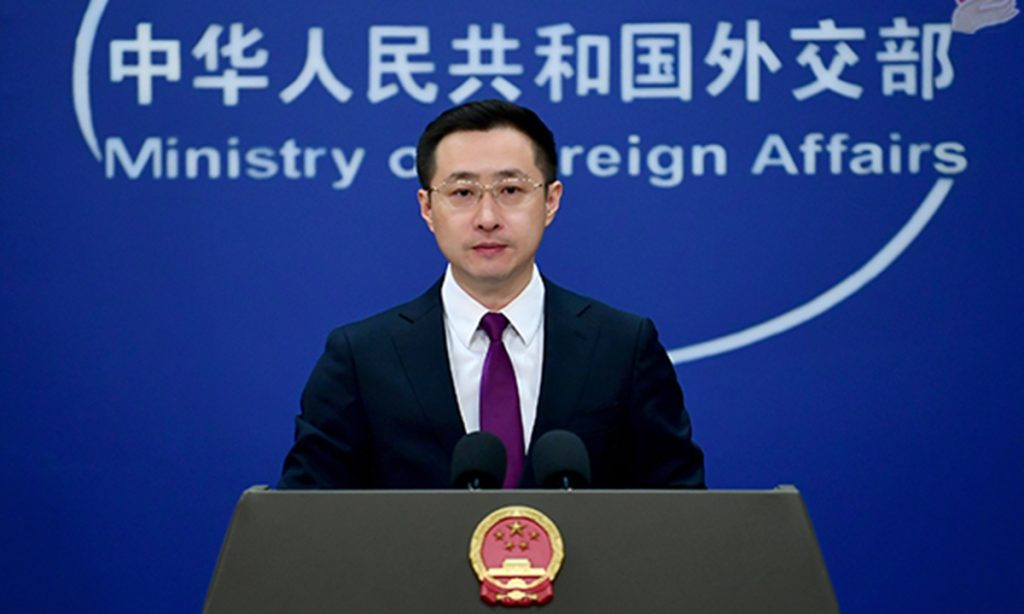
In response to a media inquiry over US officials and analysts saying that Chinese companies have built up a network of ports around the world to exercise control over global commerce, conduct espionage, and enable far-seas missions for the Chinese military, Chinese Foreign Ministry spokesperson Lin Jian on Wednesday stated that these accusations are just aimed at creating anxiety. 

Lin added that we hope the US will stop overstretching the concept of security, stop peddling so-called "China threat," and stop smearing and disrupting China's economic and trade cooperation with other countries.

Six university students accidentally die during visit to enterprise in N.China’s Inner Mongolia

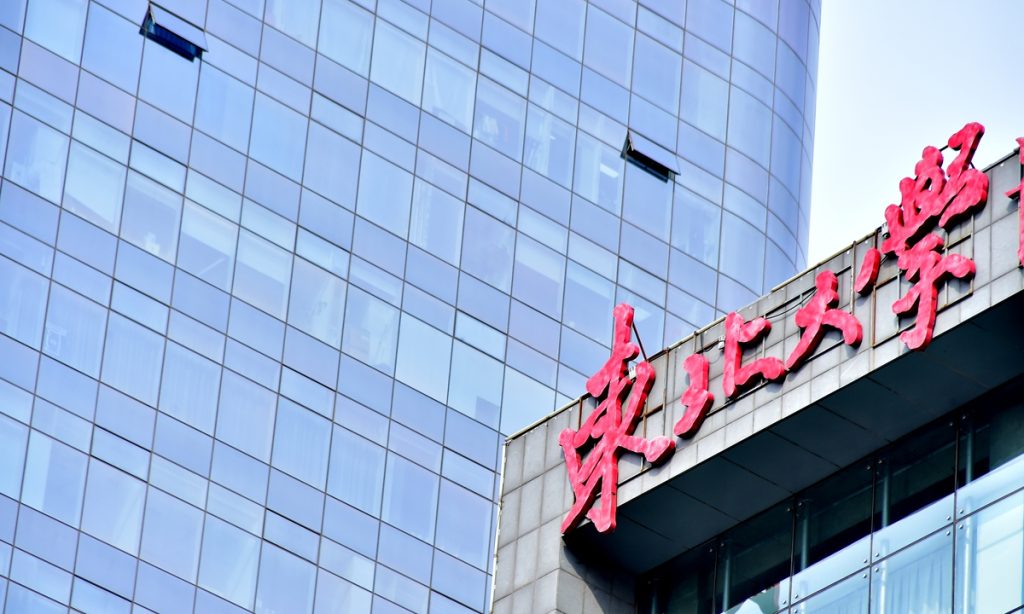
Six university students accidentally died on Wednesday during an educational visit at a mining company in North China's Inner Mongolia Autonomous Region, Xinhua News Agency reported, citing the emergency management authority in Hulun Buir City. 

According to Xinhua, the six students, who were from Northeastern University in the city of Shenyang in Northeast China's Liaoning Province, were learning about the flotation process at a plant of Wunugetushan copper-molybdenum deposit, which belongs to China Gold Inner Mongolia Mining Co.,Ltd, when they fell into a flotation tank at around 10:20 am on Wednesday due to the falling off of a grate.

After all efforts to rescue them, the students were retrieved but were confirmed drowned by medical personnel. Additionally, one teacher was injured.

Currently, the local government, Northeastern University, and China National Gold Group Corporation are carrying out follow-up handling of the incident.

China stands ready to play constructive role in helping de-escalate tensions on Cambodia-Thailand border: FM

The recent outbreak of conflict along the Cambodia-Thailand border, resulting in casualties, is deeply distressing and concerning. The root of this issue lies in the legacy left by Western colonial powers, and it now requires calm and careful handling, said Chinese Foreign Minister Wang Yi while meeting with Secretary-General of Association of Southeast Asian Nations (ASEAN) Kao Kim Hourn in Beijing on Friday.

China appreciates and supports the active mediation efforts by the ASEAN chair, and encourages dialogue and political resolution through the "ASEAN way," said Wang. 

Wang said that as a mutual neighbor and friend to both Cambodia and Thailand, China is committed to maintaining an objective and impartial stance, and stands ready to play a constructive role in helping de-escalate tensions and stabilizing the situation, according to a release from China's Foreign Ministry. 

Kao Kim Hourn said that on the Cambodia-Thailand border conflict, we believe the leaders of the countries involved have the political wisdom to resolve the issue. The "ASEAN way" remains a viable approach, and the ASEAN chair is actively mediating in the spirit of the ASEAN Charter, according to the release. 

We also appreciate China's constructive efforts in promoting dialogue and de-escalation, said Kao.

Clashes along the Thailand-Cambodia border reportedly continued on Friday, causing casualties on both sides and sparking worries, with regional countries and the international community calling for a ceasefire and de-escalation, according to multiple media outlets. 

Thailand's military-run Channel 5 reported on Friday that clashes broke out at several areas along the Thailand-Cambodia border in the early hours of the day, saying Cambodian forces have conducted sustained bombardment utilizing heavy weapons, field artillery, and BM-21 rocket systems, according to the Xinhua News Agency. 

Thai forces responded with appropriate supporting fire in accordance with the tactical situation and issued advisories to local civilians to avoid entering areas where clashes have taken place. Early Friday, the sound of artillery fire was heard again near the border area, the National Broadcasting Services of Thailand reported, citing a local official in Surin province.

According to the deputy spokesperson of the Thai Ministry of Public Health, 14 Thai people were killed and 46 others injured in military clashes near the Thailand-Cambodia border as of 9:00 pm local time on Thursday, Xinhua reported.

The deputy governor of Cambodia's Oddar Meanchey province, Met Meas Pheakdey, told Xinhua over the telephone that one villager was killed and five others were wounded on Thursday when the Thai side fired artillery shells into Cambodian territory.

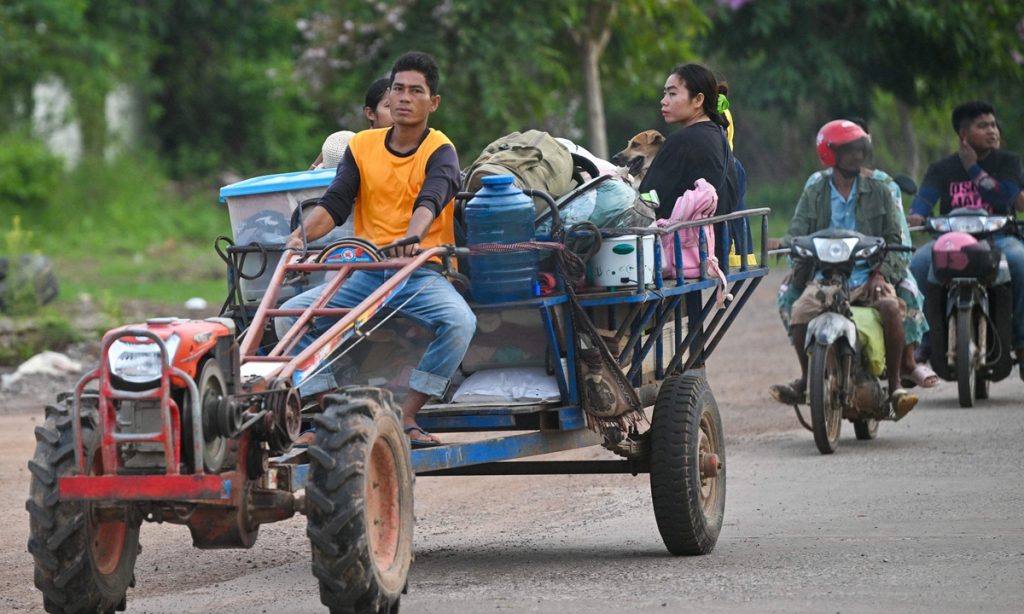
"More than 2,900 families living near the border have been evacuated to a safe refuge," he added. "Fighting is still going on as of Friday morning," he said, according to the report. 

Cambodian Defense Ministry's Undersecretary of State and spokesperson, Lieutenant General Maly Socheata, said in a press briefing on Friday morning that Thai troops had used heavy weapons and F-16 fighter jets as well as cluster bombs to attack several locations in the Cambodian provinces of Oddar Meanchey and Preah Vihear, according to the report. 

The Royal Thai Army has firmly denied allegations from Cambodian media claiming that Thailand used F-16 fighter jets to strike civilian targets during the ongoing border conflict, while accusing Cambodia of using civilians as human shields by placing artillery in civilian areas, according to Nation Thailand. 

The situation on the Thai-Cambodian border escalated following skirmishes on Thursday. The two sides traded accusations following the escalating situation.

Immediate de-escalation appears unlikely, as the core issue lies not in the clashes themselves but in deep political mistrust between the two countries' leaders. This distrust has spilled into domestic politics, with both sides constrained by internal pressures and left with little room for compromise, raising the risk of further escalation, Xu Liping, Director of the Center for Southeast Asian Studies at the Chinese Academy of Social Sciences, told the Global Times on Friday.

But a full-scale war between Thailand and Cambodia also seems unlikely. Despite ongoing tensions, the military imbalance, international mediation by ASEAN, China, and the UN, and strong global opposition to escalation serve as restraining factors, said Song Zhongping, a Chinese military affairs expert.

More importantly, the border dispute between Cambodia and Thailand is rooted in complex colonial-era issues that cannot be resolved through a full-fledged war, said Song, noting that the conflict is more likely to be prolonged and sporadic, with occasional skirmishes but overall situation under control. 

Call for de-escalation

China's permanent representative to the United Nations, Fu Cong, called for the situation between Cambodia and Thailand to cool down on Thursday. China has expressed concern over the situation between the two countries, urging both sides to exercise restraint, and hopes that the situation can stabilize and peace can be achieved, Fu said.

Fu said Cambodia and Thailand are not only good neighbors of China, but also friendly neighbors to each other, and at the same time, important members of ASEAN. He added that ASEAN has always adhered to the tradition of resolving differences through peaceful means, and China hopes that peace will prevail.

China is playing a mediating role in facilitating communication between the two sides and hopes that the situation can stabilize as soon as possible, Fu said.

The UN Security Council will hold a closed-door meeting on the Thailand-Cambodia border clashes on Friday, which was reportedly requested by Cambodian Prime Minister Hun Manet, per Xinhua. 

On late Thursday, Malaysian Prime Minister Anwar Ibrahim said in a post on X that he has spoken to Cambodian Prime Minister Hun Manet and Thailand's Acting Prime Minister Phumtham Wechayachai. He appealed, in Malaysia's capacity as the current ASEAN chair, to both leaders for an immediate ceasefire to prevent further hostilities and to create space for peaceful dialogue and diplomatic resolution. 

"I welcome the positive signals and willingness shown by both Bangkok and Phnom Penh to consider this path forward. Malaysia stands ready to assist and facilitate this process in the spirit of ASEAN unity and shared responsibility. I firmly believe that ASEAN's strength lies in its solidarity and that peace must always be our collective and unwavering choice," he said.

Cambodian Deputy Prime Minister and Minister of Foreign Affairs and International Cooperation Prak Sokhonn on Friday morning convened diplomats and military attachés from multiple countries, including the US and China, to brief them on developments regarding the Cambodia-Thailand border situation and to reaffirm Cambodia's firm stance on peacefully resolving border disputes, CCTV News reported on Friday.

The US, China and Malaysia, which is the current chair of the ASEAN regional bloc, have offered to facilitate dialogue but Bangkok is seeking a bilateral solution to the conflict, Thai foreign ministry spokesperson Nikorndej Balankura told Reuters. 

There are obstacles to the mediation efforts. Both Cambodia and Thailand hold conflicting maps and refuse to accept the other's version, Ge Hongliang, deputy director of the College of ASEAN Studies at Guangxi University for Nationalities, told the Global Times.

Though ties have been downgraded, diplomatic channels remain open. ASEAN has launched shuttle diplomacy to push for a ceasefire and renewed talks, and China maintains a neutral stance, urging both sides to return to dialogue and supporting ASEAN-led mediation, said Ge.

As Thailand and Cambodia are both ASEAN members, a war between them would destabilize Southeast Asia and undermine regional economic integration. Easing tensions and returning to dialogue serves the fundamental interests of both countries and the region, said Song. 

Many of today's conflicts can be traced back to unresolved border and ethnic issues left by colonial powers. This remains a persistent threat to global peace, underscoring the need to continue advancing global decolonization, said the expert.